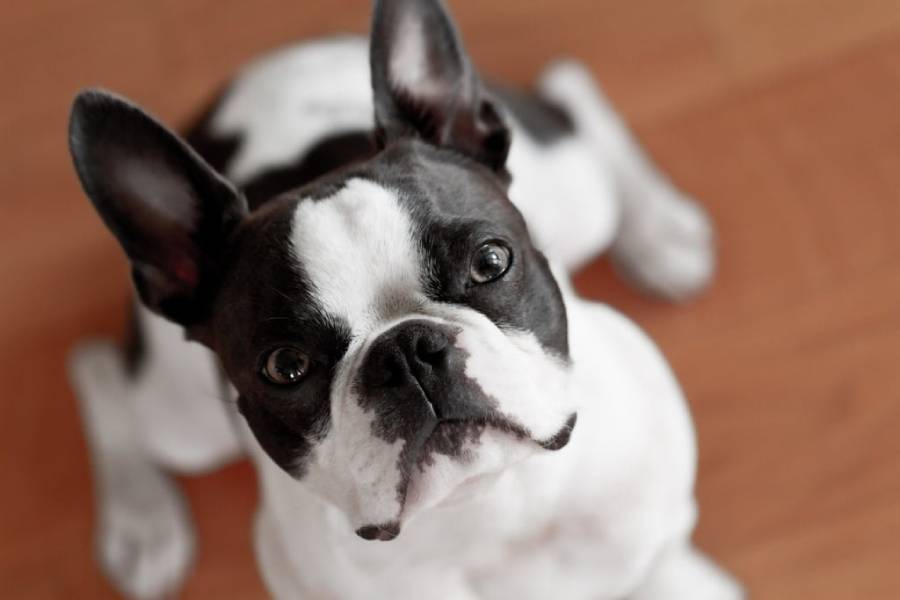
Boston Terriers are prone to several eye problems, including corneal ulcers, cataracts, glaucoma, dry eye, cherry eye, and conjunctivitis. Their large, prominent eyes are more exposed than deeply set eyes, making the eye surface vulnerable to scratches, debris, irritation, and other injuries. Some conditions primarily cause discomfort, while others can damage the eye or affect vision if treatment is delayed.
Owners should pay attention to changes such as eye redness, excessive tearing, unusual discharge, squinting, cloudiness, swelling, frequent pawing at the face, or sudden changes in vision. These signs do not identify a specific disease on their own because several Boston Terrier eye problems can produce similar symptoms. A veterinary eye examination is therefore important when symptoms are persistent, painful, severe, or develop suddenly.
This guide explains the most common Boston Terrier eye problems, why the breed is susceptible to them, and the signs owners should recognize. It also covers when an eye problem requires urgent veterinary attention, how veterinarians diagnose and treat eye conditions, and practical steps owners can take to protect their Boston Terrier’s eyes.
What Are the Most Common Eye Problems in Boston Terriers?
The most common eye problems affecting Boston Terriers include corneal ulcers, cataracts, glaucoma, dry eye, cherry eye, and conjunctivitis. These conditions affect different structures of the eye, so their symptoms, severity, and treatment differ. Corneal ulcers involve damage to the cornea, cataracts affect the lens, glaucoma involves increased pressure within the eye, and dry eye results from inadequate tear production. Cherry eye affects a gland associated with the third eyelid, while conjunctivitis involves inflammation of the conjunctiva.
Corneal ulcers are particularly important in Boston Terriers because their prominent eyes leave the corneal surface relatively exposed to injury. A scratch, foreign material, or other trauma can damage the cornea and create a painful ulcer. Affected dogs may squint, keep one eye partially closed, produce excessive tears, rub at the eye, or develop redness and discharge. Corneal damage can worsen when a dog continues rubbing the irritated eye, so persistent squinting or obvious eye pain warrants veterinary evaluation.
Cataracts develop when the normally transparent lens becomes opaque, interfering with the passage of light through the eye. Owners may notice that the center of a Boston Terrier’s eye appears increasingly cloudy or whitish. As a cataract progresses, vision can deteriorate. However, a cloudy-looking eye does not automatically mean a Boston Terrier has a cataract because changes involving the cornea and other eye structures can produce a similar appearance. A veterinarian must examine the eye to determine where the cloudiness originates.
Glaucoma occurs when pressure inside the eye becomes abnormally elevated and can damage structures responsible for vision. Signs may include redness, pain, excessive tearing, cloudiness, changes in pupil appearance, or enlargement of the affected eye. Glaucoma is more than a cosmetic change to the eye; prolonged or severe pressure can damage vision. Sudden eye pain or major changes in the appearance of a Boston Terrier’s eye therefore require prompt veterinary attention.
Dry eye, also known as keratoconjunctivitis sicca, develops when the eyes do not produce enough of the tear film needed to protect and lubricate the ocular surface. Inadequate tear production can leave the cornea and surrounding tissues irritated and inflamed. A Boston Terrier with dry eye may develop redness, discomfort, recurrent irritation, or thick eye discharge. Because these symptoms overlap with several other eye disorders, diagnosis requires an eye examination and assessment of tear production rather than symptoms alone.
Cherry eye occurs when the tear-producing gland associated with the third eyelid protrudes from its normal position. Owners typically notice a pink or red mass near the inner corner of the eye, giving the condition its common name. The visible lump makes cherry eye easier to recognize than many internal eye disorders, but not every red or swollen area around a Boston Terrier’s eye is cherry eye. Veterinary examination is needed to confirm the condition and determine appropriate treatment.
Conjunctivitis is inflammation of the conjunctiva, the tissue surrounding parts of the eye and lining the eyelids. A Boston Terrier with conjunctival inflammation may have redness, discharge, swelling, tearing, or discomfort. These signs describe inflammation rather than its underlying cause. Irritation, infection, trauma, dry eye, and other ocular problems can produce overlapping symptoms, which is why repeatedly treating a red or discharging eye without identifying the cause can leave the primary problem unresolved.
Why Are Boston Terriers Prone to Eye Problems?
Boston Terriers are prone to eye problems because their large, prominent eyes are relatively exposed to injury, irritation, and environmental debris. Their facial structure provides less physical protection around the front of the eye than dogs with more deeply set eyes. As a result, contact with branches, grass, dust, sand, another animal’s paw, or even vigorous scratching can injure the ocular surface.
Corneal injuries are an important consequence of this exposure. The cornea is the transparent outer surface at the front of the eye, and even a small scratch can damage its protective layer. A Boston Terrier running through bushes, playing roughly with another dog, or rubbing an irritated eye can develop a corneal abrasion that may progress to an ulcer. Once the cornea becomes painful, the dog may squint or paw at the eye, and continued rubbing can aggravate the original injury.
Eye problems in Boston Terriers are not caused by facial anatomy alone. Genetic factors can also influence susceptibility to specific ocular disorders. Inherited eye abnormalities may affect structures such as the lens, cornea, retina, or other parts responsible for maintaining normal vision. This is why eye health is relevant not only after symptoms appear but also when evaluating the long-term health of individual Boston Terriers and breeding dogs.
Age and existing eye conditions can further change an individual dog’s risk. A Boston Terrier that already has inadequate tear production, chronic irritation, or another ocular disorder may have a less effectively protected eye surface. Older dogs can also develop age-associated changes that owners may first notice as cloudiness or declining vision. Because different problems can produce similar visible changes, breed predisposition or age should not be used as a substitute for a veterinary diagnosis.
What Are the Signs of Eye Problems in Boston Terriers?
The main signs of eye problems in Boston Terriers include redness, squinting, excessive tearing, abnormal discharge, cloudiness, swelling, pawing at the eye, and changes in vision. Owners should also watch for a Boston Terrier keeping one eye closed, becoming unusually sensitive when the face is touched, or repeatedly rubbing its face against furniture or the floor. These behaviors can indicate ocular discomfort even when the eye initially looks relatively normal.
The combination and speed of symptom development provide important context. Mild tearing after brief exposure to wind or dust differs from persistent tearing accompanied by redness and squinting. Likewise, gradual changes in the appearance of an older dog’s eyes differ from sudden cloudiness accompanied by obvious pain. Symptoms that develop suddenly, become progressively worse, or occur together deserve greater attention because they may indicate an injury or active eye disease.
Visible symptoms cannot reliably identify the underlying condition by themselves. Redness can accompany conjunctival inflammation, corneal injury, dry eye, glaucoma, or several other disorders. Cloudiness can involve the cornea, lens, or other eye structures. Squinting is primarily a sign of discomfort rather than a diagnosis. Veterinary examination is therefore necessary to determine which structure is affected and what is causing the change.
Why Is My Boston Terrier’s Eye Red?
A Boston Terrier’s eye can become red because of irritation, inflammation, trauma, or an underlying eye disorder. Redness develops when blood vessels in or around the affected tissues become more visible, but the appearance alone does not establish the cause. Dust or debris may irritate the eye, while corneal injuries, dry eye, conjunctivitis, glaucoma, and other conditions can also produce redness.
Owners should evaluate redness together with other observable changes. A mildly red eye without discomfort presents differently from an intensely red eye accompanied by squinting, swelling, cloudiness, discharge, or persistent rubbing. Sudden redness after rough play or contact with vegetation can also raise concern about physical injury or foreign material. Persistent, worsening, or painful redness should be assessed by a veterinarian rather than treated solely on its appearance.
Why Does My Boston Terrier Have Eye Discharge?
Eye discharge in a Boston Terrier can result from irritation, inflammation, inadequate tear-film function, or another eye disorder. The significance of discharge depends on its amount, persistence, appearance, and accompanying symptoms. Small amounts of material around the eyes are different from new or persistent discharge associated with redness, swelling, squinting, or discomfort.
Abnormal discharge is especially important when it occurs repeatedly or changes from the dog’s normal pattern. For example, dry eye can be associated with thicker discharge because inadequate tear production changes the condition of the ocular surface. Inflammation can also increase tearing or produce visible material around the eyelids. Because discharge occurs with multiple eye conditions, its appearance should be treated as a symptom that helps guide veterinary examination rather than as evidence of one specific disease.
When Is a Boston Terrier Eye Problem an Emergency?
A Boston Terrier eye problem requires urgent veterinary attention when there is sudden or severe pain, significant trauma, rapid cloudiness, marked swelling, bleeding, a foreign object, or an abrupt change in vision. Keeping one eye tightly closed, persistent squinting, or being unable to open the affected eye can also indicate substantial discomfort. Eye problems can progress quickly, so owners should not wait for severe visible damage before seeking veterinary care when these warning signs appear.
Sudden pain is particularly important because painful eye conditions can involve the cornea or pressure inside the eye. A corneal injury may begin with a scratch but worsen if the damaged surface becomes deeper or the dog repeatedly rubs the eye. Glaucoma can also cause significant pain as pressure inside the eye increases. Both situations require veterinary assessment because the underlying problem cannot be determined reliably from redness or squinting alone.
Physical trauma should also be treated seriously in Boston Terriers because their prominent eyes are relatively exposed. Contact with a branch, another dog’s paw, a sharp object, or foreign material can damage the cornea or surrounding structures. Owners should seek veterinary care if trauma is followed by bleeding, persistent tearing, cloudiness, swelling, obvious pain, or an abnormal appearance of the eye. A visible object lodged in or around the eye should not be aggressively removed at home because manipulation can cause additional injury.
Changes in vision or the shape and appearance of the eye can indicate a more serious problem. A Boston Terrier that suddenly bumps into objects, hesitates when moving through familiar surroundings, develops a rapidly cloudy eye, or has an eye that appears enlarged or unusually prominent should be examined promptly. Delayed treatment of certain eye diseases can increase the risk of permanent structural damage and vision loss.
How Do Veterinarians Diagnose Eye Problems in Boston Terriers?
Veterinarians diagnose Boston Terrier eye problems by combining the dog’s medical history, a physical and ophthalmic examination, and targeted eye tests. The goal is to determine which part of the eye is affected and identify the underlying cause rather than treating redness, discharge, or cloudiness as a disease by itself. Tests may assess the cornea, tear production, pressure inside the eye, and other structures involved in vision.
The examination typically begins with the symptoms and their progression. A veterinarian may ask when the owner first noticed redness, discharge, squinting, cloudiness, or changes in vision and whether the dog recently experienced rough play, contact with vegetation, or another potential eye injury. Information about previous eye problems and ongoing treatment can also help narrow the possible causes.
Fluorescein staining can be used when corneal damage is suspected. A veterinary professional applies a fluorescent dye to the eye so areas where the corneal surface has been damaged can become more visible during examination. This helps identify corneal abrasions and ulcers that may not be obvious to an owner simply looking at the eye.
Tear production testing helps determine whether the eye produces enough tears to maintain a healthy ocular surface. Reduced tear production can support a diagnosis of dry eye when considered alongside the dog’s symptoms and examination findings. This distinction matters because persistent discharge and redness caused by inadequate tear production require treatment of the underlying tear-film problem rather than simply cleaning away the discharge.
Intraocular pressure measurement is used when abnormal pressure within the eye is a concern. Measuring this pressure helps veterinarians investigate conditions such as glaucoma. Because glaucoma can threaten vision, identifying abnormal pressure provides information that cannot be obtained by judging redness, cloudiness, or eye size alone.
Additional ophthalmic examination allows the veterinarian to assess structures such as the eyelids, conjunctiva, cornea, pupil, lens, and other visible portions of the eye. More complicated or severe cases may require additional diagnostic evaluation or referral to a veterinary ophthalmologist. The final diagnosis determines whether the Boston Terrier needs medication, protective treatment, a procedure, surgery, or specialist care.
How Are Boston Terrier Eye Problems Treated?
Boston Terrier eye problems are treated according to the underlying condition, the part of the eye affected, and the severity of the damage. Treatment may involve veterinary eye medication, protection of the injured eye, management of an underlying disorder, a procedure, or surgery. A treatment that is appropriate for conjunctival inflammation may not be appropriate for a corneal ulcer, glaucoma, cataract, or dry eye, which is why diagnosis should come before treatment.
Corneal ulcers require treatment aimed at protecting the damaged cornea and allowing the surface to heal while controlling complications. The exact approach depends on the depth and severity of the ulcer. A superficial injury and a deeper or complicated ulcer do not carry the same risk. Preventing additional trauma is also important because rubbing or pawing at a painful eye can further damage the corneal surface. More severe corneal injuries may require additional procedures or specialist treatment.
Dry eye requires a different approach because the underlying problem involves inadequate tear production or tear-film function. Veterinary treatment focuses on maintaining a healthier ocular surface and addressing the tear deficiency rather than simply removing visible discharge. Long-term management may be necessary in affected dogs, and follow-up examinations allow the veterinarian to evaluate tear production and the condition of the cornea over time.
Glaucoma requires prompt veterinary management because elevated pressure inside the eye can cause pain and damage structures involved in vision. Treatment is directed at controlling intraocular pressure and limiting further damage. The appropriate approach depends on the cause, severity, remaining vision, and response to treatment. Advanced cases may require procedures or surgery rather than medication alone.
Cataract treatment depends on how much the lens opacity affects the eye and the dog’s vision. A veterinarian can determine whether visible cloudiness actually originates from the lens and whether the cataract is significantly interfering with sight. Dogs with substantial vision impairment may require assessment for surgical treatment, while other cases may be monitored according to the individual dog’s condition.
Cherry eye may require treatment when the prolapsed gland remains displaced or causes ongoing irritation. Because the gland associated with the third eyelid contributes to normal tear production, treatment decisions should consider its function rather than viewing the visible red tissue only as a cosmetic problem. Veterinary evaluation determines whether the gland can be managed conservatively or requires a surgical procedure.
Eye drops are therefore not interchangeable treatments for Boston Terrier eye problems. Different ophthalmic medications have different purposes, and the wrong product may fail to treat the underlying disease or be inappropriate for an injured eye. Owners should avoid using leftover veterinary medication or human eye products unless a veterinarian has specifically advised their use for the current condition.
When Should a Boston Terrier See a Veterinary Ophthalmologist?
A Boston Terrier may need a veterinary ophthalmologist when an eye problem is severe, recurrent, difficult to diagnose, requires specialized surgery, or threatens vision. A general veterinarian can diagnose and manage many common eye conditions, but complicated corneal disease, glaucoma, significant cataracts, recurrent ocular problems, and other serious disorders may require specialist evaluation.
A veterinary ophthalmologist has additional training in diagnosing and treating diseases involving structures such as the cornea, lens, retina, eyelids, and internal components of the eye. Specialist equipment and procedures can also provide more detailed assessment when routine examination does not fully explain a Boston Terrier’s symptoms.
Referral becomes particularly important when an eye problem does not respond as expected to initial treatment or continues to return. For example, repeated corneal damage requires investigation beyond repeatedly treating each episode because an anatomical or underlying ocular problem may be contributing to recurrence. Similarly, progressive vision changes require assessment of the structures responsible for sight.
Owners should not wait for complete vision loss before discussing specialist care when a veterinarian recommends referral. For conditions capable of causing irreversible ocular damage, the timing of diagnosis and treatment can influence the amount of vision that can be preserved.
Read more: Boston Terrier Separation Anxiety: Signs & Solutions
How Can You Prevent Eye Problems in Boston Terriers?
Boston Terrier owners can reduce the risk of eye problems by checking the eyes regularly, limiting exposure to eye injuries, keeping the area around the eyes clean, and responding quickly to abnormal symptoms. Not every eye condition is preventable, particularly when genetics or age contributes to the problem. Preventive care instead focuses on reducing avoidable trauma and detecting changes before an eye problem becomes more severe.
Regular observation is one of the simplest preventive measures. Owners can check whether both eyes look clear and similar and watch for redness, swelling, excessive tearing, discharge, cloudiness, or changes in how widely the dog opens each eye. Behavioral changes are also important. A Boston Terrier that suddenly starts squinting, pawing at its face, rubbing an eye against furniture, or avoiding bright light may be experiencing discomfort even when obvious damage is not visible.
Reducing physical trauma is particularly relevant for Boston Terriers because their prominent eyes are more exposed to their surroundings. Branches, thorny plants, tall grass, debris, and rough interactions with other animals can contact the ocular surface. Owners can reduce these exposures by monitoring their dog around dense vegetation and interrupting play that repeatedly places the face and eyes at risk of scratches or impact.
The area around the eyes should also be kept clean without aggressively rubbing the eye itself. Visible material around the eyelids can be removed gently when appropriate, but persistent discharge should not simply be treated as a grooming problem. Recurrent discharge, redness, squinting, or excessive tearing can indicate an underlying ocular condition that requires veterinary assessment.
Owners should also avoid applying unprescribed eye products when a Boston Terrier develops symptoms. Redness and discharge have multiple possible causes, and treating the visible symptom without identifying the condition can delay appropriate care. Medication prescribed for a previous episode may also be unsuitable for a new eye problem. Veterinary diagnosis is particularly important when pain, trauma, cloudiness, swelling, or vision changes are present.
Routine veterinary examinations provide another opportunity to identify changes that owners may not recognize at home. Dogs with previous eye disease may require more frequent monitoring based on the specific condition and the veterinarian’s recommendation. Combining routine observation with prompt evaluation of new symptoms gives owners a practical way to protect eye health without attempting to diagnose ocular disease themselves.
Can Boston Terrier Eye Problems Cause Blindness?
Some Boston Terrier eye problems can cause partial or complete vision loss when they seriously damage the cornea, lens, retina, optic structures, or other parts of the eye involved in vision. The risk depends on the specific disease, its severity, how quickly it progresses, and whether effective treatment begins before irreversible damage occurs. An eye problem therefore does not automatically mean that a Boston Terrier will become blind.
Glaucoma is particularly concerning because persistently abnormal pressure inside the eye can damage structures required for vision. Corneal disease can also threaten sight when an ulcer becomes deep or complicated enough to compromise the transparent surface of the eye. Cataracts affect vision through a different mechanism: increasing opacity of the lens interferes with light passing normally through the eye. These conditions illustrate why similar outward symptoms can have very different underlying mechanisms and outcomes.
Vision changes may develop gradually or suddenly. A Boston Terrier experiencing declining sight may become hesitant around stairs, bump into objects, have difficulty navigating unfamiliar areas, or show changes in confidence when lighting is poor. Sudden loss of visual ability, especially when accompanied by pain, redness, cloudiness, or a visibly abnormal eye, requires prompt veterinary evaluation.
Early recognition does not guarantee that every form of vision loss can be prevented, but it gives veterinarians an opportunity to identify treatable conditions before additional damage occurs. Owners should therefore treat persistent squinting, significant redness, rapidly developing cloudiness, obvious eye pain, trauma, and sudden changes in vision as medical problems rather than waiting to see whether the eye returns to normal on its own.
1 thought on “Boston Terrier Eye Problems: Symptoms & Treatment”