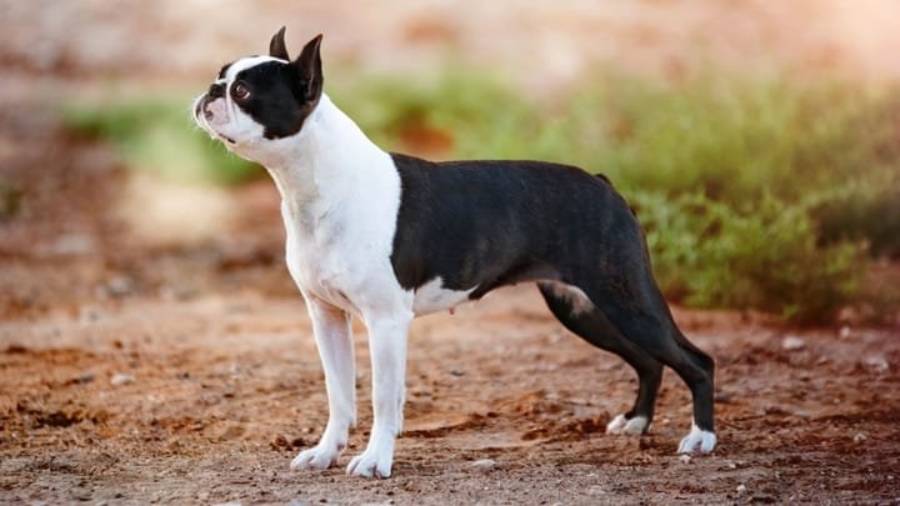
Boston Terrier hair loss can result from normal shedding, skin allergies, parasites, infections, hereditary alopecia, or underlying health conditions. Boston Terriers naturally shed some hair throughout the year, but visible bald spots, persistent coat thinning, or sudden hair loss are not typical shedding patterns and may require veterinary evaluation.
The appearance of the affected area provides useful clues about the possible cause. Hair loss accompanied by itching, redness, scaling, sores, or excessive licking is more consistent with skin irritation, parasites, allergies, or infection. Hair loss without itching can have a different set of causes, including hereditary hair loss and certain hormonal disorders. The location and distribution of missing hair also matter because localized bald patches, symmetrical thinning, and widespread coat loss can point veterinarians toward different diagnostic possibilities.
Treatment for Boston Terrier hair loss therefore depends on identifying its underlying cause rather than simply trying to stimulate hair growth. This guide explains the main causes of hair loss in Boston Terriers, common hair-loss patterns and accompanying symptoms, how veterinarians diagnose the problem, available treatments, and the signs that indicate your dog should be examined by a veterinarian.
Is Hair Loss Normal in Boston Terriers?
Some hair loss is normal in Boston Terriers when it occurs as routine shedding, but bald patches, significant coat thinning, and persistent hair loss are not normal shedding patterns. Boston Terriers have short, smooth coats that naturally release old or damaged hairs as part of the hair growth cycle. Owners may notice loose hairs on bedding, clothing, furniture, or grooming tools without seeing exposed areas of skin.
Normal shedding generally leaves the coat looking evenly distributed. The amount of loose hair may change throughout the year and can also vary between individual dogs, but shedding should not normally create clearly defined bald areas. A Boston Terrier that sheds while maintaining an even coat without inflamed or damaged skin is more likely experiencing normal hair turnover than alopecia.
Abnormal hair loss produces a noticeable change in coat density or exposes the skin underneath. It may appear as one or more bald spots, thinning hair on specific parts of the body, symmetrical hair loss on both sides, or more widespread coat loss. The pattern matters because different skin and systemic conditions can produce different distributions of alopecia.
Hair loss becomes more concerning when it occurs with skin or behavioral changes. Itching, redness, scaling, scabs, sores, unusual skin odor, darkened skin, or frequent licking and scratching indicate that the problem extends beyond routine shedding. Hair loss without itching can also be abnormal, particularly when the coat continues to thin or bald areas expand.
Owners can therefore distinguish shedding from possible alopecia by examining both the amount of hair lost and the condition of the remaining coat and skin. Loose hair with an otherwise full, healthy-looking coat is generally consistent with shedding. Visible skin, persistent thinning, expanding bald patches, or additional symptoms justify investigating the underlying cause.
What Causes Hair Loss in Boston Terriers?
Boston Terrier hair loss can result from several major groups of causes, including allergies, parasites, fungal or bacterial infections, hereditary alopecia, hormonal disorders, nutritional problems, and stress-related shedding. These conditions do not produce identical patterns. Some cause intense itching and inflammation, while others produce gradual hair thinning with little or no itching.
Allergies can contribute to hair loss by causing inflammation and itching. A Boston Terrier may repeatedly scratch, lick, rub, or chew irritated areas, damaging hairs and skin in the process. Environmental allergens, food-related reactions, and substances that contact the skin can be relevant depending on the individual dog. Persistent inflammation can also disrupt the skin barrier and create conditions that allow secondary infections to develop.
Parasites are another important cause of coat loss. Fleas can trigger itching directly, while dogs sensitive to flea bites may develop a stronger inflammatory reaction. Mites associated with mange can also produce alopecia, although the appearance and degree of itching depend on the type of mite and the dog’s response. Parasite-related hair loss may therefore appear alongside scratching, crusting, redness, or other skin changes.
Ringworm can cause localized hair loss because the fungal infection affects the skin and hair. Affected dogs may develop areas of broken hair, scaling, crusting, or bald patches. Because these signs can resemble other dermatological conditions, the appearance of a circular or patchy bald area alone does not confirm ringworm. Veterinary testing may be needed to distinguish fungal infection from other causes.
Bacterial and yeast infections can also damage the coat when they affect the skin. These infections may occur as primary problems or develop secondary to allergies and other conditions that compromise the skin barrier. Hair loss associated with infection is more informative when considered alongside signs such as redness, irritation, scaling, lesions, discharge, or unusual odor.
Hereditary alopecia is particularly relevant when evaluating persistent hair loss without obvious inflammation. Genetic or pattern-related hair loss can cause gradual thinning in characteristic areas while the affected skin may initially appear relatively normal. This type of alopecia differs from hair loss caused primarily by scratching because the dog may show little or no itching.
Hormonal disorders can produce another non-itchy pattern of coat loss. Conditions such as hypothyroidism and Cushing’s disease can interfere with normal hair growth and may cause thinning or symmetrical alopecia. These disorders can also produce changes elsewhere in the body, so veterinarians consider the dog’s overall health, physical examination, history, and appropriate laboratory testing rather than diagnosing an endocrine disorder from hair loss alone.
Nutrition affects normal skin and coat maintenance because hair growth requires adequate energy, protein, essential fatty acids, vitamins, and minerals. However, hair loss should not automatically be interpreted as a nutritional deficiency. A Boston Terrier eating a complete and balanced diet may have alopecia for an entirely different reason, and adding supplements without identifying the cause does not address parasites, infections, allergies, hereditary conditions, or hormonal disease.
Stress can increase shedding in some dogs, but temporary stress-related shedding should be distinguished from persistent alopecia. A stressful event may result in noticeably more loose hair without creating progressive bald patches. Hair loss that continues, exposes skin, or occurs with other abnormalities requires investigation rather than being attributed to stress alone.
What Do Different Hair Loss Patterns in Boston Terriers Mean?
Different hair loss patterns can help narrow the possible causes of Boston Terrier hair loss, but the location of a bald area cannot confirm a diagnosis by itself. Veterinarians consider whether hair loss is localized or widespread, symmetrical or irregular, itchy or non-itchy, and associated with visible skin changes. These characteristics provide more useful information than the location of hair loss alone.
Patchy hair loss creates one or more clearly defined areas where the coat becomes thin or disappears. Parasites, fungal infections, bacterial skin infections, inflammation, and repeated scratching can all produce localized bald spots. The appearance of the skin provides additional context. Redness, crusting, scaling, broken hairs, or sores suggest active skin disease, while smooth skin without obvious inflammation may shift attention toward other causes.
Hair loss around the ears can occur when a Boston Terrier repeatedly scratches or rubs the area because of irritation. Parasites and dermatological conditions can also affect this region. Owners should examine whether the hair loss is limited to the outer ear area or occurs with additional signs such as redness, crusting, discharge, odor, or frequent head shaking. Ear-related symptoms are important because they indicate that the problem may involve more than coat loss.
Hair loss around the eyes also requires attention to accompanying skin changes. Local irritation, parasites, and dermatological disorders can cause thinning or bald areas around the face. Because the skin surrounding the eyes is sensitive, owners should avoid applying shampoos, creams, essential oils, or other topical home remedies near the eyes without veterinary guidance.
Hair loss across the back, sides, or trunk can have a different diagnostic context from a single irritated bald spot. Widespread or symmetrical thinning may occur with disorders that interfere with the normal hair growth cycle, including certain endocrine or hereditary conditions. In contrast, irregular areas accompanied by scratching, redness, or lesions are more consistent with processes affecting the skin directly. Distribution is therefore one part of the diagnostic picture rather than proof of a specific disease.
Generalized coat thinning affects a larger proportion of the body rather than one isolated location. Owners may first notice that the coat looks less dense or that more skin has become visible over time. Progressive thinning deserves veterinary assessment, particularly when it occurs without an obvious seasonal change or continues despite otherwise normal grooming and nutrition.
Why Is My Boston Terrier Losing Hair but Not Itching?
Boston Terrier hair loss without itching can be associated with hereditary alopecia, hormonal disorders, or other conditions that disrupt the hair growth cycle without causing significant skin irritation. The absence of scratching is useful information because many allergic, parasitic, and inflammatory skin problems commonly produce some degree of itching.
Hereditary or pattern-related alopecia may cause gradual coat thinning while the dog otherwise appears comfortable. The affected skin may initially show little redness or inflammation. A relatively non-itchy presentation does not mean the condition is harmless or that genetic hair loss can be assumed from appearance alone. Other disorders can produce similar patterns.
Hormonal diseases are another reason veterinarians investigate persistent non-itchy alopecia. Hypothyroidism and Cushing’s disease can alter normal hair growth and may produce symmetrical thinning or slow hair regrowth. Affected dogs may have additional changes involving body weight, energy, thirst, urination, skin, or other physical characteristics depending on the underlying condition.
Persistent hair loss without itching should therefore not be ignored simply because the Boston Terrier appears comfortable. Veterinary evaluation can determine whether the pattern represents a hereditary coat condition, an endocrine disorder, or another cause requiring treatment.
What Symptoms Can Occur With Hair Loss in Boston Terriers?
Boston Terrier hair loss can occur with itching, redness, scaling, scabs, sores, skin discoloration, unusual odor, and excessive licking or scratching. The combination of hair loss with these symptoms helps distinguish simple shedding from skin disease and can help veterinarians determine which causes should be investigated first.
Itching is particularly important because scratching, chewing, licking, and rubbing can directly damage the coat. An itchy Boston Terrier with hair loss may have allergies, parasites, infection, or another inflammatory skin problem. Repeated scratching can then create additional skin damage, making the original problem more complicated.
Redness, scabs, scaling, and sores indicate visible changes to the skin rather than isolated loss of hair. Scaling may appear as flakes within the coat, while crusts or scabs can develop over damaged areas. Open sores can occur after severe scratching or other skin injury and increase the importance of veterinary assessment.
Skin odor and discharge provide additional clues. An unusual or persistent odor from affected skin can accompany microbial overgrowth or infection, especially when it occurs with redness, greasy skin, irritation, or lesions. Odor alone does not identify whether bacteria, yeast, or another problem is responsible, so treatment should be based on the underlying diagnosis.
Changes in skin color can accompany chronic dermatological problems. Repeated inflammation can alter the appearance and texture of affected skin, while some non-inflammatory forms of alopecia can also develop visible skin changes over time. Owners should therefore note whether pigmentation appeared before, during, or after the hair loss.
Systemic symptoms are especially significant because they suggest that the problem may extend beyond the skin. Changes in energy, body weight, appetite, thirst, or urination occurring alongside persistent hair loss can give veterinarians important diagnostic information. For example, hair loss combined with broader physical changes may justify investigation for an underlying endocrine or systemic disorder rather than treating the coat as an isolated problem.
The most useful observation is therefore not simply that a Boston Terrier is losing hair. Owners should note where the hair is disappearing, whether the dog is itchy, how quickly the problem is progressing, what the exposed skin looks like, and whether any other physical or behavioral changes are occurring. These details help determine which diagnostic tests are appropriate and what treatment the dog may need.
How Do Veterinarians Diagnose Hair Loss in Boston Terriers?
Veterinarians diagnose Boston Terrier hair loss by evaluating the hair-loss pattern, examining the skin and coat, reviewing the dog’s medical history, and selecting diagnostic tests based on the suspected cause. Hair loss is a clinical sign rather than a single disease, so identifying whether the problem comes from parasites, infection, allergy, hereditary alopecia, or an underlying medical condition is necessary before choosing treatment.
The examination usually begins with the distribution and appearance of the hair loss. A veterinarian may determine whether alopecia is localized or generalized, symmetrical or irregular, and associated with itching, redness, scaling, crusting, pigmentation, or skin lesions. The condition of the remaining hair can also provide information because broken hairs and self-trauma produce a different presentation from hair that fails to grow normally.
Medical history adds context to these physical findings. Relevant information includes when the hair loss started, how quickly it progressed, whether the dog scratches or licks the affected areas, current parasite prevention, diet, grooming products, previous skin problems, medications, and changes in the dog’s general health. Owners can help by noting when the first bald area appeared and taking photographs that document how the coat changes over time.
Skin scraping may be used when mites or other microscopic skin abnormalities are suspected. Cytology can examine material collected from the skin for cells and microorganisms associated with certain infections. When fungal disease such as ringworm is suspected, the veterinarian may select appropriate fungal testing rather than relying on the shape of a bald patch alone.
Blood testing becomes more relevant when the hair-loss pattern or additional symptoms suggest a systemic problem. Endocrine testing may be considered when a Boston Terrier has persistent or symmetrical alopecia together with clinical signs consistent with disorders such as hypothyroidism or Cushing’s disease. These conditions cannot be confirmed solely by looking at the coat.
Allergy investigation may require a different diagnostic approach because allergies can overlap with secondary bacterial or yeast problems. A veterinarian may first evaluate parasites and infections and then investigate allergic triggers based on the dog’s history and response to management. Skin biopsy may be considered when persistent alopecia remains unexplained or when the appearance of the skin and follicles requires further examination.
Not every Boston Terrier with hair loss needs every available test. Diagnostic testing should follow the dog’s specific hair-loss pattern, accompanying symptoms, history, and examination findings. This approach helps identify the underlying condition without treating alopecia as a diagnosis by itself.
How Is Hair Loss in Boston Terriers Treated?
Boston Terrier hair loss is treated by addressing its underlying cause rather than treating the missing hair alone. Parasites, allergies, infections, endocrine disorders, and hereditary alopecia require different management strategies, so a treatment that works for one form of hair loss may have no benefit for another.
Parasite-related hair loss requires control of the parasite responsible for the skin problem. The appropriate treatment depends on whether fleas, mites, or another parasite is involved. Environmental and household parasite control may also matter in some infestations. As the parasite problem and resulting skin inflammation resolve, damaged areas of the coat may begin recovering.
Allergy-related hair loss requires management of the allergic or inflammatory process. Treatment may focus on reducing exposure to identified triggers, controlling itching and inflammation, and treating secondary skin infections when present. Because scratching, chewing, and licking can contribute substantially to coat loss, controlling the underlying itch can reduce further hair damage.
Bacterial, yeast, and fungal conditions require treatment appropriate to the organism and diagnosis. Antimicrobial treatment should be selected according to the type of infection rather than using a general home remedy for every bald spot. This distinction matters because bacterial infection, yeast overgrowth, and ringworm are different problems even when they produce overlapping signs such as redness, scaling, or hair loss.
Hair loss caused by an endocrine disorder requires management of the underlying disease. A Boston Terrier with hypothyroidism or Cushing’s disease needs a treatment plan directed at that condition rather than a coat-growth product alone. Improvement in the skin and coat may occur as the underlying disorder is brought under control, but coat recovery may take longer than improvement in other clinical signs.
Hereditary alopecia requires a different approach because there may not be an infection, parasite, or inflammatory trigger to eliminate. Management depends on the specific diagnosis and the condition of the skin. Veterinary assessment remains important because hereditary hair loss should not be assumed until other treatable causes with similar appearances have been considered.
Supportive skin and coat care can accompany treatment when appropriate. A complete and balanced diet provides nutrients required for normal skin and hair growth, while suitable grooming helps maintain the coat without unnecessarily irritating affected skin. Supplements, medicated shampoos, or topical products should not substitute for diagnosis when hair loss is persistent or progressive.
Does Boston Terrier Hair Grow Back After Hair Loss?
Boston Terrier hair can grow back when the underlying cause is reversible and the hair follicles remain capable of normal growth. The likelihood and speed of regrowth depend on the cause of alopecia, how long the condition has been present, the degree of skin damage, and how effectively the underlying problem is controlled.
Hair lost because of temporary inflammation, parasites, infection, or repeated scratching may regrow after the causative problem has been treated. Coat recovery is not necessarily immediate because hairs must progress through their normal growth cycle. The skin may therefore improve before the bald area becomes fully covered again.
Regrowth can be less predictable when alopecia is hereditary or when a chronic condition has significantly altered normal follicle function. In these situations, controlling skin complications and maintaining skin health may be more realistic than expecting complete coat restoration.
Owners should monitor the affected areas during treatment rather than judging success only by immediate hair growth. Reduced itching, healing lesions, less redness, and stabilization of previously expanding bald areas can indicate improvement before visible coat density returns.
Can You Treat Boston Terrier Hair Loss at Home?
Boston Terrier hair loss should only be managed at home when home care supports an identified condition or maintains healthy skin and coat; unexplained or persistent alopecia requires veterinary evaluation. Hair loss has multiple possible causes, and grooming products, dietary supplements, or topical remedies cannot reliably treat parasites, infections, endocrine disorders, or hereditary alopecia without first identifying the underlying problem.
Maintain gentle grooming while monitoring the affected areas. Boston Terriers have short coats that generally do not require intensive brushing, so grooming should remove loose hair without repeatedly irritating exposed skin. Owners should check the coat and skin during grooming for new bald spots, redness, scaling, crusts, sores, or changes in pigmentation. Photographing the same area periodically can also make progression easier to recognize.
Use bathing products appropriate for dogs and avoid excessive bathing. Frequent washing or unsuitable products can irritate the skin and complicate an existing dermatological problem. Human shampoos, essential oils, and unverified topical remedies should not be applied to bald or inflamed areas simply because they are available at home. Medicated shampoos are more useful when selected for a diagnosed skin condition and used according to veterinary instructions.
Provide a complete and balanced diet rather than adding supplements automatically. Protein, essential fatty acids, vitamins, and minerals contribute to normal skin and hair growth, but supplementation does not correct every form of alopecia. A Boston Terrier already eating an appropriate complete diet may still lose hair because of allergies, parasites, infection, hereditary factors, or endocrine disease.
Maintain consistent parasite prevention appropriate for the individual dog. Fleas and mites can contribute directly or indirectly to hair loss, and preventing parasite exposure reduces one avoidable source of skin irritation. Owners should discuss suitable preventive products with their veterinarian rather than treating visible hair loss with an unidentified antiparasitic product.
Most importantly, do not use improvement in itching as the only measure of recovery. A Boston Terrier can have abnormal hair loss without scratching. Continue monitoring coat density, bald-area size, skin appearance, and general health even when the dog appears comfortable.
When Should You Take a Boston Terrier With Hair Loss to the Vet?
Take a Boston Terrier to a veterinarian when hair loss is persistent, rapidly spreading, recurrent, associated with abnormal skin changes, or accompanied by changes in the dog’s general health. A small amount of routine shedding does not usually require treatment, but visible alopecia deserves more attention when there is no obvious temporary explanation.
Rapidly expanding bald areas should be evaluated because progression indicates that the process affecting the coat is continuing. The same applies when new bald spots repeatedly appear or previously affected areas fail to improve. Persistent hair loss without itching also warrants evaluation because hereditary and endocrine causes may not produce the scratching commonly associated with skin disease.
Severe itching is another reason to seek veterinary care. Repeated scratching, licking, biting, or rubbing can damage the skin and accelerate hair loss. Once the skin becomes injured, secondary infection can further complicate the original condition.
Open sores, bleeding, swelling, discharge, crusting, or a strong unusual odor require attention because these signs indicate more than simple coat shedding. Hair loss combined with inflamed or damaged skin increases the likelihood that an active dermatological condition needs diagnosis and targeted treatment.
Changes outside the skin are also important. Contact a veterinarian when persistent hair loss occurs with unexplained weight gain or loss, reduced energy, significant changes in appetite, increased thirst, or changes in urination. These combinations can provide evidence that an underlying health disorder should be investigated rather than treating the problem exclusively as a skin condition.
Owners should also arrange veterinary evaluation when home monitoring cannot explain the hair loss. Waiting for severe symptoms is unnecessary. Identifying parasites, infections, allergies, or other treatable conditions earlier can prevent continued skin damage and help establish an appropriate treatment plan before the alopecia becomes more extensive.
Read more: Boston Terrier Digestive Problems: Causes & Treatment
How Can You Keep a Boston Terrier’s Skin and Coat Healthy?
Keep a Boston Terrier’s skin and coat healthy with a complete diet, appropriate grooming, suitable bathing, consistent parasite prevention, and regular skin checks. These measures support normal hair growth and help owners identify dermatological problems early, although they cannot prevent every cause of alopecia.
Feed a complete and balanced diet appropriate for the Boston Terrier’s life stage. Hair and skin depend on adequate protein, essential fatty acids, vitamins, minerals, and energy for normal maintenance. Dietary changes or supplements should have a specific purpose because adding nutrients to an already balanced diet does not automatically improve coat growth or prevent hair loss caused by parasites, allergies, infections, hereditary conditions, or hormonal disorders.
Groom the coat regularly but gently. Boston Terriers have short, smooth coats, so grooming can be used to remove loose hair and inspect the skin rather than aggressively brushing the dog. Check areas around the face, ears, neck, legs, belly, back, and sides for thinning hair, redness, scaling, scabs, or new bald spots. Early changes are easier to track when owners already know what their dog’s normal coat density looks like.
Bathe a Boston Terrier with products formulated for dogs and avoid unnecessary over-bathing. Bathing can remove dirt and allergens from the coat, but excessive washing or irritating products can interfere with the skin barrier. A dog receiving treatment for a dermatological condition may require a specific bathing schedule or medicated shampoo recommended by a veterinarian.
Maintain consistent parasite prevention because fleas and mites are avoidable contributors to skin irritation and hair loss. Prevention is particularly important for dogs that develop intense reactions to parasite exposure. The appropriate preventive approach depends on the individual dog’s age, health, lifestyle, and exposure risks.
Regular skin checks provide another practical layer of prevention. Look beyond the amount of hair being shed and examine the condition of the skin underneath. New bald patches, persistent thinning, redness, lesions, excessive licking, or changes in skin color should be investigated rather than treated as routine shedding. Recognizing these changes early can shorten the time between the onset of a problem and appropriate veterinary care.
Can Hair Loss in Boston Terriers Be Prevented?
Some causes of Boston Terrier hair loss can be prevented or their risk reduced, but hereditary alopecia and certain underlying medical conditions cannot reliably be prevented. Prevention should therefore focus on controllable factors such as parasites, skin irritation, coat care, and early management of dermatological problems rather than attempting to guarantee that a Boston Terrier will never develop alopecia.
Parasite-related hair loss is one of the more controllable categories. Consistent parasite prevention reduces exposure to fleas and certain mites that can trigger itching, inflammation, and subsequent coat damage. Owners should continue prevention according to veterinary guidance rather than waiting until scratching or bald spots appear.
Skin damage can also be reduced by using suitable grooming and bathing practices. Gentle brushing, dog-appropriate shampoos, and avoiding unnecessary topical products help protect the skin barrier. When a Boston Terrier already has sensitive or inflamed skin, introducing multiple shampoos, oils, or home remedies can make it harder to determine what is causing or aggravating the problem.
Early intervention can prevent a minor dermatological problem from producing more extensive hair loss. Treating the underlying cause of persistent itching, for example, can reduce scratching and self-trauma. Identifying and treating secondary infections can likewise prevent continued inflammation from damaging the coat.
Not every case is preventable. Genetic hair loss cannot be avoided through grooming, diet, or parasite prevention, and endocrine disorders require diagnosis and management rather than routine coat care. This distinction is important because persistent alopecia should not be interpreted as evidence that an owner has failed to groom or feed a Boston Terrier correctly.
The practical goal is therefore to reduce preventable causes and recognize abnormal hair loss early. Maintain appropriate nutrition and parasite control, monitor the coat and skin regularly, and seek veterinary assessment when hair loss becomes persistent, progressive, recurrent, or associated with other symptoms. This approach protects skin health while ensuring that conditions requiring medical treatment are not mistaken for normal Boston Terrier shedding.
1 thought on “Boston Terrier Hair Loss: Causes & Treatment”