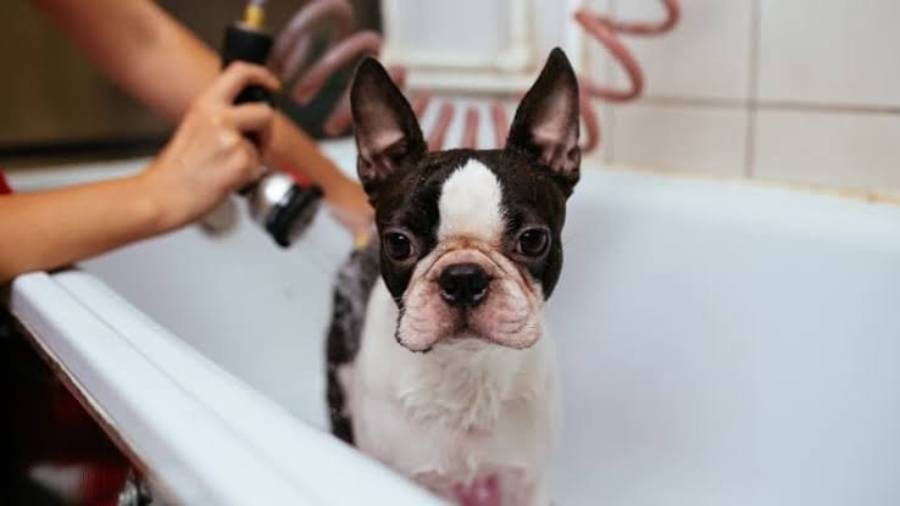
A Boston Terrier should generally be bathed every 4 to 8 weeks, although the right schedule depends on the dog’s skin condition, activity level, coat cleanliness, and exposure to dirt. Boston Terriers have short, smooth coats that do not require frequent washing under normal conditions. A dog that stays mostly indoors and has healthy skin may go longer between baths, while one that regularly gets dirty outdoors may need bathing sooner.
Bathing more frequently is not automatically better for a Boston Terrier. Shampoo removes dirt and odor, but unnecessary washing or unsuitable products can also interfere with the skin and coat, contributing to dryness or irritation. For this reason, owners should use the calendar as a general guide and also check for visible dirt, persistent odor, greasy coat texture, and changes in the skin.
A practical bathing routine therefore combines a reasonable baseline schedule with the individual dog’s needs. This guide explains how often Boston Terriers need baths, which factors change bathing frequency, how to recognize when a bath is necessary, the problems associated with overbathing, and how to bathe and keep a Boston Terrier clean between baths.
How Often Should You Bathe a Boston Terrier?
Most Boston Terriers should be bathed about once every 4 to 8 weeks when their skin and coat are healthy. This range works as a practical baseline rather than a strict schedule because Boston Terriers have short, smooth coats that are relatively easy to keep clean. A healthy dog that spends most of its time indoors may remain clean throughout this interval without needing additional full-body baths.
The condition of the dog matters more than the exact number of days since the previous bath. A Boston Terrier should be bathed sooner when its coat becomes visibly dirty, develops a noticeable odor, or becomes contaminated with mud or another substance that needs to be removed. In contrast, a clean dog with healthy skin does not need an extra bath simply because a predetermined date has arrived.
Bathing frequency also changes when a Boston Terrier has a diagnosed skin condition. Dogs receiving treatment for allergies, infections, or other dermatological problems may need medicated baths on a schedule established by a veterinarian. This therapeutic schedule serves a different purpose from routine grooming and may require bathing more frequently than a healthy Boston Terrier would normally need.
Owners should therefore treat the 4-to-8-week interval as a starting point and adjust it according to the individual dog. The goal is to keep the coat and skin clean without washing unnecessarily. Checking the coat, skin, odor, and recent activities before deciding on a bath provides a more useful routine than following the calendar alone.
What Factors Determine How Often a Boston Terrier Needs a Bath?
There are 5 main factors that determine how often a Boston Terrier needs a bath: skin condition, coat condition, activity level, environmental exposure, and odor. These factors explain why two Boston Terriers may need different bathing schedules even when both dogs are healthy.
Skin condition is one of the most important factors because bathing directly exposes the skin to water and shampoo. A Boston Terrier with healthy skin can follow a normal grooming schedule, while a dog with dry, irritated, sensitive, or allergy-prone skin may require a different approach. Increasing bath frequency without considering the cause of a skin problem can make grooming less effective and may contribute to further irritation. Dogs undergoing dermatological treatment should follow the bathing frequency and product instructions provided by their veterinarian.
Coat condition provides another practical indicator. A Boston Terrier has a short coat, so dirt, grease, and changes in coat texture are relatively easy for an owner to notice. A coat that remains clean and normal does not require washing simply to maintain a fixed schedule. Visible dirt, a greasy feel, or contamination that cannot be removed through basic spot cleaning provides a stronger reason for a bath.
Activity level and environmental exposure often work together. A Boston Terrier that spends most of its time inside a clean home is generally exposed to less mud and outdoor debris than a dog that regularly runs through parks, plays in wet soil, or spends substantial time outside. For example, an outdoor play session that leaves mud across the body can justify an earlier bath even when the dog’s previous bath was recent.
Odor is the fifth factor, but it should be interpreted rather than used automatically as a reason for repeated bathing. Normal dirt-related odor may disappear after a bath, while persistent or unusual odor can indicate a skin, ear, or other health problem that washing alone will not resolve. A Boston Terrier that continues to smell unusual shortly after being cleaned should be evaluated for the underlying cause instead of simply being bathed more frequently.
What Signs Show That a Boston Terrier Needs a Bath?
A Boston Terrier needs a bath when its coat has visible dirt, feels greasy, develops a noticeable dirt-related odor, or has been exposed to substances that should be removed from the skin and fur. These physical signs are more useful than relying exclusively on a fixed bathing date because they reflect the dog’s actual hygiene needs.
Visible dirt is the clearest sign. Mud, soil, dust, and other outdoor debris can accumulate on the coat after walks or play sessions. A small dirty area, such as muddy paws, may only require spot cleaning rather than a complete bath. A full bath becomes more appropriate when dirt covers multiple areas of the body or cannot be removed effectively with localized cleaning.
Coat texture and odor provide additional information. A healthy Boston Terrier’s short coat should not remain excessively greasy or develop a strong persistent smell shortly after routine cleaning. Bathing can remove odor caused by accumulated dirt and substances on the coat, but repeated bathing should not be used to conceal an odor that continually returns. Persistent or unusual odor can originate from a skin, ear, or other health problem and requires investigation of the underlying cause.
Skin changes should also be checked before automatically giving the dog a bath. Redness, persistent itching, excessive scratching, sores, or other abnormal changes are not simply signs that a Boston Terrier is dirty. These symptoms can indicate a skin problem that requires veterinary assessment. In this situation, repeatedly shampooing the dog without identifying the cause may expose already irritated skin to unnecessary washing.
The practical distinction is whether the problem is dirt that needs to be removed or a physical symptom that needs to be investigated. Dirt, mud, and a dirty coat support the decision to bathe. Persistent irritation, lesions, or unexplained odor support the decision to contact a veterinarian.
Can You Bathe a Boston Terrier Too Often?
Yes, a Boston Terrier can be bathed too often, particularly when frequent washing is unnecessary or unsuitable shampoo repeatedly irritates the skin. Bathing removes dirt from the coat, but it also exposes the skin to water, cleansing ingredients, rubbing, rinsing, and drying. Increasing bathing frequency without a hygiene or medical reason therefore does not automatically make the dog healthier or cleaner.
The main concern with unnecessary frequent bathing is disruption of normal skin and coat condition. Repeated washing with an unsuitable or harsh cleansing product can contribute to dryness and irritation. The effect depends on several variables, including the shampoo formulation, the dog’s existing skin condition, the frequency of washing, and whether shampoo residue is thoroughly rinsed from the coat.
Signs that a bathing routine may not suit a Boston Terrier include dry or flaky skin, redness, irritation, changes in coat condition, and increased scratching after baths. These signs should not automatically be attributed to overbathing because allergies, parasites, infections, and other dermatological problems can produce similar symptoms. Their timing is important: skin problems that repeatedly appear or become worse after bathing justify reviewing the bathing routine and products being used.
Reducing unnecessary baths does not mean allowing a Boston Terrier to remain dirty. Owners can use brushing, paw cleaning, and localized cleaning between full baths to remove minor dirt without repeatedly washing the entire body. This approach is especially useful for a dog that gets dirty in one small area but otherwise has a clean coat.
There is also an important exception to the rule against frequent bathing. A veterinarian may prescribe a medicated shampoo and a specific bathing schedule for a Boston Terrier with a diagnosed skin condition. These therapeutic baths should follow the prescribed schedule because their purpose is treatment rather than routine grooming. A medically directed bathing schedule should not be reduced simply because it is more frequent than the dog’s normal bath routine.
How Should You Bathe a Boston Terrier?
To bathe a Boston Terrier, prepare the bathing supplies, check the skin and coat, wet the coat with comfortably warm water, apply dog shampoo, rinse thoroughly, and dry the dog completely. A controlled bathing process removes dirt while limiting unnecessary irritation from shampoo residue, rough handling, or excessive heat.
Start by preparing everything before putting the Boston Terrier in the bath. The basic supplies include dog shampoo, towels, a non-slip surface, and a container or gentle spray source for rinsing. Preparing these items in advance reduces the amount of time the dog needs to remain wet and prevents the owner from leaving the dog unattended to retrieve supplies.
Check the skin and coat before applying water or shampoo. Look for redness, sores, unusual lumps, irritated areas, excessive flaking, or other changes that may be easier to notice while handling the short coat. A bath can proceed normally when the skin appears healthy and the dog simply needs cleaning. Persistent inflammation, open wounds, or significant irritation should be addressed before routinely applying grooming products to the affected area.
Wet the coat thoroughly with comfortably warm water rather than very hot water. Keep water and shampoo away from the eyes and avoid directing water forcefully into the ears. Once the coat is wet, distribute an appropriate dog shampoo over the body and massage it gently through the short coat. Scrubbing aggressively is unnecessary and can increase mechanical irritation, particularly when the skin is already sensitive.
Rinsing is as important as washing. Continue rinsing until shampoo has been removed from the coat and skin because residual cleansing product can contribute to irritation. Pay attention to areas where shampoo can remain trapped rather than assuming that a quick rinse has removed it completely.
Dry the Boston Terrier with a clean towel after rinsing. Blot and gently rub the coat rather than using unnecessarily rough friction. If a dryer is used, avoid excessive heat and keep the airflow at a safe distance from the skin. The dog should be comfortably dry before returning to a cold environment.
A bath is also an opportunity to examine the Boston Terrier rather than simply wash it. Changes such as recurring redness, persistent odor, unusual skin texture, or irritation that repeatedly appears between baths provide useful information about whether the dog’s routine needs to change or veterinary assessment is appropriate.
What Shampoo Should You Use for a Boston Terrier?
Use a shampoo formulated specifically for dogs when bathing a Boston Terrier, with the exact product type selected according to the dog’s skin condition. A healthy dog may only require a gentle routine dog shampoo, while a Boston Terrier with sensitive, dry, allergic, or medically treated skin may need a more specialized formulation.
A suitable routine shampoo should clean the coat without requiring aggressive scrubbing or repeated applications. Product choice becomes more important when the Boston Terrier has a history of skin sensitivity. In this situation, owners should avoid choosing products solely because they have a strong fragrance or produce more foam. The objective is effective cleaning while minimizing unnecessary exposure to ingredients that may irritate the individual dog’s skin.
Human shampoo should not be the default substitute for dog shampoo. Products intended for people are formulated for human skin rather than canine skin, so using a product designed specifically for dogs provides a more appropriate starting point for routine bathing. The same principle applies to other household cleansing products: a product’s ability to remove dirt does not make it suitable for a Boston Terrier’s skin.
Medicated shampoo belongs in a separate category from ordinary grooming shampoo. A veterinarian may recommend or prescribe a specific product for conditions involving infection, allergies, or other dermatological problems. These products can have instructions covering application amount, contact time, bathing frequency, and rinsing. Following those instructions is part of the treatment rather than an optional variation of a normal bath.
Owners should also evaluate what happens after using a shampoo. Redness, increased scratching, dryness, or irritation that consistently develops after bathing can indicate that the product or bathing routine does not suit the dog. Stop repeatedly using a suspected product and discuss persistent reactions with a veterinarian rather than attempting to solve the problem by switching among multiple shampoos without identifying the cause.
Read more: Boston Terrier Vomiting: Causes and What to Do
How Can You Keep a Boston Terrier Clean Between Baths?
You can keep a Boston Terrier clean between baths by brushing the coat, spot-cleaning dirty areas, wiping the paws after outdoor activities, and keeping the dog’s bedding and resting areas clean. These practices remove localized dirt without requiring a full bath every time the dog gets slightly dirty.
Brushing is useful even though Boston Terriers have short coats. It removes loose hair and surface debris while giving the owner an opportunity to examine the coat and skin. Regular handling can also make changes such as redness, flaky areas, bumps, or unusual coat texture easier to notice. Brushing should be gentle because vigorous grooming is unnecessary for a short, smooth coat.
Spot cleaning is more practical than a full bath when dirt affects only one part of the body. For example, a Boston Terrier that returns from a walk with dirty paws does not necessarily need its entire body shampooed. Cleaning the affected paws removes the dirt while avoiding an unnecessary full-body wash. The same approach can be used for small areas of superficial dirt when the rest of the coat remains clean.
The paws deserve particular attention after outdoor activities because they make direct contact with mud, wet ground, and other surface debris. Check the paws after walks and clean them when necessary. This habit prevents minor outdoor dirt from becoming a reason to increase the dog’s overall bathing frequency.
A clean environment also helps the coat stay clean for longer. Wash the Boston Terrier’s bedding regularly and keep frequently used resting areas free from accumulated dirt and debris. A freshly bathed dog that immediately returns to dirty bedding can quickly pick up odor and surface contaminants again, reducing the practical benefit of the bath.
Between-bath cleaning should complement rather than replace bathing when the entire coat is genuinely dirty. Use localized cleaning for localized dirt and a full bath when broader cleaning is required. This distinction helps maintain hygiene without turning every minor mess into an additional shampoo bath.
When Should You Ask a Veterinarian About a Boston Terrier’s Bathing Routine?
Ask a veterinarian about your Boston Terrier’s bathing routine when the dog has persistent itching, recurring redness, skin lesions, unusual odor, repeated skin problems, or a suspected reaction to grooming products. These signs can indicate that the problem extends beyond normal hygiene and should not be managed simply by increasing or decreasing bath frequency.
Persistent itching is one important reason to seek veterinary guidance. Occasional scratching does not automatically indicate a skin disorder, but repeated or intense scratching can accompany several underlying problems. Giving additional baths without identifying the cause may fail to address the condition and can complicate an already unsuitable grooming routine.
Recurring redness, sores, significant flaking, or other visible skin abnormalities also require closer attention. These changes should not automatically be treated as evidence that the dog is dirty. A veterinarian can evaluate whether the symptoms are associated with allergies, infection, parasites, irritation, or another dermatological problem and determine whether bathing should form part of the management plan.
Persistent or unusual odor deserves similar attention when it returns soon after the dog has been cleaned. A normal bath can remove dirt-related odor from the coat, but repeated odor despite appropriate hygiene suggests that simply bathing more frequently may not solve the underlying problem.
Veterinary guidance is particularly important when medicated shampoo is required. Therapeutic bathing may follow a much more frequent schedule than routine grooming because the shampoo is being used as part of treatment. Follow the prescribed product, application method, contact time, and bathing schedule rather than applying the normal 4-to-8-week routine to a dog undergoing dermatological treatment.
For a Boston Terrier with healthy skin and a clean coat, bathing can remain a straightforward part of routine grooming. When persistent skin symptoms appear, however, the priority shifts from deciding how often to wash the dog to identifying and managing the cause of those symptoms.
1 thought on “How Often Should You Bathe a Boston Terrier?”