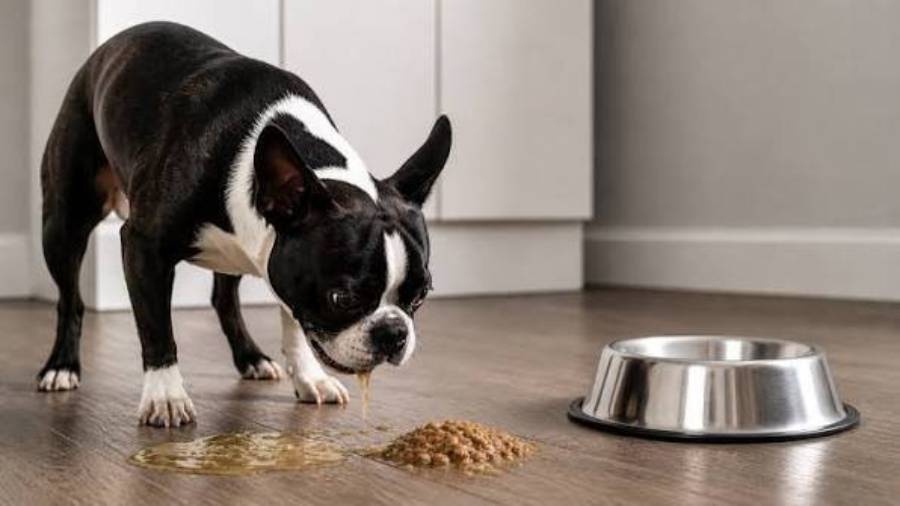
Boston Terrier vomiting can result from eating too fast, sudden diet changes, dietary indiscretion, food intolerance, gastrointestinal infections, parasites, foreign objects, toxin exposure, or an underlying health condition. A single episode is not always an emergency, especially when a Boston Terrier remains alert, eats normally, drinks water, and shows no other signs of illness. Repeated vomiting or vomiting accompanied by blood, weakness, abdominal pain, diarrhea, or an inability to keep water down requires closer attention.
Vomiting is a symptom rather than a disease itself. Its significance depends on how often it occurs, how long it lasts, what the vomit contains, and whether other symptoms appear at the same time. For example, a Boston Terrier that vomits once after eating something unusual presents a different situation from a dog that repeatedly vomits water and becomes lethargic.
It is also important to distinguish vomiting from regurgitation. Vomiting is an active process that typically involves nausea, retching, and abdominal contractions, while regurgitation is a more passive return of material from the esophagus. This distinction can help narrow down the possible cause. The sections below explain why Boston Terriers vomit, what different types of vomit may indicate, what owners should do after an episode, and which warning signs require veterinary care.
Why Is My Boston Terrier Vomiting?
Boston Terriers can vomit because of eating too fast, sudden diet changes, dietary indiscretion, food intolerance, intestinal parasites, gastrointestinal infections, foreign objects, toxin exposure, or underlying health conditions. The cause may be relatively minor when vomiting happens once and the dog otherwise behaves normally. Repeated vomiting is more concerning because it increases fluid loss and may indicate a problem that requires veterinary evaluation.
Eating too fast and dietary changes are two food-related triggers to consider first. A Boston Terrier that consumes a meal rapidly may swallow food and air within a short period, which can contribute to digestive discomfort or food coming back up after eating. A sudden switch from one food to another can also disturb the gastrointestinal tract because the digestive system has not had time to adjust to the new ingredients. New treats, table scraps, rich foods, and foods the dog does not tolerate can produce a similar pattern, particularly when vomiting occurs together with loose stool or diarrhea.
Dietary indiscretion occurs when a Boston Terrier eats something outside its normal diet, such as garbage, spoiled food, plant material, or non-food objects. The consequences depend on what and how much the dog swallowed. Mild gastrointestinal irritation may cause a limited episode of vomiting, while ingestion of a toy fragment, fabric, bone, or another indigestible object can create a gastrointestinal obstruction. Repeated vomiting, abdominal discomfort, reduced appetite, difficulty keeping water down, or abnormal stool production after possible foreign-object ingestion requires veterinary attention.
Parasites and gastrointestinal infections are another group of possible causes. These conditions can irritate the stomach or intestines and may produce vomiting together with diarrhea, appetite changes, lethargy, or dehydration. The combination of symptoms matters because vomiting alone does not identify a specific infection or parasite. Puppies require particular attention when vomiting and diarrhea occur together because ongoing fluid loss can become significant.
Toxin exposure can cause sudden vomiting and should be treated differently from an uncomplicated stomach upset. Potential hazards include human medications, household chemicals, toxic plants, and foods that are unsafe for dogs. Contact a veterinarian or appropriate animal poison service promptly when toxin ingestion is known or suspected rather than waiting to see whether vomiting resolves on its own. Owners should not induce vomiting unless specifically instructed to do so because the appropriate response depends on the substance swallowed.
Vomiting can also accompany health conditions that are not caused directly by food. Problems involving the gastrointestinal tract or other organ systems may produce vomiting as one of several clinical signs. This is why the pattern is more informative than a single episode: frequency, duration, appetite, water intake, stool changes, energy level, abdominal discomfort, and the appearance of the vomit help determine how urgently a Boston Terrier needs veterinary assessment.
Is My Boston Terrier Vomiting or Regurgitating?
Vomiting is an active process that brings stomach contents back up, while regurgitation is a more passive return of food or fluid from the esophagus. The distinction matters because the two events involve different parts of the digestive tract and can point toward different underlying problems.
A Boston Terrier that is vomiting may show signs of nausea before anything comes up. These signs can include drooling, repeated swallowing, restlessness, retching, and visible abdominal contractions. The expelled material may contain partially digested food, fluid, foam, or bile because it has reached the stomach before being brought back up. Vomiting can occur soon after eating, but it can also happen hours later or when the stomach contains little food.
Regurgitation usually requires less physical effort. Food or fluid may come back up suddenly without the repeated retching and abdominal contractions associated with vomiting. The material is often undigested because it may not have reached the stomach. For example, recognizable pieces of recently eaten kibble can appear after regurgitation. However, undigested food alone does not prove that a Boston Terrier is regurgitating rather than vomiting; the events immediately before the material comes up are also important.
Owners can help a veterinarian distinguish the two by recording when the episode occurs in relation to eating, whether the dog retches beforehand, whether abdominal contractions are visible, and what the expelled material looks like. A short video of an episode can also provide useful context when vomiting or regurgitation keeps occurring.
What Does My Boston Terrier’s Vomit Mean?
The appearance of a Boston Terrier’s vomit can provide clues about what was in the stomach, but color or consistency alone cannot identify the cause. Timing, frequency, recent food intake, behavior, and accompanying symptoms must be considered together. Yellow bile, white foam, clear liquid, undigested food, and blood therefore have different possible contexts rather than one diagnosis each.
Undigested food can appear when food comes back up before it has been fully broken down. Owners should first consider how soon the episode occurred after a meal and whether it involved active retching. Repeated episodes involving undigested food deserve more attention than a single isolated event because recurring vomiting or regurgitation can indicate an ongoing digestive or esophageal problem.
Yellow vomit commonly contains bile, a digestive fluid that can become visible when little food is present in the material being expelled. A Boston Terrier may therefore bring up yellow fluid when its stomach is relatively empty. Repeated yellow vomiting should not automatically be attributed to an empty stomach, particularly when the dog also has diarrhea, appetite loss, lethargy, abdominal discomfort, or other abnormal signs.
White foam can consist of saliva, fluid, and gastrointestinal contents mixed with air. Clear vomit may contain water or other stomach fluid, especially when a dog has recently been drinking. The important question is whether the Boston Terrier can subsequently keep water down. Repeatedly vomiting after drinking can contribute to dehydration and is more concerning than a single episode followed by normal drinking and behavior.
Blood requires greater attention. Fresh blood may appear red, while partially digested blood can look darker. A Boston Terrier that vomits blood should receive veterinary assessment, particularly when the amount is substantial, vomiting recurs, or additional signs such as weakness, abdominal pain, dark stool, or reduced responsiveness are present. The appearance of blood describes an important clinical sign, but it does not identify where the problem originated or what caused it.
What Other Symptoms Should I Check When My Boston Terrier Is Vomiting?
Check for diarrhea, appetite loss, lethargy, abdominal discomfort, dehydration, repeated retching, abnormal stools, weakness, and changes in behavior when your Boston Terrier is vomiting. These accompanying signs provide more useful information than vomiting alone because they show whether the problem is limited to an isolated stomach upset or is affecting the dog more broadly.
Diarrhea is particularly important because vomiting and diarrhea together increase fluid loss. A Boston Terrier experiencing both symptoms can become dehydrated if the episodes continue, especially when the dog also refuses water or vomits shortly after drinking. Signs that may accompany dehydration include dry or tacky gums, reduced energy, and reduced urination. Persistent vomiting and diarrhea require closer veterinary attention than a single vomiting episode in a dog that continues eating, drinking, and behaving normally.
Appetite and energy level also help establish the severity of the problem. A Boston Terrier that vomits once but remains alert and interested in normal activities presents a different clinical picture from one that repeatedly vomits, refuses food, and becomes unusually lethargic. Weakness, collapse, or markedly reduced responsiveness should not be treated as routine digestive upset.
Watch the abdomen and the dog’s behavior as well. Abdominal discomfort may appear as restlessness, reluctance to move, unusual posture, sensitivity when the abdomen is touched, or difficulty becoming comfortable. Repeated attempts to vomit without producing material, particularly when accompanied by abdominal enlargement or obvious distress, require urgent veterinary evaluation.
Stool changes can provide additional context. Diarrhea, blood in the stool, unusually dark stool, or a major change in stool production should be noted alongside the vomiting. Owners should record the number of vomiting episodes, when they occurred, whether the Boston Terrier ate or drank beforehand, and any other symptoms. This information helps a veterinarian assess the pattern rather than relying on the appearance of one episode.
Are Boston Terriers More Likely to Have Vomiting or Regurgitation Problems?
Boston Terriers are brachycephalic dogs, so their short-muzzled anatomy is relevant when recurrent regurgitation or other upper digestive signs are being evaluated. However, being a Boston Terrier does not mean that every vomiting episode is caused by brachycephalic anatomy, and vomiting should not automatically be considered normal for the breed.
Brachycephalic dogs have shortened facial structures that affect the anatomy of the upper airway. Problems involving breathing, swallowing, and the upper gastrointestinal tract can occur together in some affected dogs. This makes the distinction between true vomiting and regurgitation especially useful when a Boston Terrier repeatedly brings up food or fluid. Observing whether the event involves nausea and abdominal contractions or occurs passively can provide important information for veterinary assessment.
Breed anatomy also should not distract from other common causes of vomiting. A Boston Terrier can still vomit after eating inappropriate food, undergoing an abrupt diet change, developing gastrointestinal disease, swallowing a foreign object, or being exposed to a toxin. The breed provides clinical context, but the frequency of vomiting, accompanying symptoms, recent exposures, and the dog’s overall condition are more useful for determining what should happen next.
Recurring vomiting or regurgitation should therefore be evaluated rather than accepted as a normal Boston Terrier trait. Keeping notes about meal timing, eating speed, breathing signs, activity, and the appearance of expelled material can help identify patterns. A video of a recurring episode may also help a veterinarian determine whether the dog is vomiting, regurgitating, coughing, or showing another behavior that looks similar to an owner.
What Should I Do After My Boston Terrier Vomits?
After your Boston Terrier vomits, assess the episode, check for other symptoms, monitor food and water intake, and determine whether veterinary care is needed. Start by noting how many times your dog has vomited, when the vomiting occurred, and what the material contained. A single episode in a dog that remains alert and otherwise behaves normally requires a different response from repeated vomiting accompanied by weakness, diarrhea, abdominal pain, or other abnormal signs.
Check what your Boston Terrier may have eaten before the episode. Look for access to garbage, table scraps, unfamiliar treats, human medications, household chemicals, plants, damaged toys, bones, fabric, or other objects that could have been swallowed. This step is particularly important when vomiting begins suddenly. Contact a veterinarian promptly when you know or suspect that your Boston Terrier swallowed a toxin or foreign object rather than waiting for additional symptoms to develop.
Record the vomiting pattern if another episode occurs. Note the time, frequency, relationship to meals, presence of retching or abdominal contractions, and whether the vomit contains food, bile, foam, liquid, or blood. Photos of the vomit or a video of the episode can give a veterinarian additional information, especially when it is unclear whether the Boston Terrier is vomiting or regurgitating.
Monitor your dog’s overall condition during the same period. Appetite, energy level, stool production, urination, abdominal comfort, and ability to keep water down provide context for assessing severity. A Boston Terrier that returns to normal behavior after an isolated episode is different from a dog whose condition progressively worsens over several hours.
Should I Give My Boston Terrier Food or Water After Vomiting?
Water and food should be managed according to the severity and persistence of the vomiting rather than using the same feeding rule for every Boston Terrier. Maintaining hydration is important, but a dog that repeatedly vomits immediately after drinking cannot effectively replace lost fluids and may require veterinary treatment.
Observe whether your Boston Terrier can drink and keep the water down. Repeated vomiting after water intake is a warning sign because continued fluid loss increases the risk of dehydration. Puppies, dogs with existing medical conditions, and dogs experiencing simultaneous vomiting and diarrhea can become more vulnerable to fluid loss and should receive veterinary guidance sooner.
Feeding decisions also depend on the circumstances. An isolated vomiting episode in an otherwise normal adult dog is not equivalent to repeated vomiting, suspected poisoning, a possible intestinal obstruction, or vomiting in a sick puppy. Avoid forcing food into a Boston Terrier that continues to vomit. A veterinarian can provide feeding instructions appropriate to the dog’s age, health status, suspected cause, and severity of symptoms.
Do not give human medications or attempt to induce vomiting without veterinary instructions. Treatments that are appropriate for one cause of vomiting may be ineffective or harmful for another. For example, suspected toxin ingestion or a gastrointestinal foreign body requires a different response from a minor dietary upset. The safest immediate approach is therefore to assess the dog, document the episode, prevent further access to possible hazards, and escalate to veterinary care when warning signs are present.
When Should I Take My Boston Terrier to the Vet for Vomiting?
Take your Boston Terrier to a veterinarian when vomiting is repeated or persistent, the dog cannot keep water down, blood appears in the vomit, or vomiting occurs with significant weakness, abdominal pain, collapse, or other serious symptoms. Suspected toxin exposure or foreign-object ingestion also warrants prompt veterinary contact because waiting for the condition to worsen can delay necessary treatment.
Repeated vomiting is more concerning than a single isolated episode because it increases fluid loss and suggests that the underlying trigger has not resolved. The inability to keep water down makes the situation more urgent because the Boston Terrier cannot adequately replace the fluid being lost. Vomiting accompanied by persistent diarrhea further increases dehydration concerns, particularly in puppies and dogs that are already unwell.
Blood is another reason to seek veterinary assessment. Fresh blood may appear red, while partially digested blood can look darker. The amount, frequency, and accompanying symptoms all matter, but owners should not attempt to determine the source of gastrointestinal bleeding at home. Weakness, collapse, pale gums, marked lethargy, or reduced responsiveness alongside vomiting require more immediate attention.
Abdominal signs can also indicate a potentially serious problem. Seek urgent veterinary care when a Boston Terrier repeatedly tries to vomit without producing anything, develops a visibly enlarged abdomen, or shows substantial abdominal pain or distress. Similarly, vomiting after known or suspected ingestion of a toy, fabric, bone, medication, chemical, toxic food, or another hazardous substance should not be managed by simply waiting for another episode.
When Is Vomiting More Concerning in a Boston Terrier Puppy?
Vomiting is more concerning in a Boston Terrier puppy when it repeats, occurs with diarrhea, prevents normal food or water intake, or is accompanied by lethargy, weakness, or other signs of illness. A puppy’s smaller body size means continued gastrointestinal fluid loss deserves close attention, particularly when both vomiting and diarrhea are occurring.
A puppy that vomits once but remains active, drinks normally, eats normally, and develops no additional symptoms presents a different situation from one that vomits repeatedly and becomes quiet or unwilling to eat. Age, vaccination history, recent diet changes, possible foreign-object exposure, and contact with other animals can all provide useful context for a veterinarian.
Do not rely solely on the appearance of the vomit to determine whether a puppy is seriously ill. Yellow bile or undigested food, for example, describes what came up but does not establish the underlying cause. Prompt veterinary guidance is appropriate when a Boston Terrier puppy’s vomiting continues or its overall condition deteriorates.
Read more: Boston Terrier Diarrhea: Causes, Treatment & Vet Signs
How Will a Veterinarian Find the Cause of My Boston Terrier’s Vomiting?
A veterinarian identifies the cause of vomiting by combining the Boston Terrier’s medical history, recent exposures, physical examination, symptoms, and diagnostic tests when necessary. Not every vomiting dog requires every available test. The diagnostic approach depends on the frequency and duration of vomiting, physical findings, age, medical history, and suspected causes.
The process commonly starts with history. Useful information includes when vomiting began, how frequently it occurs, what the vomit looks like, whether it happens before or after meals, and whether diarrhea, appetite loss, lethargy, pain, or changes in stool are also present. Recent diet changes and access to garbage, medications, chemicals, plants, toys, bones, or other foreign material can substantially change the diagnostic direction.
A physical examination allows the veterinarian to assess the Boston Terrier’s general condition and look for findings such as dehydration, abdominal discomfort, or other abnormalities. When parasites or gastrointestinal disease are suspected, fecal testing may provide additional information. Blood tests can be used when the veterinarian needs to evaluate systemic illness or determine whether vomiting is associated with problems beyond a simple digestive upset.
Diagnostic imaging may be appropriate when a foreign body, obstruction, or another structural problem is suspected. X-rays and ultrasound provide different types of information about the abdomen and gastrointestinal tract. Additional tests can then be selected according to what the history, examination, and initial diagnostic results indicate.
The objective is not simply to stop the act of vomiting but to identify and address its cause. A Boston Terrier with a dietary upset, for example, requires a different management approach from one with toxin exposure, an intestinal foreign body, or another underlying disorder. Providing the veterinarian with accurate observations, photos, videos, and information about possible exposures can therefore make the diagnostic process more informative.
How Can I Reduce the Risk of My Boston Terrier Vomiting Again?
You can reduce the risk of your Boston Terrier vomiting again by controlling eating speed, making diet changes gradually, preventing access to unsafe foods and objects, and monitoring recurring digestive symptoms. Prevention depends on the cause, so repeated vomiting should not be managed only by changing feeding habits when the underlying problem has not been identified.
Slow down meals if your Boston Terrier regularly eats too quickly. Rapid eating can cause a dog to swallow food and air within a short period and may contribute to food coming back up after meals. Smaller portions, appropriately designed slow-feeding methods, and a calmer feeding environment can help extend meal time. If undigested food repeatedly comes back up despite changes in eating speed, veterinary evaluation can help determine whether the episodes are vomiting or regurgitation and whether another problem is involved.
Make dietary changes gradually rather than abruptly replacing one food with another. A sudden change in ingredients can disrupt the gastrointestinal tract in some dogs and lead to vomiting or diarrhea. Treats, table scraps, and other foods outside the Boston Terrier’s regular diet should also be considered when investigating recurring episodes. Keeping a record of foods and symptoms can help identify whether vomiting consistently follows a particular dietary change.
Prevent access to items that can cause gastrointestinal irritation, poisoning, or obstruction. Secure household garbage, human medications, cleaning products, toxic foods, and hazardous plants where the dog cannot reach them. Toys should also be appropriate for the Boston Terrier’s size and condition because damaged pieces can become ingestion hazards. During walks, monitor what the dog picks up and prevent scavenging whenever possible.
Pay attention to patterns rather than treating every episode as an unrelated event. Record when vomiting occurs, how frequently it happens, what the Boston Terrier ate beforehand, and whether diarrhea, appetite changes, lethargy, abdominal discomfort, or regurgitation occur at the same time. Recurring vomiting is a reason to investigate the underlying cause rather than repeatedly relying on home management.
Routine preventive care also supports gastrointestinal health by giving a veterinarian opportunities to review diet, parasite prevention, body condition, and changes in the dog’s health. Prevention cannot eliminate every cause of vomiting, but controlling food transitions, eating behavior, environmental hazards, and recurring symptoms can reduce avoidable episodes and make genuine health problems easier to recognize.
1 thought on “Boston Terrier Vomiting: Causes and What to Do”