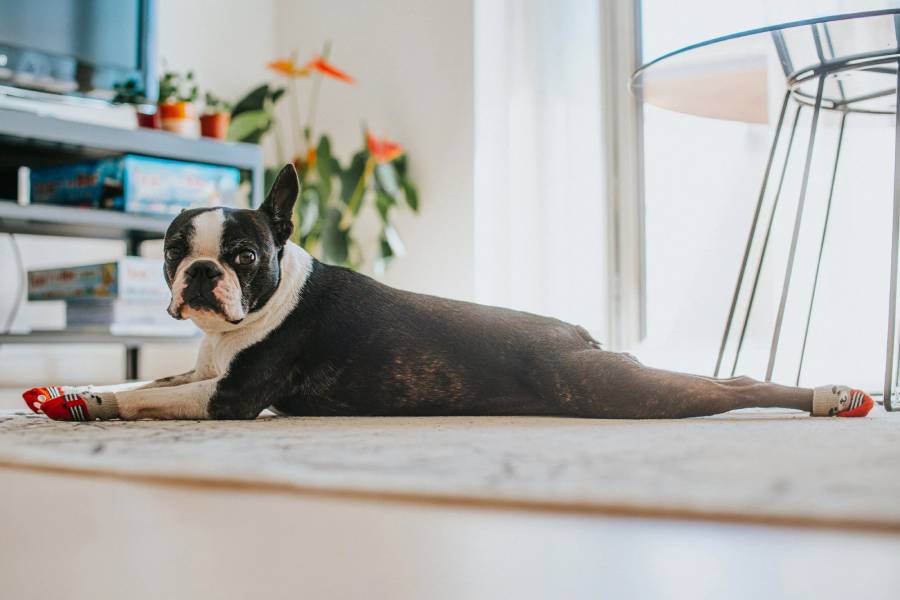
Boston Terrier diarrhea can result from a sudden diet change, eating unfamiliar food, food intolerance, intestinal parasites, infections, stress, medications, or an underlying digestive disorder. A single loose stool is not always an emergency, especially when your Boston Terrier remains active, eats normally, and drinks water. Persistent or worsening diarrhea requires closer attention because repeated fluid loss can lead to dehydration and may indicate a gastrointestinal problem that needs veterinary care.
The appearance of the stool and your dog’s other symptoms help determine how serious the problem may be. Watery diarrhea, blood or black stool, repeated vomiting, marked lethargy, weakness, loss of appetite, and signs of dehydration are more concerning than an isolated episode of soft stool. Puppies and Boston Terriers with existing health problems also require closer monitoring because they may be more vulnerable to fluid loss and complications.
This guide explains the main causes of diarrhea in Boston Terriers, what different stool changes may indicate, how to respond when diarrhea starts, and when to contact a veterinarian. It also covers hydration, feeding during recovery, veterinary diagnosis and treatment, recurring diarrhea, and practical steps that can reduce future digestive problems.
Is Diarrhea Common in Boston Terriers?
Diarrhea can occur in Boston Terriers, but repeated loose stools should not be treated as normal for the breed. An isolated soft stool may develop after a minor dietary change or gastrointestinal upset, while frequent, persistent, or recurring diarrhea can indicate a problem that requires closer evaluation.
Diarrhea occurs when the gastrointestinal tract does not absorb enough water or moves intestinal contents through the digestive system too quickly. The result can range from slightly loose stool to frequent, watery bowel movements. The duration and frequency help distinguish a short digestive disturbance from a potentially more significant problem. Acute diarrhea begins suddenly and lasts for a short period, while persistent or recurrent diarrhea continues or repeatedly returns after appearing to resolve.
A Boston Terrier’s overall condition provides important context. A dog that has one loose stool but continues eating, drinking, playing, and behaving normally presents a different situation from a dog experiencing repeated watery diarrhea with vomiting, weakness, or appetite loss. Stool appearance, frequency, duration, and accompanying symptoms should therefore be assessed together rather than using stool consistency alone to determine severity.
Recurring diarrhea deserves particular attention because it suggests that the trigger may still be present. Repeated exposure to an unsuitable food, food intolerance, intestinal parasites, medication effects, or an underlying gastrointestinal disorder can cause diarrhea to return. Identifying the pattern and trigger is more useful than repeatedly managing each episode as an isolated event.
What Causes Diarrhea in Boston Terriers?
There are 8 main groups of causes of diarrhea in Boston Terriers: sudden diet changes, dietary indiscretion, food intolerance or allergy, intestinal parasites, gastrointestinal infections, stress, medications, and ingestion of toxins or foreign objects. The severity varies considerably between causes, so the circumstances surrounding the first episode can help narrow down the likely trigger.
A sudden diet change can cause diarrhea because the digestive system and intestinal microbiota need time to adapt to a different food composition. Switching immediately from one dog food to another changes the types and proportions of protein, fat, carbohydrates, and fiber entering the gastrointestinal tract. A gradual food transition reduces this abrupt change. If diarrhea begins shortly after a new food is introduced, the timing of the transition is therefore an important detail to record.
Dietary indiscretion occurs when a Boston Terrier eats something outside its normal diet. Examples include table scraps, fatty foods, garbage, spoiled food, or unfamiliar treats. These foods can irritate the gastrointestinal tract or contain quantities of fat and other nutrients that the dog is not accustomed to digesting. Owners should consider what the dog ate during the hours or days before diarrhea began, including items obtained without supervision.
Food intolerance or food allergy can also be associated with gastrointestinal symptoms. Food intolerance involves an adverse response to a dietary ingredient without requiring an immune reaction, while a food allergy involves an immune response to a food component. Diarrhea associated with diet becomes more relevant when digestive problems repeatedly occur after exposure to particular foods. A veterinarian may recommend a structured dietary assessment when recurrent symptoms suggest a food-related trigger.
Intestinal parasites can disrupt normal digestion and cause loose or watery stools. Examples include Giardia and intestinal worms. Some parasitic infections can also produce mucus, changes in stool frequency, poor body condition, or other gastrointestinal signs. Because different parasites require different management, the presence of diarrhea alone cannot determine which parasite is responsible. Fecal testing may be needed to identify or rule out parasitic causes.
Gastrointestinal infections can cause diarrhea when infectious organisms disrupt or inflame the digestive tract. Diarrhea associated with infection may occur alongside vomiting, reduced appetite, lethargy, fever, or changes in stool appearance. The combination and severity of symptoms matter because infectious gastrointestinal disease ranges from mild illness to conditions requiring prompt veterinary treatment.
Stress can alter intestinal motility and contribute to diarrhea in some dogs. Changes such as boarding, travel, moving home, changes in routine, or other stressful events can coincide with gastrointestinal upset. Stress-related diarrhea should still be monitored rather than automatically attributed to anxiety, particularly when the stool contains blood or the dog develops vomiting, weakness, appetite loss, or other abnormal signs.
Medications can cause diarrhea as an adverse effect by changing gastrointestinal function or disrupting the intestinal environment. The relationship is more likely when loose stools begin after a new medication is introduced or a treatment regimen changes. Owners should contact the prescribing veterinarian about suspected medication-related diarrhea rather than stopping a prescribed medication without veterinary guidance.
Toxins and swallowed foreign objects represent more urgent potential causes. A Boston Terrier that consumes a toxic substance or swallows an object may develop diarrhea together with vomiting, abdominal discomfort, appetite loss, weakness, or behavioral changes. Foreign material can also cause gastrointestinal obstruction rather than simple digestive upset. Suspected toxin or foreign-object ingestion therefore requires prompt veterinary guidance instead of routine home monitoring.
What Can Your Boston Terrier’s Diarrhea Look Like?
Boston Terrier diarrhea can appear as soft stool, loose stool, watery diarrhea, stool containing mucus, stool containing fresh blood, or unusually dark to black stool. Stool appearance does not identify the exact cause by itself, but consistency, color, frequency, and abnormal material can help determine whether a digestive problem requires closer monitoring or veterinary evaluation.
Soft or loose stool retains some shape but has more moisture than normal feces. A single episode can occur after a dietary change, unfamiliar treat, stress, or minor gastrointestinal disturbance. Repeated loose stools are more significant because continuing intestinal dysfunction increases fluid loss and suggests that the underlying trigger has not resolved.
Watery diarrhea contains substantially more fluid and little or no formed fecal material. The digestive tract is not retaining or absorbing enough water before intestinal contents are eliminated. Frequent watery bowel movements increase fluid loss, making hydration an important concern. A Boston Terrier with repeated watery diarrhea should be monitored for changes in drinking, activity, appetite, urination, and overall behavior.
Mucus can appear as a clear or jelly-like coating on the stool. The large intestine normally produces mucus, but visible amounts can accompany irritation or inflammation of the lower gastrointestinal tract. Mucus should be interpreted together with other findings because it can occur with several gastrointestinal problems rather than indicating one specific disease.
Fresh blood and black stool require greater attention. Fresh red blood may appear as streaks, drops, or blood mixed with diarrhea and generally indicates bleeding closer to the lower digestive tract. Very dark, black, or tar-like stool can be associated with digested blood originating higher in the gastrointestinal tract. Visible blood, particularly when substantial or accompanied by repeated diarrhea, vomiting, weakness, pain, or lethargy, warrants veterinary attention.
Tracking stool changes can provide useful information if veterinary care becomes necessary. Record when diarrhea started, how frequently your Boston Terrier defecates, whether the stool is soft or watery, and whether blood or mucus is present. Recent food changes, unusual foods, medications, possible toxin exposure, and other symptoms provide additional context that can help a veterinarian investigate the cause.
Which Symptoms Can Occur With Diarrhea in Boston Terriers?
The main symptoms that can accompany diarrhea in Boston Terriers include vomiting, loss of appetite, lethargy, abdominal discomfort, weakness, and dehydration. The combination of diarrhea with these symptoms is generally more informative than diarrhea alone because it shows whether the gastrointestinal problem is affecting the dog’s overall condition.
Vomiting increases concern because a Boston Terrier experiencing both vomiting and diarrhea loses fluid through two routes. Repeated vomiting can also make it difficult for the dog to maintain hydration by drinking. A dog that cannot keep water down requires more urgent veterinary assessment than a dog with an isolated loose stool but otherwise normal behavior.
Loss of appetite can occur during gastrointestinal upset, but its duration and severity matter. Skipping or showing less interest in one meal provides different clinical context from refusing food while experiencing repeated diarrhea, vomiting, weakness, or behavioral changes. Persistent appetite loss can also make recovery more difficult because the dog is not maintaining normal nutrient intake.
Lethargy and weakness indicate that the problem is affecting more than stool consistency. A Boston Terrier that normally interacts, plays, and responds to its environment but becomes unusually inactive or weak during an episode of diarrhea requires closer attention. Marked weakness combined with ongoing fluid loss can accompany dehydration or a more significant underlying illness.
Abdominal discomfort may appear as restlessness, reluctance to move, sensitivity when the abdomen is approached, an unusual posture, or difficulty settling comfortably. These behaviors do not identify the cause on their own. However, pronounced abdominal discomfort combined with vomiting, appetite loss, or suspected foreign-object ingestion raises concern for a gastrointestinal problem that should be evaluated by a veterinarian.
Dehydration is one of the most important complications of repeated diarrhea because each watery bowel movement removes fluid from the body. The risk increases when diarrhea is frequent, vomiting occurs simultaneously, or the dog is not drinking enough to replace lost fluid. Puppies and dogs with existing health problems can be less tolerant of continued fluid loss.
The pattern of symptoms should therefore guide the response. One loose stool in a Boston Terrier that continues to eat, drink, and behave normally can be monitored differently from repeated watery diarrhea accompanied by vomiting, blood in the stool, pronounced lethargy, weakness, or declining hydration. The second pattern requires veterinary attention because multiple abnormal signs indicate a greater risk than stool changes alone.
What Should You Do When Your Boston Terrier Has Diarrhea?
Assess your Boston Terrier’s overall condition, monitor the stool, maintain access to water, review recent food or environmental changes, and watch for warning signs when diarrhea begins. The appropriate response depends on the frequency and severity of the diarrhea and whether vomiting, blood in the stool, weakness, appetite loss, dehydration, or other abnormal symptoms occur at the same time.
Start by observing your Boston Terrier’s behavior. A dog that remains alert, active, interested in food, and able to drink presents a different situation from one that becomes lethargic, weak, painful, or unwilling to eat or drink. Behavior provides important context because diarrhea is a symptom rather than a diagnosis, and the same change in stool consistency can occur with both minor digestive disturbances and more serious gastrointestinal problems.
Check each bowel movement for changes in consistency, color, frequency, and contents. Note whether the stool is merely soft or completely watery and whether it contains mucus, fresh blood, or has become unusually dark or black. Recording how often your Boston Terrier has diarrhea also helps establish whether the problem is improving, remaining unchanged, or becoming more frequent.
Review what happened before the diarrhea started. Identify any new dog food, treats, table scraps, garbage access, medications, stressful events, or opportunities to swallow unfamiliar objects. For example, diarrhea beginning soon after an abrupt food change creates a different context from diarrhea that starts after a dog gets into household garbage. Suspected access to a toxin or foreign object should prompt veterinary guidance rather than routine home observation.
Keep fresh water available because repeated loose or watery stools increase fluid loss. Monitor whether your Boston Terrier is actually drinking rather than assuming that access to a water bowl means hydration is adequate. Repeated vomiting, inability to keep water down, or refusal to drink increases the risk of dehydration and changes how urgently the dog should be assessed.
Avoid giving human antidiarrheal medications or other medicines without veterinary guidance. A medication that is used for human diarrhea may be inappropriate for a dog, may interfere with treatment, or may mask symptoms without addressing the underlying cause. Treatment should be selected according to the cause and the individual dog’s condition.
Contact a veterinarian when diarrhea becomes persistent or worsens, or when significant accompanying symptoms develop. Blood or black stool, repeated vomiting, marked lethargy, weakness, dehydration, substantial abdominal discomfort, suspected toxin exposure, or possible foreign-object ingestion require more attention than an isolated episode of loose stool.
How Can You Keep a Boston Terrier Hydrated During Diarrhea?
Keep fresh water readily available and monitor your Boston Terrier’s actual fluid intake during diarrhea. Hydration becomes increasingly important as bowel movements become more frequent or watery because the gastrointestinal tract is losing fluid faster than it does during normal digestion.
Diarrhea increases water loss because intestinal contents pass through the digestive tract with more fluid remaining in the stool. A single loose bowel movement may cause limited fluid loss, while repeated watery diarrhea can remove substantially more water over time. Vomiting increases the problem because fluid is then being lost through both the stomach and intestines.
Observe drinking behavior throughout the episode. A Boston Terrier that drinks normally and retains the water has a better opportunity to replace gastrointestinal fluid losses than a dog that refuses water or vomits after drinking. Do not force large quantities of water into a dog that is vomiting or unable to drink normally. Inability to maintain fluid intake is a reason to contact a veterinarian because oral drinking may no longer be sufficient to replace ongoing losses.
Monitor your dog for changes that may accompany dehydration. Reduced energy, weakness, abnormal behavior, reduced interest in drinking, and other changes in overall condition become particularly important when diarrhea is frequent. No single observation should be used to determine hydration status with certainty at home; the pattern of fluid loss, drinking behavior, vomiting, and overall condition provides more useful context.
Puppies and Boston Terriers with existing medical problems deserve closer monitoring during repeated diarrhea because continued fluid loss can become more consequential in vulnerable dogs. The threshold for contacting a veterinarian should therefore be lower when diarrhea is frequent, the dog is very young, or additional health concerns are present.
Veterinary treatment may be necessary when a Boston Terrier cannot replace lost fluids by drinking. The veterinarian can assess hydration status and determine whether additional fluid support or treatment of the underlying cause is required. Maintaining hydration is supportive care; it does not replace diagnosis when diarrhea persists, worsens, or occurs with other concerning symptoms.
What Should a Boston Terrier Eat After Diarrhea?
A Boston Terrier recovering from diarrhea should return to an appropriate, nutritionally complete diet in a way that does not create another abrupt dietary change. Feeding decisions should account for the severity of the diarrhea, whether vomiting is present, the dog’s age and health status, and any instructions provided by a veterinarian.
Digestive recovery can be disrupted when several foods are introduced at once. Giving multiple new treats, table foods, supplements, or changing between different dog foods makes it harder to determine which ingredient the Boston Terrier tolerates. It also creates additional dietary changes while the gastrointestinal tract is recovering. Keeping the diet consistent makes both recovery and identification of potential food-related triggers easier.
A temporary gastrointestinal diet may be appropriate for some dogs, particularly when recommended by a veterinarian. The purpose is to provide nutrition that can be tolerated while the digestive tract recovers rather than to treat every possible cause of diarrhea. Dietary management alone will not resolve problems such as intestinal parasites, toxin ingestion, a foreign object, or gastrointestinal disease that requires specific veterinary treatment.
Return to the Boston Terrier’s regular food gradually when a dietary transition is appropriate. A sudden switch back to the normal diet creates another rapid change in the nutrients reaching the gastrointestinal tract and may trigger additional digestive upset. A gradual transition allows the digestive system to adapt while giving the owner an opportunity to monitor stool consistency and detect another deterioration.
Repeated diarrhea associated with particular foods requires a different approach from a single digestive episode. A veterinarian may investigate food intolerance, food allergy, or another gastrointestinal condition when symptoms repeatedly follow certain foods or return despite consistent feeding. Randomly eliminating ingredients can make the pattern harder to interpret, while a structured dietary plan provides clearer information about how the dog responds.
Avoid assuming that fasting is appropriate for every Boston Terrier with diarrhea. Puppies, dogs with existing medical conditions, and dogs experiencing additional symptoms can have different nutritional and medical needs. Feeding decisions should be individualized when diarrhea is severe, persistent, recurrent, or accompanied by vomiting, weakness, or appetite loss.
When Should You Take a Boston Terrier With Diarrhea to a Vet?
Take your Boston Terrier to a veterinarian when diarrhea is persistent or worsening, or when it occurs with blood or black stool, repeated vomiting, marked lethargy, weakness, dehydration, significant abdominal discomfort, suspected toxin exposure, or possible foreign-object ingestion. These findings increase concern that the problem involves more than a minor, short-lived digestive disturbance.
Blood in diarrhea deserves attention because gastrointestinal bleeding has multiple possible causes. Small amounts of fresh red blood can originate from irritation in the lower digestive tract, while very dark or black, tar-like stool can indicate digested blood from higher in the gastrointestinal tract. The amount and appearance of blood, frequency of diarrhea, and presence of other symptoms determine the clinical context, so significant or persistent bleeding should be evaluated by a veterinarian.
Repeated vomiting combined with diarrhea increases the risk of dehydration because the Boston Terrier is losing fluid through both the upper and lower gastrointestinal tract. Vomiting can also prevent the dog from replacing those losses by drinking. Veterinary assessment becomes more important when water cannot be kept down, vomiting continues, or the dog becomes progressively weaker or less responsive.
Marked lethargy and weakness are also warning signs. A Boston Terrier that becomes unusually inactive, has difficulty maintaining normal activity, or shows a substantial behavioral change during repeated diarrhea may be experiencing dehydration, pain, systemic illness, or another underlying problem. These signs should not be treated as normal consequences of having an upset stomach.
Seek prompt veterinary guidance when toxin exposure is possible. Household chemicals, medications, toxic foods, plants, and other harmful substances can cause gastrointestinal symptoms alongside effects on other organs. The specific response depends on what was consumed, the amount involved, and the dog’s condition. Do not wait for diarrhea to become severe when there is credible reason to suspect poisoning.
Possible foreign-object ingestion also requires veterinary attention. Boston Terriers can swallow pieces of toys, fabric, packaging, bones, or other objects that do not pass normally through the gastrointestinal tract. Diarrhea can occur, but vomiting, appetite loss, abdominal discomfort, reduced stool production, or worsening behavior can indicate a more serious gastrointestinal problem. An obstruction cannot be ruled out from stool appearance alone.
The duration and progression of diarrhea matter even when dramatic warning signs are absent. Diarrhea that continues, becomes more frequent, repeatedly returns, or fails to improve warrants veterinary assessment because the underlying trigger may still be active. Parasites, dietary problems, medication effects, and chronic gastrointestinal disorders are examples of causes that may require targeted investigation rather than continued home monitoring.
Puppies and Boston Terriers with existing health conditions should receive veterinary attention sooner when diarrhea is repeated or significant. Their ability to tolerate fluid and nutritional losses may differ from that of a healthy adult dog. Age, medical history, diarrhea frequency, hydration, and accompanying symptoms should therefore be considered together when deciding how quickly veterinary care is needed.
How Does a Veterinarian Diagnose Diarrhea in a Boston Terrier?
A veterinarian diagnoses the cause of diarrhea in a Boston Terrier by combining the dog’s medical and dietary history, physical examination, stool evaluation, and additional diagnostic tests when needed. The diagnostic process is guided by the duration and severity of diarrhea, accompanying symptoms, recent exposures, and the dog’s overall condition rather than stool consistency alone.
The history provides the first set of clues. A veterinarian may need to know when the diarrhea started, how frequently the Boston Terrier is defecating, whether the stool contains blood or mucus, and whether vomiting, appetite loss, lethargy, or abdominal discomfort is present. Recent diet changes, new treats, garbage access, medications, travel, stressful events, and possible exposure to toxins or foreign objects can help narrow the possible causes.
A physical examination helps determine how the gastrointestinal problem is affecting the dog as a whole. The veterinarian can assess hydration, general condition, abdominal findings, and other physical signs that cannot be evaluated reliably from stool appearance alone. For example, repeated watery diarrhea combined with dehydration and weakness creates a different diagnostic priority from one loose stool in an otherwise active Boston Terrier.
Fecal testing may be recommended when intestinal parasites are suspected. A stool sample can provide information that is not visible during routine observation at home and may help identify or rule out specific parasitic causes. Bringing a recent stool sample to the appointment can therefore be useful when the veterinary clinic requests one.
Additional testing depends on the clinical situation. Blood tests or diagnostic imaging may be considered when diarrhea is persistent, severe, recurrent, accompanied by systemic symptoms, or associated with possible foreign-object ingestion or another underlying condition. Not every Boston Terrier with diarrhea requires every available test; diagnostic steps are selected according to the history, examination findings, and suspected causes.
Keeping accurate observations before the appointment can make the diagnostic process more efficient. Record the onset and frequency of diarrhea, stool appearance, appetite, vomiting, water intake, medications, and recent dietary or environmental changes. These details help transform a general symptom such as “diarrhea” into a clearer clinical history.
How Is Diarrhea in Boston Terriers Treated?
Diarrhea in Boston Terriers is treated according to its underlying cause, severity, hydration status, and accompanying symptoms. Mild gastrointestinal upset may require supportive management, while parasites, infections, foreign objects, toxin exposure, dehydration, or chronic gastrointestinal disease can require targeted veterinary treatment.
How Is Mild Diarrhea Treated?
Mild diarrhea may be managed with hydration, appropriate nutritional support, close monitoring, and veterinary guidance when the Boston Terrier remains otherwise well. The objective is to support normal gastrointestinal function while determining whether the diarrhea resolves or develops into a persistent problem.
Dietary consistency is important during recovery. Repeatedly changing foods or introducing several new ingredients can create additional gastrointestinal disruption and make it difficult to identify a dietary trigger. When a veterinarian recommends a temporary gastrointestinal diet or another feeding strategy, following that plan consistently provides a clearer basis for monitoring improvement.
Monitoring remains part of treatment because a mild episode can change. Stool should gradually become more formed while frequency returns toward the dog’s normal pattern. New vomiting, blood in the stool, appetite loss, lethargy, weakness, dehydration, or increasing diarrhea indicates that the situation needs to be reassessed rather than managed as an uncomplicated episode.
How Is Diarrhea Caused by an Underlying Condition Treated?
Diarrhea caused by an underlying condition requires treatment directed at that condition rather than treatment of loose stool alone. The appropriate approach differs between intestinal parasites, dietary disorders, medication-related problems, gastrointestinal disease, and other diagnosed causes.
For example, confirmed intestinal parasites require an appropriate parasite-control strategy selected for the organism involved. A suspected food-related problem may require a structured dietary plan, while medication-associated diarrhea may require the prescribing veterinarian to review the treatment. These situations illustrate why identifying the cause matters: two Boston Terriers can have similar-looking diarrhea while requiring different management.
Recurring diarrhea is particularly important in this context. Repeatedly controlling individual episodes without identifying why they return can leave the underlying problem unresolved. When diarrhea repeatedly improves and returns, further investigation can help determine whether diet, parasites, medication, or chronic gastrointestinal disease is contributing to the pattern.
How Is Severe Diarrhea Treated?
Severe diarrhea requires veterinary treatment focused on stabilizing the Boston Terrier, replacing fluid losses, controlling significant symptoms, and treating the underlying cause. The exact treatment depends on what the examination and diagnostic findings reveal.
Fluid support becomes particularly important when repeated watery diarrhea, vomiting, or reduced drinking causes dehydration. Veterinary fluid therapy can replace losses that the dog cannot adequately replace by drinking. Additional supportive treatment may be required according to the Boston Terrier’s clinical condition and associated symptoms.
Severe diarrhea caused by toxin exposure, gastrointestinal obstruction, significant infection, or another serious condition requires treatment of that specific problem. For example, suspected foreign-object ingestion creates different treatment priorities from confirmed intestinal parasites. This is why severe diarrhea should not be approached as a single disease with one universal medication.
Owners should not use human antidiarrheal drugs as a substitute for veterinary treatment. Suppressing diarrhea without understanding its cause can be inappropriate in some situations and does not address problems such as obstruction, poisoning, dehydration, or underlying gastrointestinal disease. Veterinary treatment should target both the consequences of diarrhea and the condition responsible for it.
Why Does My Boston Terrier Keep Getting Diarrhea?
Recurring diarrhea in a Boston Terrier can result from repeated dietary triggers, food intolerance, intestinal parasites, medication effects, chronic gastrointestinal disorders, or another underlying condition that has not been resolved. When diarrhea repeatedly disappears and returns, identifying the pattern and underlying cause becomes more important than managing each episode separately.
Repeated dietary exposure is one possible explanation. A Boston Terrier may continue encountering the same trigger through table scraps, treats, garbage, chews, or frequent changes between foods. Keeping the main diet consistent while recording treats and other foods can help reveal whether episodes repeatedly follow a particular dietary exposure.
Food intolerance should also be considered when diarrhea follows certain foods or ingredients consistently. Gastrointestinal signs may improve when the trigger is removed and return after another exposure. However, changing foods repeatedly without a structured plan can make the pattern harder to identify because each change introduces additional variables. A veterinarian may recommend a controlled dietary approach when a food-related problem is suspected.
Intestinal parasites can cause persistent or recurring gastrointestinal signs. The symptoms may not remain equally severe every day, so temporary improvement does not necessarily establish that the underlying problem has disappeared. Fecal testing can help determine whether parasites are contributing to repeated diarrhea and guide appropriate treatment when an infection is identified.
Medication effects should be reviewed when recurring diarrhea begins after a Boston Terrier starts a new medication or when an existing treatment changes. The timing between medication use and gastrointestinal symptoms can provide useful diagnostic information. The prescribing veterinarian should evaluate suspected medication-related diarrhea because stopping or changing a prescribed treatment without guidance can create additional health risks.
Chronic gastrointestinal disorders and other underlying diseases become more relevant when diarrhea continues despite consistent feeding and appropriate parasite control. Weight changes, repeated vomiting, appetite changes, reduced activity, or a progressive change in stool quality provide additional reasons for veterinary investigation. Persistent digestive symptoms should not automatically be attributed to a “sensitive stomach” without considering other causes.
A symptom diary can help identify recurring patterns. Record stool consistency, bowel movement frequency, food and treats, medications, vomiting, appetite, and unusual exposures. For example, diarrhea that repeatedly appears after the same treat provides a different pattern from diarrhea that occurs regardless of diet and is accompanied by weight loss or vomiting.
Read more: Boston Terrier Constipation: Causes & Treatment
How Can You Prevent Diarrhea in a Boston Terrier?
You can reduce the risk of diarrhea in a Boston Terrier by keeping the diet consistent, transitioning foods gradually, limiting access to inappropriate foods, maintaining parasite prevention, monitoring food reactions, and following routine veterinary care. Prevention focuses on reducing avoidable gastrointestinal triggers while identifying recurring digestive problems early.
Change dog food gradually rather than replacing one diet with another abruptly. A transition gives the gastrointestinal system time to adapt to changes in ingredients and nutrient composition. This is especially useful when a Boston Terrier has previously developed loose stools after rapid dietary changes.
Control access to garbage, spoiled food, table scraps, and objects that can be swallowed. Dietary indiscretion is preventable when food waste is secured and potentially ingestible household items are kept out of reach. Supervision also reduces the chance that diarrhea is the first visible sign of toxin or foreign-object ingestion.
Keep treats and supplemental foods consistent and appropriate for the dog. Treats still contribute to total dietary exposure, so frequent changes or large amounts of unfamiliar food can complicate digestive management. Recording treats becomes particularly useful when a Boston Terrier experiences recurring diarrhea despite eating the same primary dog food.
Maintain an appropriate parasite-prevention and veterinary-care plan. Parasite exposure cannot be evaluated from stool appearance alone, and preventive needs vary with factors such as environment and lifestyle. Routine veterinary care also provides an opportunity to discuss recurring stool changes before they develop into a persistent pattern.
Monitor repeated reactions instead of treating every episode as unrelated. Diarrhea that repeatedly follows the same food, medication, environment, or event provides information about a possible trigger. Recognizing this relationship can help a veterinarian determine whether dietary investigation, fecal testing, medication review, or additional diagnostic evaluation is appropriate.
Prevention cannot eliminate every cause of diarrhea. Gastrointestinal infections, underlying disease, and unexpected exposures can still occur despite careful feeding and supervision. The practical goal is to reduce controllable triggers and recognize abnormal patterns early enough to investigate them appropriately.
Do Boston Terriers Have Sensitive Stomachs?
Some Boston Terriers can experience recurring digestive sensitivity, but frequent diarrhea should not automatically be attributed to a sensitive stomach. Loose stools can result from diet changes, dietary indiscretion, food intolerance, parasites, medications, infections, stress, or underlying gastrointestinal disorders. Identifying the actual trigger is more useful than assuming digestive problems are simply a breed characteristic.
A Boston Terrier with digestive sensitivity may develop loose stools after abrupt food changes, unfamiliar treats, rich table foods, or ingredients that it does not tolerate well. The pattern is important. If diarrhea repeatedly develops after the same dietary exposure and improves when that exposure is removed, diet becomes a more relevant factor to investigate. Keeping food, treats, and feeding routines consistent can make these relationships easier to identify.
Recurring digestive problems require more attention than occasional food-related stomach upset. Diarrhea that repeatedly returns despite a consistent diet can indicate intestinal parasites, medication effects, chronic gastrointestinal disease, or another unresolved condition. Additional signs such as repeated vomiting, appetite changes, weight loss, lethargy, blood in the stool, or persistent changes in stool consistency strengthen the reason for veterinary evaluation.
Owners can also make digestive patterns easier to evaluate by changing one dietary variable at a time. Switching foods, treats, supplements, and feeding schedules simultaneously introduces several possible triggers, making it difficult to determine what caused an improvement or deterioration. A structured feeding history gives a veterinarian clearer information when recurrent diarrhea needs investigation.
The practical distinction is therefore between an occasional digestive reaction and a recurring gastrointestinal problem. A Boston Terrier that develops loose stool after a specific dietary change may need better dietary consistency, while a dog that repeatedly experiences unexplained diarrhea needs the underlying cause investigated. Labeling persistent diarrhea as a sensitive stomach without further evaluation can delay identification of a treatable problem.
1 thought on “Boston Terrier Diarrhea: Causes, Treatment & Vet Signs”