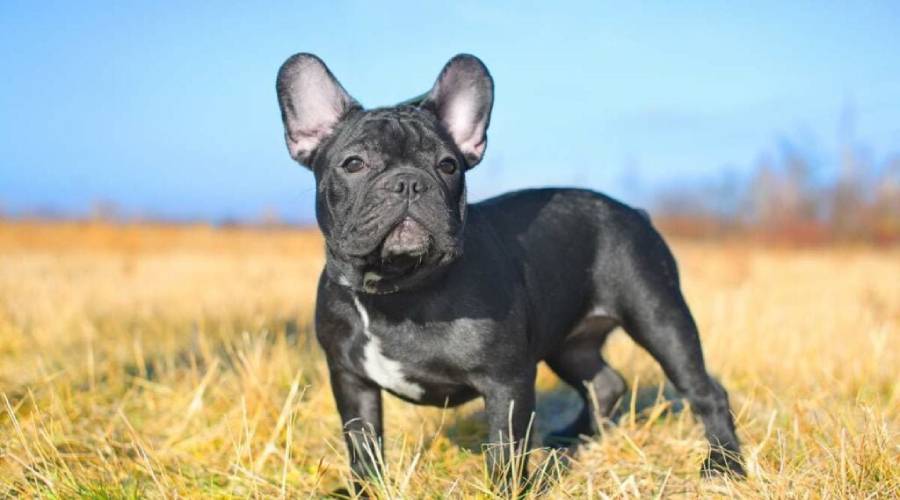
Boston Terrier coat color is determined by the combination of color-related genes and alleles a puppy inherits from its parents. These inherited variants influence the base coat color, brindle pattern, pigment intensity, and distribution of white markings. This is why two Boston Terriers with similar-looking coats can carry different genetic variants and potentially produce puppies with colors that are not visually apparent in either parent.
Three concepts are essential for understanding Boston Terrier color genetics: genotype, phenotype, and inheritance. A genotype is the combination of genetic variants a dog carries, while a phenotype is the coat color and pattern that can actually be observed. Inheritance describes how puppies receive alleles from their sire and dam. Dominant and recessive relationships between these alleles help explain why some color traits appear immediately while others can remain hidden for generations.
This guide explains how genes and loci influence Boston Terrier coat colors, including brindle, black, seal, white markings, red or liver, blue, and fawn. It also covers how color genes pass from parents to puppies, how Punnett squares and DNA color tests can help predict inheritance, which colors are recognized by the breed standard, and when coat-color genetics may have health implications.
How Do Genetics Determine a Boston Terrier’s Coat Color?
Boston Terrier coat color is determined by the combination of alleles inherited from the puppy’s sire and dam and by how genes at different loci interact. Each parent contributes one allele at a given genetic locus, creating the puppy’s genotype. That genotype influences the phenotype, which is the visible coat color or pattern expressed by the dog. Because several loci can contribute to the final appearance, Boston Terrier color inheritance is more complex than a single gene determining a single color.
Genotype and phenotype describe two different aspects of coat color. The genotype represents the genetic variants a Boston Terrier carries, including variants that may not be visible. The phenotype represents observable traits such as black pigmentation, brindling, or white markings. Two Boston Terriers can therefore have similar phenotypes while carrying different genotypes. This distinction explains why looking at the parents alone does not always reveal every coat-color trait their puppies could inherit.
Dominant and recessive alleles also affect whether an inherited trait becomes visible. A dominant allele can influence the phenotype when a dog inherits one copy, whereas a recessive trait generally requires the relevant recessive allele from both parents to be expressed. A Boston Terrier that carries only one copy of a recessive color variant may not display that associated phenotype but can still pass the allele to its puppies. Such a dog is commonly described as a carrier.
Homozygous and heterozygous genotypes further describe these combinations. A dog is homozygous at a locus when it inherits the same allele from both parents and heterozygous when it inherits two different alleles. These combinations matter when predicting inheritance because each parent passes only one of its two alleles at a locus to each puppy. As a result, littermates can inherit different combinations even though they have the same sire and dam.
Which Genes and Loci Affect Boston Terrier Coat Color?
Several genetic loci work together to determine a Boston Terrier’s base pigment, coat pattern, pigment distribution, and white markings. A locus is a specific position in the genome where a gene or genetic variant is located. Instead of treating each locus as an isolated “color gene,” Boston Terrier color genetics should be understood as interactions among multiple loci that influence different parts of the final phenotype.
The K locus is particularly relevant to brindle expression and dominant black pigmentation in dogs. Variants at this locus can influence whether a dog expresses dominant black, brindle, or allows patterns controlled by other loci to become visible. This makes the K locus important when explaining why a Boston Terrier appears black or brindle rather than simply assigning each appearance to a separate color gene.
The B locus, associated with the TYRP1 gene, affects black versus brown eumelanin pigment. Recessive variants affecting TYRP1 can change eumelanin from black to brown, producing pigmentation commonly described with terms such as brown, liver, or red in discussions of Boston Terrier colors. The effect is not limited to coat hairs; eumelanin-related pigmentation can also affect areas such as the nose and other pigmented tissues.
The D locus, associated with the MLPH gene, influences pigment dilution. When the relevant recessive dilution variants are inherited from both parents, eumelanin pigmentation can become visibly lighter. Black pigment may consequently appear gray or blue. The D locus therefore modifies an underlying pigment rather than functioning as an independent source of blue pigment.
White areas require a separate genetic concept because white markings are not simply another base coat color. Variants associated with white spotting influence where pigment-producing cells are present during development, affecting the amount and distribution of white on the body. A Boston Terrier can consequently share the same basic dark coat color with another dog while displaying a substantially different pattern of white markings.
These loci also demonstrate why Boston Terrier coat color should be interpreted as a genetic system rather than a list of independent colors. One locus may influence the type of pigment, another may modify its intensity, another may determine a pattern, and another may affect where pigment appears. The visible coat is the combined phenotype produced by these genetic interactions.
How Is Brindle Coloring Inherited in Boston Terriers?
Brindle coloring in Boston Terriers is primarily associated with the K locus, where the brindle allele allows dark eumelanin stripes to appear over areas producing lighter phaeomelanin pigment. The result is not a single solid color but a striped pattern whose visibility can range from obvious light-and-dark striping to a coat that appears nearly black until viewed closely or under stronger light.
At the K locus, the three commonly discussed alleles are dominant black (Kᴮ), brindle (kᵇʳ), and the allele that permits expression of patterns controlled by the A locus (kʸ). Their dominance hierarchy is generally represented as Kᴮ > kᵇʳ > kʸ. A dominant-black allele can therefore prevent brindle from being expressed even when the dog carries kᵇʳ. A Boston Terrier carrying kᵇʳ without Kᴮ may express brindle when the genetic background at other loci permits the lighter pigment needed to make the striped pattern visible.
Brindle inheritance also demonstrates the difference between carrying an allele and expressing a phenotype. A Boston Terrier can inherit a brindle-associated allele without showing an obvious brindle coat when another genetic factor masks its expression. This means visible appearance alone does not always establish whether a parent can transmit brindle-related genetics to its puppies. Genetic testing can provide additional information about the alleles present at relevant loci.
The amount and visual intensity of brindling can also vary between individual Boston Terriers. One dog may have easily visible dark stripes over a lighter background, while another may have such extensive dark pigmentation that the brindling is difficult to distinguish at first glance. For inheritance purposes, these visual differences should not automatically be interpreted as completely different genetic color categories because phenotype reflects both the underlying genotype and interactions affecting pigment expression.
How Is Black Coloring Inherited in Boston Terriers?
A black Boston Terrier expresses black eumelanin pigment, but its visible black coat can result from the interaction of multiple color loci rather than from a single “black gene.” The K locus is particularly important because the dominant-black allele Kᴮ can produce predominantly eumelanin-based coloration while overriding patterns that would otherwise be controlled by other loci.
The B locus determines whether eumelanin remains black or is modified to brown. A Boston Terrier with the genetic conditions required to produce black eumelanin retains black pigmentation because it does not have the recessive B-locus combination that converts eumelanin to brown. Other loci can then modify how this black pigment appears or where it is distributed across the coat.
The D locus provides an example of this interaction. A genetically black-based dog with normal pigment intensity can appear black, while inheritance of the appropriate recessive dilution variants can lighten black eumelanin toward a gray or blue appearance. White spotting can independently remove visible pigment from specific areas. A Boston Terrier can therefore have a black base coat and extensive white markings without those white areas representing a different base-color genotype.
Visible black coloration does not reveal every color allele the dog carries. A black Boston Terrier may carry recessive variants inherited from previous generations without expressing the corresponding phenotype. If a compatible breeding partner carries the same relevant recessive variant, both parents can potentially pass those alleles to the same puppy. This is one reason parental genotype provides more inheritance information than coat appearance alone.
How Is Seal Coloring Inherited in Boston Terriers?
Seal is a recognized Boston Terrier coat description characterized by a coat that appears black but shows a reddish cast when viewed in bright light or sunlight. The distinction is based on visible coat appearance: a seal Boston Terrier can look essentially black indoors and reveal warmer red-toned highlights when lighting conditions make the pigment differences more apparent.
Seal should therefore be distinguished from ordinary black based on phenotype rather than assuming every dark Boston Terrier has the same visible color. Black remains black under normal changes in lighting, whereas the characteristic reddish cast is what identifies seal in the breed-color description. This distinction is particularly relevant because photographs taken indoors or under low light may make a seal Boston Terrier appear black.
The precise genetic basis of seal in Boston Terriers is less straightforward than genetic mechanisms such as brown eumelanin caused by TYRP1 variants or dilution associated with MLPH. Seal should not be assigned to a specific allele or simple single-gene inheritance pattern without sufficient genetic evidence. Coat-color terminology based on visible appearance does not always map directly to one known genotype.
For owners, this means seal phenotype and genetic test results should be interpreted separately. DNA testing can identify known variants at tested color loci, but identifying those variants does not necessarily provide a single definitive “seal gene.” When predicting puppy colors, documented parental genotypes at established loci provide stronger genetic information than attempting to infer an exact seal genotype from appearance alone.
How Are White Markings Inherited in Boston Terriers?
White markings in Boston Terriers are inherited separately from the genes that determine the underlying coat pigment. A dog can therefore have a black, brindle, seal, or another base color while also inheriting genetic variants that influence where white areas appear. This distinction is important because white is not simply another version of the base pigment; white areas generally occur where normal coat pigmentation is absent.
White spotting in dogs is strongly associated with variation involving the MITF gene at the S locus. MITF influences the development and distribution of melanocytes, the pigment-producing cells responsible for coloration. When melanocytes do not populate particular areas of the developing skin, hairs in those areas grow without normal pigment and appear white. This mechanism can create white on areas such as the muzzle, blaze, chest, neck, and legs.
The amount of white can differ substantially between Boston Terriers because the visible pattern is not determined solely by whether a dog has a dark or light base coat. Two black Boston Terriers, for example, may share a similar base pigmentation while showing different amounts or distributions of white. The final phenotype reflects the interaction between inherited pigmentation genetics and the developmental distribution of pigment-producing cells.
White markings also need to be separated conceptually from albinism and pigment dilution. Dilution modifies the intensity of existing pigment, while white spotting produces areas where coat pigment is absent. Albinism involves different mechanisms affecting melanin production. Treating these three phenotypes as the same genetic process would lead to inaccurate interpretations of Boston Terrier color inheritance.
How Are Red, Liver, Fawn, and Blue Colors Inherited in Boston Terriers?
Red, liver, fawn, and blue Boston Terrier colors result from different genetic mechanisms, so these terms should not be treated as interchangeable descriptions of the same recessive color trait. Brown/liver coloration involves modification of eumelanin, blue involves dilution of eumelanin, and fawn or red-toned appearances can involve different pigment-expression pathways and interactions among color loci.
Red and liver: Brown or liver pigmentation is associated with recessive variants of the TYRP1 gene at the B locus. TYRP1 participates in eumelanin production, and relevant recessive variants modify normally black eumelanin into brown pigment. For a dog to express TYRP1-related brown pigmentation, it generally needs to inherit an applicable recessive variant from both parents. A parent carrying one recessive variant can pass it to offspring without necessarily showing the brown phenotype itself.
The effect of brown eumelanin can extend beyond the coat. Areas containing eumelanin, including the nose and other normally dark pigmentation, can also appear brown rather than black. This provides a useful distinction between genetically brown/liver pigmentation and a coat that merely looks reddish because of lighting, brindling, or another pigment mechanism. Color labels used informally by owners and breeders do not always correspond exactly to genetic terminology, so genotype and phenotype should be identified separately.
Blue: Blue coloration results when genetically dark eumelanin is diluted to a lighter gray or blue-gray appearance. Variants of the MLPH gene at the D locus are associated with this dilution mechanism. A dog expressing recessive dilution inherits the relevant dilution variant from both parents, while a dog carrying only one copy can transmit the variant without displaying the diluted phenotype.
Dilution modifies pigment that is already genetically present rather than creating a separate blue pigment. A useful way to understand the process is base pigment → dilution → visible diluted phenotype. When black eumelanin is diluted, the resulting coat can appear blue or gray. Other pigmented areas can also show reduced pigment intensity because the dilution mechanism affects eumelanin distribution rather than only changing the color of individual coat hairs.
Fawn: Fawn coloration involves the expression of phaeomelanin rather than a simple modification of black eumelanin. Its appearance can range across lighter tan or reddish shades depending on the dog’s broader genetic background. Loci controlling whether eumelanin or phaeomelanin can be expressed in particular coat regions therefore need to be considered when interpreting a fawn phenotype.
The practical distinction between these colors is genetic as well as visual. Brown/liver modifies the type of eumelanin produced, blue dilutes existing pigment, and fawn involves a different balance of pigment expression. Because multiple loci can interact, visual identification alone cannot reveal every allele a Boston Terrier carries. DNA testing of established coat-color loci provides more reliable information about carrier status and potential inheritance than assigning a genotype from coat appearance alone.
Why Can Boston Terrier Puppies Have Different Colors From Their Parents?
Boston Terrier puppies can have different colors from their parents because each puppy inherits a different combination of alleles, including recessive color variants that may not be visible in either parent. A parent’s coat shows its phenotype, but the phenotype does not reveal every allele in its genotype. Two dogs that look similar can therefore carry hidden recessive variants and pass them to their offspring.
Each Boston Terrier puppy receives one allele from its sire and one allele from its dam at a given autosomal locus. The specific allele transmitted by a heterozygous parent varies between offspring. Littermates consequently do not receive identical color genotypes simply because they have the same parents. One puppy may inherit two copies of a recessive variant and express the associated phenotype, while another inherits only one copy and becomes a carrier.
Consider a simplified recessive trait in which B represents a dominant allele and b represents a recessive allele. Two parents with the genotype Bb can have the same dominant phenotype because each carries one B allele. However, each parent can also transmit b. When a puppy receives b from both parents, its genotype becomes bb and the recessive phenotype can be expressed. In this simplified single-locus cross, each puppy has a 25% probability of BB, a 50% probability of Bb, and a 25% probability of bb.
These percentages describe the probability for each puppy rather than guaranteeing the color distribution of an entire litter. A four-puppy litter does not have to contain one BB puppy, two Bb puppies, and one bb puppy. Each conception represents another inheritance event, so a small litter can contain several puppies with the same genotype or none with a particular expected genotype.
Color inheritance becomes more complex when several loci contribute to the visible coat. A Boston Terrier may inherit variants affecting eumelanin color, dilution, brindling, and white spotting simultaneously. One genetic effect can also modify or mask the visible expression of another. This is why identifying a puppy’s likely color requires more than checking whether its parents look black, brindle, seal, or another color.
How Can You Predict the Colors of Boston Terrier Puppies?
The most reliable way to predict possible Boston Terrier puppy colors is to combine the parents’ known genotypes with established inheritance patterns at the relevant coat-color loci. Parental phenotype provides useful information, but DNA results can reveal recessive alleles that are not visible in the coat. Predictions become more informative when both the sire and dam have been tested for the variants relevant to the colors being evaluated.
Four factors are particularly important: parental phenotype, parental genotype, carrier status, and interactions between loci. Phenotype identifies what each parent visibly expresses. Genotype identifies the tested alleles behind that appearance. Carrier status reveals recessive variants that could be transmitted without being visible in the parent. Locus interactions determine whether an inherited variant will actually contribute to the puppy’s observable coat.
Prediction should therefore begin with individual loci rather than with a simple color-to-color formula. For example, when investigating a recessive B-locus variant, the alleles carried by both parents can be evaluated first. The same process can then be performed for dilution or other tested traits. The results need to be considered together because the final phenotype represents the combined expression of the inherited color genetics.
DNA testing improves prediction but does not turn puppy color into a certainty. Tests examine specific known variants, while the appearance of a coat can also involve interactions among loci and variation in the degree of pattern expression. Genetic prediction is therefore most useful for identifying possible genotypes and their inheritance probabilities, rather than promising the exact visual appearance of every puppy.
How Does a Punnett Square Predict Boston Terrier Color Inheritance?
A Punnett square predicts the probability that a puppy will inherit particular allele combinations from its parents at a defined locus. The alleles of one parent are placed across one side of the square and the alleles of the second parent across the other. Each cell then represents one possible combination inherited by an offspring.
For a simplified Bb × Bb cross, the possible offspring genotypes are BB, Bb, Bb, and bb. The resulting probabilities are 25% BB, 50% Bb, and 25% bb. If b represents a recessive color-associated variant, only the bb genotype would express that recessive trait under this simplified model, while Bb puppies would carry the allele without expressing it.
Punnett squares are particularly useful for explaining why two parents without a visible recessive phenotype can produce a puppy that expresses one. Both parents can be carriers and each can contribute the required recessive allele. The tool also makes an important distinction between probability and guaranteed litter composition: a 25% probability applies to each inheritance event and does not guarantee that exactly 25% of puppies in a litter will have that genotype.
A single Punnett square should not be used as a complete model of Boston Terrier coat color when several loci are involved. It predicts inheritance at the locus being examined, while the puppy’s final phenotype can depend on additional genes controlling pigment type, dilution, pattern, and white spotting. Multiple genetic results must therefore be interpreted together when estimating the possible colors of a breeding pair.
Which Boston Terrier Colors Are Recognized by the Breed Standard?
The Boston Terrier breed standard recognizes brindle, seal, or black coats when they occur with white markings. These breed-standard descriptions classify the dog by visible phenotype and should be distinguished from every coat color that can occur genetically. A color being genetically possible in a Boston Terrier does not automatically make it a recognized breed-standard color.
Brindle consists of darker striping over a lighter background, while black describes black pigmentation without the characteristic reddish cast of seal. Seal appears black under many lighting conditions but shows a red cast when viewed in sunlight or bright light. In each case, white markings form an important part of the characteristic Boston Terrier appearance rather than functioning as the dog’s underlying base color.
Colors such as liver or brown, blue or dilute, and some fawn or red phenotypes can result from inherited color variants but fall outside the standard color combination. This creates an important distinction between genetics and conformation standards. Genetics explains why a phenotype can occur; a breed standard defines which phenotypes are accepted for conformation purposes by a particular kennel organization.
The same distinction applies to markings. Genetic mechanisms affecting white spotting can produce different amounts and distributions of white, but the existence of a genetically produced marking does not mean every possible distribution matches the breed standard. Owners should therefore use genetic terminology when discussing inheritance and the applicable kennel club standard when determining whether a particular color or marking is recognized.
A non-standard color also should not automatically be interpreted as evidence that a Boston Terrier is unhealthy or not a Boston Terrier. Color classification and health assessment answer different questions. Parentage, health testing, pedigree documentation, physical characteristics, and responsible breeding practices provide information that coat color alone cannot establish.
Does a Boston Terrier’s Coat Color Affect Its Health?
Coat color alone does not determine a Boston Terrier’s overall health, but specific genetic mechanisms involved in pigmentation can have health implications in particular genetic contexts. The relevant question is therefore not simply whether a Boston Terrier is black, brindle, blue, white, or another color. The more useful question is whether the genetic variants producing or accompanying that phenotype are associated with a documented health risk.
Dilution provides one example of why this distinction matters. Recessive variants affecting pigment dilution can produce a blue or gray appearance by changing the distribution of pigment in the hair. In dogs, some dilute phenotypes have also been associated with color dilution alopecia, a condition involving hair thinning, breakage, or loss and potentially recurrent skin problems. However, a dilute coat should not by itself be treated as a diagnosis. Clinical signs and veterinary evaluation are required to determine whether an individual dog has a dermatological disorder.
Extensive areas lacking pigment require similarly careful interpretation. Pigmentation genes participate in biological processes beyond determining the visual appearance of the coat, and some patterns of reduced pigmentation in dogs have been studied in relation to congenital hearing problems. This does not mean every Boston Terrier with prominent white markings will develop deafness. The location, underlying genetic mechanism, and individual dog matter more than the simple presence of white fur.
The reverse assumption is also inaccurate: a breed-standard color does not guarantee good health. Boston Terriers can inherit health conditions unrelated to coat pigmentation, so responsible health screening needs to extend beyond color genetics. A DNA color panel primarily answers questions about pigmentation and inheritance; it should not be treated as a substitute for breed-appropriate genetic and veterinary health screening.
For pet owners, coat color is therefore best treated as one observable characteristic rather than a health score. Health history, appropriate screening, responsible breeding practices, and veterinary assessment provide more useful information about a Boston Terrier’s health than whether its coat color is standard, rare, or visually desirable.
Read more: Boston Terrier Coat Colors: Complete Color Guide
What Can a Boston Terrier DNA Color Test Tell You?
A Boston Terrier DNA color test can identify specific coat-color variants a dog carries and help determine its genotype, carrier status, and potential to pass tested color traits to puppies. This provides information that visual inspection cannot always reveal because a Boston Terrier can carry recessive color alleles without expressing the associated phenotype.
A typical color panel examines variants associated with specific pigmentation pathways and loci. Depending on the laboratory and test panel, results may include variants affecting eumelanin color, dilution, dominant black or brindle expression, pattern expression, and white spotting. These results allow owners or breeders to move from an appearance-based description, such as “this dog looks black,” to a more specific genetic description based on the alleles detected.
DNA testing is especially useful for identifying carriers. For a simplified recessive trait, a Boston Terrier with one normal allele and one recessive allele may have no visible indication that it carries the recessive variant. If another carrier is bred to that dog, both parents can potentially transmit the recessive allele to the same puppy. Testing the sire and dam therefore provides more information about possible offspring genotypes than judging the breeding pair by coat color alone.
Color-test results are generally reported as allele pairs at individual loci. For example, a result showing two copies of a recessive variant indicates a different inheritance status from a result showing only one copy. A dog with two relevant recessive copies may express the associated trait when other required genetic conditions are present, while a heterozygous dog may carry the variant without displaying it. The exact notation varies by testing laboratory, so results should be interpreted according to the laboratory’s definitions for each tested variant.
Testing also has limitations. A DNA color test identifies the variants included in that test; it does not provide a complete genetic explanation for every detail of a Boston Terrier’s appearance. Some phenotypes involve interactions among several loci, and the visual intensity or distribution of a pattern may not be predicted precisely from a basic color panel. Seal is a useful example because identifying known color alleles does not necessarily produce a simple genetic test result that explains the entire seal phenotype.
Color testing should also be separated from health testing. A panel designed to identify coat-color variants does not establish that a Boston Terrier is free from inherited diseases or other breed-related health concerns. When evaluating a puppy or breeding dog, color genetics is one category of genetic information rather than a replacement for appropriate health screening.
Should You Choose a Boston Terrier Based on Coat Color?
Coat color can be a personal preference when choosing a Boston Terrier, but health, temperament, responsible breeding, and appropriate health screening should carry more weight than color alone. A black, brindle, seal, or less common-colored puppy can still vary substantially in health, behavior, structure, and suitability for a particular household.
Color genetics is most useful when it helps an owner understand what a dog has inherited rather than when color becomes the primary measure of a puppy’s quality. Terms such as “rare color” describe appearance or frequency but do not establish superior genetics, better health, or greater breed quality. Similarly, a non-standard coat color should not by itself be used to diagnose a health problem.
Prospective owners should evaluate the broader breeding context. Relevant information includes the health history of the parents, breed-appropriate health screening, the puppy’s veterinary care, temperament, living conditions, and the breeder’s approach to selecting breeding dogs. DNA color results can supplement this information by explaining pigmentation and carrier status, but they address a much narrower question.
Understanding Boston Terrier color genetics ultimately helps separate three concepts that are often confused: what a Boston Terrier looks like, what color alleles it carries, and what those genetic findings mean for inheritance. A visible phenotype does not reveal every allele in the genotype, and a genetically possible color is not necessarily a breed-standard color. Evaluating these concepts separately gives owners a clearer way to understand coat color without allowing appearance to overshadow the characteristics that matter most for the dog’s long-term welfare.
1 thought on “Boston Terrier Color Genetics and Inheritance”