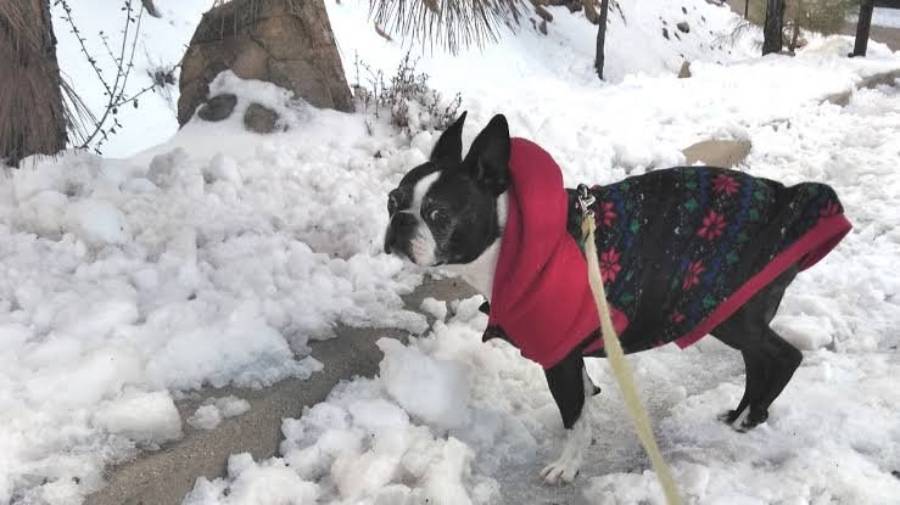
Boston Terriers can handle mildly cold weather for short periods, but they are not well suited to prolonged exposure to low temperatures. Their short, fine coat provides less insulation than the dense double coats of cold-weather breeds, so Boston Terriers can lose body heat relatively quickly when temperatures drop. Cold conditions become more challenging when wind, rain, snow, or extended outdoor exposure increases heat loss.
There is no single outdoor temperature that is safe or unsafe for every Boston Terrier. A healthy adult may tolerate a cool winter walk better than a puppy, senior dog, underweight dog, or Boston Terrier with an existing health condition. Wind chill, moisture, activity level, clothing, and time spent outside also affect how quickly an individual dog becomes uncomfortable or dangerously cold.
Owners should therefore evaluate cold weather using both environmental conditions and their Boston Terrier’s behavior. Shivering, lifting the paws, slowing down, seeking shelter, or refusing to continue a walk can indicate that the dog is becoming too cold. This guide explains how Boston Terriers handle cold weather, what temperatures require greater caution, how long they should stay outside, and how to protect them from hypothermia, frostbite, and other winter-related risks.
Can Boston Terriers handle cold weather?
Boston Terriers can handle cool and mildly cold weather for short periods, but they have relatively low tolerance for prolonged cold exposure. They can still go outside for bathroom breaks, walks, and exercise during winter, provided the temperature and weather conditions are appropriate and the owner monitors the dog for signs of discomfort. Their ability to tolerate cold should not be compared with cold-adapted breeds such as Siberian Huskies or Alaskan Malamutes.
The main limitation is insulation. Boston Terriers have short, smooth coats that provide less protection against heat loss than thick double coats. A double-coated dog has an insulating undercoat that traps warm air close to the body, while a Boston Terrier has much less natural protection between its skin and the outdoor environment. As a result, prolonged exposure to low temperatures can cause its body to lose heat faster than it can comfortably replace it.
Cold tolerance also depends on exposure rather than temperature alone. A Boston Terrier may remain comfortable during a short walk on a cool, dry, calm day but become cold much faster at the same air temperature when exposed to strong wind or rain. Wet fur increases heat loss, while wind removes the layer of warm air surrounding the body. This means owners should evaluate temperature, wind, moisture, and time outdoors together when deciding whether conditions are suitable.
Individual tolerance matters as well. Healthy adult Boston Terriers generally cope with cold better than puppies, senior dogs, underweight dogs, or dogs with health problems. Instead of assuming that every Boston Terrier has the same temperature limit, owners should combine weather conditions with observable signs such as shivering, lifting the paws, slowing down, or attempting to return indoors.
Why do Boston Terriers get cold easily?
Boston Terriers get cold easily primarily because their short coat provides limited insulation against low temperatures. Their physical characteristics, age, body condition, health, and environmental exposure can further influence how quickly they lose body heat.
Their short, fine coat is the most obvious factor. Fur helps create an insulating barrier between a dog’s body and its surroundings. Boston Terriers lack the dense undercoat found in many breeds developed for colder climates, leaving them with less protection when the temperature falls. This difference becomes more important as exposure lasts longer or conditions become windy and wet.
Body size also influences heat retention. Smaller dogs generally have a higher surface-area-to-body-mass ratio than larger dogs, which means more of their body surface is exposed relative to the amount of tissue producing and retaining heat. A Boston Terrier therefore does not have the same physical advantages for conserving heat as a larger, heavily insulated cold-weather breed.
Age can reduce cold tolerance further. Boston Terrier puppies are still developing and have smaller bodies, while senior dogs may experience age-related changes that make temperature regulation more difficult. Older Boston Terriers may also have health conditions that affect mobility or their ability to remain active outdoors. Because muscular activity generates heat, a dog moving slowly may become cold sooner than a healthy adult walking at a comfortable pace.
Body condition and health create additional differences between individual dogs. An underweight Boston Terrier has less body tissue available for insulation, while illness or reduced mobility can make maintaining body temperature more difficult. For this reason, two Boston Terriers standing outside under identical weather conditions do not necessarily have the same cold tolerance.
Wind and moisture can amplify all of these factors. A Boston Terrier that remains comfortable in dry, still air may become uncomfortable sooner when exposed to wind, rain, sleet, or wet snow. Owners should therefore treat cold tolerance as the result of several connected factors rather than relying on outdoor temperature as the only measure of safety.
How long can a Boston Terrier stay outside in cold weather?
A Boston Terrier should stay outside only as long as it remains warm, active, and comfortable, with outdoor time becoming progressively shorter as temperature, wind, and moisture increase cold exposure. There is no single safe time limit for every Boston Terrier because a five-minute bathroom break and a continuous winter walk create different levels of exposure, and individual dogs lose heat at different rates.
In cool, dry conditions, a healthy adult Boston Terrier may be able to complete its normal walk without showing signs of cold stress. The same walk may need to be shortened when temperatures approach freezing, wind increases, or rain and snow make the dog’s coat wet. Puppies, senior dogs, underweight dogs, and Boston Terriers with health or mobility problems may require shorter trips even when a healthy adult appears comfortable.
Bathroom breaks should be treated differently from exercise. When conditions are particularly cold, a brief trip outside to urinate or defecate reduces exposure while still meeting the dog’s immediate needs. The dog can then return to a warm indoor environment. Owners should avoid leaving a Boston Terrier standing unattended in a yard during cold weather because inactivity generates less body heat than walking or playing.
Winter walks require continuous observation rather than adherence to a fixed number of minutes. A Boston Terrier that starts a walk enthusiastically may slow down as heat loss accumulates. Shivering, repeatedly lifting the paws, stopping, seeking shelter, or attempting to turn toward home are practical signals that the walk should end. Extending the walk to meet a predetermined duration after these signs appear unnecessarily increases cold exposure.
Clothing can extend comfort but should not be used to justify excessive time outside. A well-fitting coat or sweater covers part of the body and reduces heat loss, while the paws, ears, and other exposed areas remain affected by the environment. Snow, ice, wind, and wet conditions can therefore make a long outing inappropriate even when the dog’s torso is covered.
Owners should determine outdoor duration dynamically: check the weather before leaving, observe the Boston Terrier throughout the outing, and shorten the trip when conditions or behavior indicate increasing discomfort. On days when outdoor exercise must be reduced substantially, indoor play and mental enrichment can replace part of the dog’s normal activity.
How can you tell when a Boston Terrier is too cold?
A Boston Terrier may be too cold when it starts shivering, lifting its paws, slowing down, changing posture, seeking warmth, or refusing to continue normal outdoor activity. These behavioral and physical changes are more useful than temperature alone because they show how the individual dog is responding to the conditions at that moment.
Shivering is one of the clearest early signals. Muscle contractions generate heat, so shivering indicates that the body is responding to cold exposure. An occasional brief shiver does not by itself establish a medical emergency, but persistent shivering during a winter outing is a reason to move the Boston Terrier to a warmer environment rather than continuing the activity.
Repeatedly lifting the paws can indicate discomfort from cold ground, snow, ice, or substances on the walking surface. A Boston Terrier may alternate between paws, hesitate to walk, or stop completely. Owners should end or shorten the exposure and inspect the paws after returning indoors, particularly when sidewalks have been treated with salt or chemical deicers.
Slowing down and reluctance to continue are also important. A normally active Boston Terrier that suddenly walks more slowly, stops repeatedly, turns toward home, or seeks a sheltered location is communicating a change in comfort. These signals should carry more weight than completing a planned walking distance.
Posture can provide additional information. A cold dog may hunch its body, tuck its tail, reduce movement, or attempt to make itself smaller. The mechanism is straightforward: reducing exposed surface area and limiting unnecessary movement can help conserve heat when the environment becomes uncomfortable.
Owners should respond to these early signs before they progress. Bring the Boston Terrier indoors, remove wet clothing if present, dry wet fur and paws, and allow the dog to warm in a comfortable indoor environment. Persistent or worsening abnormalities after the dog has been removed from the cold require greater concern.
More serious changes should not be treated as ordinary winter discomfort. Weakness, pronounced lethargy, confusion, poor coordination, collapse, or abnormal breathing can indicate a more significant problem and warrant prompt veterinary attention. The practical distinction is that mild cold discomfort tells an owner to end the exposure, while systemic or worsening signs require evaluation for conditions such as hypothermia.
What are the signs of hypothermia in a Boston Terrier?
Signs of hypothermia in a Boston Terrier can include persistent shivering, weakness, lethargy, poor coordination, confusion, and a reduced ability to respond normally. Hypothermia is more serious than simply feeling cold because it occurs when the dog’s body loses heat faster than it can replace it, causing core body temperature to fall.
Early cold discomfort and hypothermia should not be treated as the same condition. A Boston Terrier that shivers but remains alert, active, and responsive may be showing an early reaction to cold exposure. The situation becomes more concerning when shivering is accompanied by weakness, unusual tiredness, difficulty walking, or noticeable changes in behavior. These signs indicate that cold exposure is affecting more than the dog’s comfort.
Prolonged exposure increases the risk because heat loss continues for as long as the dog remains in the cold environment. Wind and moisture can accelerate this process, while puppies, senior Boston Terriers, underweight dogs, and dogs with health problems may have less tolerance for sustained exposure. A wet Boston Terrier can also lose heat more rapidly because moisture reduces the insulating effectiveness of its coat.
Move a Boston Terrier into a warm, dry environment when concerning signs develop. Remove wet clothing, dry wet fur, and prevent further exposure while seeking veterinary guidance. Warming should be gradual rather than exposing the dog directly to an intense heat source. Severe weakness, collapse, impaired responsiveness, abnormal breathing, or other worsening symptoms require prompt veterinary attention.
Owners should not wait for severe symptoms before ending a winter walk. Early signs such as persistent shivering, slowing down, or seeking shelter provide an opportunity to stop cold exposure before the dog’s condition progresses. Preventing continued heat loss is safer than trying to determine outdoors whether the dog has already developed hypothermia.
Can Boston Terriers get frostbite in cold weather?
Boston Terriers can develop frostbite when exposed to sufficiently cold conditions, particularly when low temperatures are combined with prolonged exposure, wind, or moisture. Frostbite is a cold-related tissue injury and is different from the generalized loss of body heat associated with hypothermia.
The extremities deserve particular attention because areas farther from the body’s core are more exposed to environmental cold. A Boston Terrier’s paws and toes are especially relevant during winter because they remain in contact with frozen ground, snow, and ice. Ear tips and the tail can also be exposed during severe cold conditions.
Frostbite develops when cold exposure interferes with normal circulation and damages tissue. The body attempts to preserve heat for vital organs during severe cold by reducing blood flow toward peripheral areas. Extended exposure can therefore leave extremities more vulnerable to cold injury. Wind, wet fur, and direct contact with frozen surfaces can increase the problem by accelerating heat loss.
Changes in the affected skin or tissue after significant cold exposure should be taken seriously. Discoloration, swelling, pain, unusual sensitivity, or changes in the appearance of exposed areas warrant veterinary assessment. Owners should avoid aggressively rubbing a suspected frostbitten area because damaged tissue can be injured further.
Prevention is more reliable than attempting to manage frostbite after it develops. Shortening outdoor exposure during freezing conditions, using suitable winter clothing, protecting the paws when conditions require it, and bringing the Boston Terrier indoors when signs of discomfort appear all reduce unnecessary cold exposure.
Hypothermia and frostbite also can occur together because both result from excessive cold exposure, although they affect the body differently. Hypothermia primarily involves a dangerous reduction in core body temperature, while frostbite involves localized cold injury to tissue. Recognizing that distinction helps owners understand why a Boston Terrier can require veterinary attention even when only certain body areas initially appear affected.
Do Boston Terriers need a coat in cold weather?
Boston Terriers can benefit from wearing a coat or sweater in cold weather because their short, fine coat provides limited natural insulation. Winter clothing becomes more useful as temperatures fall, outdoor exposure becomes longer, or conditions include wind, rain, and snow. Puppies, senior dogs, lean Boston Terriers, and dogs that show signs of becoming cold quickly may need additional insulation sooner than healthy adults.
A winter coat works by reducing heat loss from the areas of the body it covers. For a Boston Terrier, useful coverage generally includes the chest, back, and torso while leaving enough freedom for normal walking, running, urinating, and defecating. Clothing that restricts the shoulders, rubs the skin, or interferes with movement can create a different set of problems, so fit is as important as warmth.
The appropriate clothing also depends on weather conditions. A sweater can add insulation during a cool, dry walk, while an outer layer that provides protection from moisture is more useful during rain or wet snow. Keeping the torso dry matters because wet fur loses some of its ability to retain warm air close to the body.
Owners should use the dog’s response to determine whether clothing provides enough protection. A Boston Terrier that continues to shiver, lift its paws, slow down, or seek shelter is still showing signs of cold discomfort even when wearing a coat. The correct response is to shorten the outdoor exposure rather than adding more walking time because the dog is dressed.
A coat also has physical limits. It does not protect the paws, ear tips, or every exposed area, and it cannot eliminate the effects of severe cold or prolonged exposure. Winter clothing should therefore supplement sensible decisions about weather and outdoor duration rather than replace them.
Do Boston Terriers need boots in winter?
Boston Terriers do not need boots for every winter outing, but paw protection can be useful when they walk on snow, ice, frozen surfaces, road salt, or chemical deicers. The decision should be based on ground conditions and the individual dog’s paw sensitivity rather than cold weather alone.
Paws are directly exposed to the walking surface, which creates a different type of winter exposure from the torso. Snow can collect around the feet, frozen surfaces can become uncomfortable, and ice can make walking more difficult. A Boston Terrier that repeatedly lifts its paws, stops walking, or attempts to avoid particular surfaces may be experiencing paw discomfort.
Road salt and chemical deicers create an additional concern because residues can remain on the paws after a walk. Dogs may later lick their feet while grooming, and some products can also irritate the skin. Cleaning and drying the paws after winter walks helps remove accumulated snow, ice, salt, dirt, and other residues.
Dog boots create a physical barrier between the paws and the environment. They can reduce direct contact with frozen ground and treated surfaces, but they need to fit correctly. Boots that are too loose can fall off or alter the dog’s gait, while boots that are too tight can cause discomfort. A Boston Terrier unfamiliar with footwear may also need short indoor sessions to become accustomed to walking naturally in boots before using them outside.
Boots are not the only form of paw management. On milder winter days without snow, ice, or treated sidewalks, inspecting and cleaning the paws after a walk may be sufficient for many Boston Terriers. Owners should choose protection according to the actual conditions rather than treating boots as mandatory throughout the entire winter.
Paw behavior should remain part of the decision even when boots are used. Refusing to walk, repeatedly stopping, or showing discomfort can indicate that the dog is cold, that a boot does not fit correctly, or that the conditions themselves are unsuitable. Winter paw protection is most effective when boots, paw inspection, cleaning, and shorter exposure are used according to the environment the Boston Terrier is actually walking in.
Can Boston Terriers walk in snow?
Boston Terriers can walk in snow for short periods when conditions are suitable, but snow increases cold exposure and requires closer monitoring than a normal walk on dry ground. Temperature, snow depth, moisture, wind, paw condition, and time outside determine whether a snowy walk remains comfortable for an individual Boston Terrier.
Snow creates two main challenges: lower body temperature and direct paw exposure. A Boston Terrier’s short coat provides limited insulation, and contact with wet snow can make the fur damp. Once the coat becomes wet, the dog can lose heat faster, particularly when low temperatures are combined with wind. Deep snow can increase exposure further because it contacts more of the legs and underside of the body.
Snow depth also changes the physical effort required to walk. Moving through deeper snow requires more work than walking on a clear surface, especially for a relatively small dog. A Boston Terrier may therefore slow down or become tired sooner even when it initially appears enthusiastic about playing outside.
The paws require continuous attention during snowy walks. Snow and ice can accumulate around the feet, while sidewalks and roads may contain salt or chemical deicers. Repeated paw lifting, hesitation, stopping, or licking the feet can indicate discomfort. Boots can provide a protective barrier when surface conditions justify them, while cleaning and drying the paws after returning indoors helps remove snow and residues.
Owners should shorten or end a snowy walk when their Boston Terrier starts shivering, slowing down, lifting its paws, seeking shelter, or attempting to return home. A dog that enjoys playing in snow can still become cold as exposure continues, so enthusiasm at the beginning of the outing should not be used as evidence that prolonged exposure is safe.
After the walk, remove wet clothing and dry the Boston Terrier thoroughly, paying attention to the paws, legs, belly, and other areas that contacted snow. Check between the toes for accumulated snow, ice, or debris. These steps reduce continued cooling after the dog has returned indoors.
How should you walk a Boston Terrier in winter?
Walk a Boston Terrier in winter by checking weather conditions first, choosing appropriate protection, adjusting the duration, monitoring the dog continuously, and drying and inspecting it after returning indoors. This routine allows the dog to receive regular exercise without treating every winter day as having the same level of cold-weather risk.
Check temperature, wind, precipitation, and ground conditions before leaving. Air temperature alone provides an incomplete picture because wind can increase heat loss and rain or wet snow can reduce the insulating effect of the coat. Ground conditions also determine whether the paws will encounter snow, ice, road salt, or deicers.
Choose clothing according to the conditions and the individual dog. A coat or sweater can add insulation for a short-coated Boston Terrier, particularly on colder outings. Boots may be useful when snow, ice, frozen surfaces, salt, or chemical treatments create additional paw exposure. Clothing should fit securely without restricting normal movement.
Adjust the walk instead of automatically following the dog’s normal warm-weather schedule. Colder, wetter, and windier conditions justify shorter outdoor sessions. Several appropriately timed short outings can be more suitable than one prolonged walk when winter conditions increase heat loss.
Monitor behavior throughout the walk. Shivering, paw lifting, slowing down, stopping repeatedly, seeking shelter, or turning toward home are practical signals to shorten the outing. Owners should respond when these behaviors begin rather than waiting for more serious symptoms to develop.
Choose the walking route with winter conditions in mind. Cleared paths can reduce contact with deep snow, while routes that provide easy access back home allow the walk to end quickly if the dog becomes uncomfortable. Avoid forcing a Boston Terrier across heavily iced surfaces where slipping or paw discomfort makes normal movement difficult.
Complete the routine after returning indoors. Remove wet clothing, dry damp fur, inspect and clean the paws, and allow the dog to warm up naturally in a comfortable indoor environment. Pay particular attention to salt, ice, and debris around the toes after walks on treated sidewalks.
Winter walking therefore requires adjustment rather than complete avoidance. The goal is to maintain appropriate physical activity while reducing unnecessary cold exposure whenever the weather exceeds the individual Boston Terrier’s tolerance.How can you keep a Boston Terrier warm indoors during winter?
Keep a Boston Terrier warm indoors during winter by providing a dry sleeping area, comfortable bedding, protection from cold drafts, and prompt drying after wet outdoor trips. Boston Terriers generally need less protection indoors than outdoors, but their short coats can make cold rooms and drafty resting areas uncomfortable, especially for puppies, senior dogs, and individuals that are particularly sensitive to low temperatures.
Start with the dog’s sleeping and resting areas. Place the bed away from frequently opened exterior doors, cold drafts, and other locations where the dog is continuously exposed to cooler air. A padded bed or blanket also creates insulation between the Boston Terrier and cold flooring such as tile, stone, or concrete. The objective is to provide a warm resting place without relying on excessive heat.
Keeping the dog dry is equally important. Rain, melting snow, and wet winter surfaces can leave the coat, belly, legs, and paws damp after an outdoor trip. Dry these areas when the Boston Terrier returns indoors and remove wet sweaters or coats instead of allowing them to remain against the body. A dry coat retains warmth more effectively than wet fur.
Indoor comfort should also be evaluated through the individual dog’s behavior. A Boston Terrier that repeatedly seeks blankets, curls tightly into warm locations, or shivers in a particular room may be uncomfortable at that indoor temperature. Puppies, senior Boston Terriers, lean dogs, and dogs with health problems may prefer warmer resting conditions than healthy adults.
Avoid using intense heat as a substitute for appropriate indoor conditions. A comfortable bed in a stable, dry environment is generally more practical than placing the dog directly beside a powerful heater. Boston Terriers should also be able to move away from a warm location when they become comfortable.
Indoor winter care ultimately has a simple objective: prevent the dog from remaining cold or wet after outdoor exposure and provide a consistently comfortable place for recovery and rest.
Read more: Can Boston Terriers Swim? Safety & Swimming Guide
How much exercise does a Boston Terrier need when it is cold outside?
A Boston Terrier still needs regular physical activity and mental stimulation during cold weather, but outdoor exercise should be shortened or moved indoors when winter conditions exceed the dog’s cold tolerance. Cold weather changes how exercise is delivered rather than eliminating the need for activity.
Outdoor walks can continue when conditions are suitable. On colder days, owners can reduce the length of individual walks while maintaining activity through shorter outdoor sessions. This approach limits continuous cold exposure while still providing opportunities for movement, bathroom breaks, sniffing, and environmental stimulation.
Indoor activity can replace part of a shortened winter walk. Games such as fetch in a safe indoor space, structured tug, hide-and-seek, and short training sessions allow a Boston Terrier to move without prolonged exposure to low temperatures. The appropriate activity depends on available space, the dog’s age, and its physical condition.
Mental exercise also contributes to a winter routine. Food puzzles, scent-based games, obedience practice, and learning new behaviors require concentration and can provide stimulation when outdoor activity is restricted. For example, several short training sessions distributed throughout the day can give a Boston Terrier structured interaction without requiring an extended winter walk.
Exercise should still match the individual dog. Puppies, healthy adults, senior Boston Terriers, and dogs with medical conditions do not have identical activity requirements. Owners should consider normal energy level, age, health, and veterinary recommendations rather than attempting to meet one fixed exercise target for every Boston Terrier.
Cold-weather exercise should also stop when the dog shows signs of discomfort. Extending a walk after persistent shivering, paw lifting, slowing down, or attempts to return home provides little benefit compared with finishing the activity indoors.
The practical winter strategy is therefore to balance exercise with cold exposure. Use outdoor walks when conditions are comfortable, shorten them when cold risk increases, and replace lost outdoor time with appropriate indoor physical and mental activities.
Are Boston Terrier puppies and senior dogs more sensitive to cold weather?
Boston Terrier puppies and senior dogs can be more sensitive to cold weather than healthy adults, so they generally require closer monitoring and more conservative outdoor exposure during winter. Age affects body size, activity, health, and temperature regulation, which can change how quickly an individual Boston Terrier becomes uncomfortable in cold conditions.
Boston Terrier puppies have small bodies and are still developing physically. Their smaller size means they have relatively more surface area through which body heat can be lost, while their short coat provides limited insulation from the environment. A puppy that is comfortable during active play may also begin losing heat more noticeably when it stops moving or remains outside for longer periods.
Puppies should therefore have cold-weather exposure adjusted according to their behavior and the conditions outside. Bathroom breaks and walks can be shortened when temperatures fall, particularly during wind, rain, snow, or freezing conditions. Shivering, lifting the paws, slowing down, seeking warmth, or resisting continued movement are reasons to return indoors rather than encourage the puppy to remain outside.
Senior Boston Terriers face a different set of challenges. Aging can be accompanied by reduced activity, loss of muscle mass, changes in body condition, or health problems that influence cold tolerance. A senior dog that walks slowly also produces less heat through muscular activity than a younger Boston Terrier moving continuously at a faster pace.
Mobility deserves additional consideration in winter. Snow, ice, and slippery surfaces can make movement more difficult for older dogs, particularly when they already have stiffness or reduced mobility. A shorter route on a clear surface may therefore be more appropriate than maintaining the same distance used during warmer months.
Winter clothing can provide additional insulation for both age groups when conditions require it. A properly fitted coat or sweater helps reduce heat loss from the torso, while boots may provide useful paw protection on snow, ice, or treated sidewalks. These measures should supplement shorter exposure and behavioral monitoring rather than be used to extend outdoor time regardless of conditions.
Individual response remains more important than age alone. A healthy, active senior Boston Terrier may tolerate a particular winter day better than a younger dog with a health problem, and puppies can differ in size, activity, and cold sensitivity. Owners should therefore avoid assuming that every dog within an age group has an identical temperature threshold.
The safest approach for puppies and senior Boston Terriers is to use shorter cold-weather exposure, appropriate protection, and close observation of the individual dog. When age-related or existing medical conditions create uncertainty about winter exercise or temperature tolerance, individualized veterinary guidance is more appropriate than relying on a universal outdoor limit.
1 thought on “Can Boston Terriers Handle Cold Weather?”