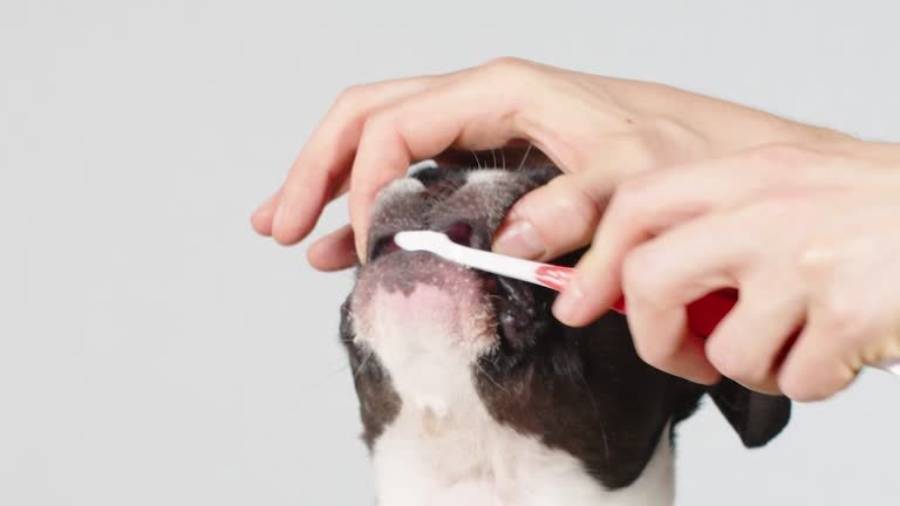
Brushing a Boston Terrier’s teeth requires a dog-safe toothpaste, a soft toothbrush, and a gradual brushing routine that cleans the outer surfaces of the teeth along the gumline. Start by letting your Boston Terrier taste the toothpaste and become comfortable with having its lips and mouth handled. Once the dog is relaxed, lift the lips and brush the teeth gently, paying particular attention to the back teeth where plaque and tartar can accumulate.
Regular tooth brushing is an important part of a Boston Terrier’s dental care because plaque left on the teeth can harden into tartar and contribute to gum and periodontal problems. Establishing a consistent routine also makes brushing easier, especially when a Boston Terrier is introduced to mouth handling and a toothbrush gradually rather than being forced through a full brushing session immediately.
This guide explains what you need to brush your Boston Terrier’s teeth, how to perform the process step by step, how often to brush, and how to train a dog that resists the toothbrush. It also covers alternatives when brushing is difficult and the dental warning signs that indicate your Boston Terrier should be examined by a veterinarian.
What Do You Need to Brush a Boston Terrier’s Teeth?
You need a soft dog toothbrush, dog-safe toothpaste, and a reward to brush a Boston Terrier’s teeth at home. A finger toothbrush can also be useful when introducing brushing because it gives you direct control over the cleaning motion and may feel less unfamiliar to a dog that has never had its teeth brushed. The toothbrush should be small enough to move comfortably around the mouth without pressing hard against the gums.
Use toothpaste specifically formulated for dogs rather than human toothpaste. Dog toothpaste is designed to be used without rinsing because dogs normally swallow some of it during brushing. Many products use flavors that dogs find appealing, which can also make the introduction to brushing easier. Enzymatic dog toothpastes are another option designed to support plaque control as part of a regular dental-care routine.
Human toothpaste should not be substituted for dog toothpaste. Human dental products are formulated to be spit out rather than swallowed, and some products may contain ingredients that are unsuitable or unsafe for dogs. Using a dog-specific product therefore removes an unnecessary risk while allowing the toothpaste to remain in the mouth after brushing.
A small reward is useful for building a positive association with dental care. For example, praise, play, or a suitable treat can be given after a short brushing session. The reward should follow calm behavior rather than be used to force your Boston Terrier to tolerate brushing. This distinction becomes especially important during the first several sessions, when the primary goal is getting the dog comfortable with having its mouth handled.
How Do You Brush a Boston Terrier’s Teeth Step by Step?
To brush a Boston Terrier’s teeth, introduce the toothpaste first, get the dog comfortable with mouth handling, lift the lips, and gently brush the outer surfaces of the teeth along the gumline. The process should be introduced gradually rather than forcing the dog through every step during its first session.
Start by letting your Boston Terrier smell and taste a small amount of dog toothpaste. This introduces the taste before a toothbrush is placed in the mouth. Once the dog accepts the toothpaste, gently touch the muzzle and lift the lips for a few seconds. Repeat this process until you can expose the teeth without the dog becoming uncomfortable.
Next, introduce the toothbrush without immediately attempting a complete cleaning. Place a small amount of dog toothpaste on the brush and allow your Boston Terrier to investigate it. Gently touch a few teeth with the bristles, reward calm behavior, and increase the amount of brushing over subsequent sessions. This gradual progression connects the toothbrush with an already familiar taste and reduces the number of unfamiliar sensations introduced at once.
When your Boston Terrier accepts the toothbrush, lift one side of the lip and place the bristles against the outer surfaces of the teeth near the gumline. Use gentle, controlled movements rather than applying heavy pressure. Work progressively from one area of the mouth to another, including the back teeth instead of cleaning only the easily visible front teeth. Plaque develops on tooth surfaces throughout the mouth, so consistent coverage is more useful than repeatedly brushing one accessible area.
You generally do not need to force a Boston Terrier’s mouth wide open to clean the outer tooth surfaces. Lifting the lips provides access while allowing the jaw to remain in a more natural position. Keeping the procedure comfortable also makes it easier to repeat brushing consistently instead of turning each session into a struggle.
Finish the session with praise or another appropriate reward. Early sessions do not need to cover every tooth. Cleaning several teeth calmly and gradually increasing coverage is more productive for establishing a routine than restraining a resistant dog to complete the entire mouth in one attempt.
How Long Should You Brush a Boston Terrier’s Teeth?
Aim to work toward a complete brushing session of about two minutes, but keep early training sessions shorter while your Boston Terrier learns to accept the toothbrush. The practical goal is thorough coverage rather than keeping the brush in the mouth for an exact number of seconds.
A Boston Terrier that is new to brushing may initially tolerate only a few seconds of mouth handling or brushing several teeth. Increase the duration as the dog becomes comfortable. For example, an early session can focus on lifting the lips and touching a few teeth, while later sessions progressively cover one side and then the entire mouth. This approach develops tolerance without making session length more important than brushing quality and the dog’s comfort.
How Often Should You Brush a Boston Terrier’s Teeth?
Brush your Boston Terrier’s teeth every day whenever possible because daily brushing provides the most consistent control of dental plaque. If daily brushing is not yet realistic, establish the most frequent routine your dog will tolerate and work toward daily brushing rather than relying on occasional cleaning.
Frequency matters because brushing physically disrupts plaque before it remains on the tooth surfaces long enough to contribute to more persistent dental buildup. Once plaque mineralizes into tartar, a toothbrush cannot simply remove the hardened deposits at home. Regular brushing is therefore preventive: it repeatedly removes soft buildup instead of waiting until visible tartar has developed.
Consistency is also more important than choosing a specific time of day. Morning and evening brushing can both work if the routine is easy to repeat. For example, brushing after the final meal or before bedtime can create a predictable sequence that helps both the owner and dog become accustomed to the process. Choose one convenient point in the daily routine and use the same location, toothbrush, toothpaste, and reward system whenever possible.
Missing an occasional session does not mean you need to compensate by brushing aggressively the next time. Resume the normal routine and use gentle pressure. Brushing harder does not replace brushing regularly and may make a Boston Terrier less willing to cooperate during future sessions.
How Do You Get a Boston Terrier Used to Having Its Teeth Brushed?
Get a Boston Terrier used to tooth brushing by introducing mouth handling, toothpaste, and the toothbrush in separate stages before attempting a complete brushing session. Each stage should become comfortable before progressing to the next one. This gradual process teaches the dog what to expect and prevents several unfamiliar sensations from being introduced simultaneously.
Begin with mouth handling. Touch your Boston Terrier around the muzzle when the dog is relaxed, then briefly lift one side of the lip to expose the teeth. Release the lip and reward calm behavior. As the dog becomes comfortable, increase the amount of time you handle the lips and gently touch the teeth and gums with a finger. The goal at this stage is acceptance of handling, not cleaning the entire mouth.
Introduce dog toothpaste separately once mouth handling is tolerated. Place a small amount where your Boston Terrier can smell and taste it rather than immediately putting a loaded toothbrush into the mouth. A dog that accepts the flavor has one less unfamiliar element to process when the toothbrush is introduced.
The next stage is toothbrush contact. Allow your Boston Terrier to inspect the brush, add a small amount of dog toothpaste, and gently touch the bristles to a few accessible teeth. Stop after a short successful interaction and reward calm behavior. During later sessions, gradually increase the number of teeth brushed and begin moving along the gumline.
Progress from short contact to partial brushing and finally to a complete brushing routine. For example, one training session may involve brushing only several teeth on one side of the mouth. A later session can include both sides and the back teeth. Progress should be based on the dog’s response rather than an arbitrary deadline.
Positive reinforcement should remain consistent throughout training. Praise, a suitable reward, or a preferred activity immediately after cooperative behavior helps create a predictable sequence: mouth handling is followed by something positive. Punishment or force can create the opposite association and make future dental care more difficult.
Training is also easier when sessions end before your Boston Terrier becomes highly resistant. A short session in which the dog remains calm provides a better foundation for the next attempt than a long session that ends with struggling. The long-term objective is not simply to complete one brushing session; it is to establish a dental-care routine that can be repeated throughout the dog’s life.
What Should You Do If Your Boston Terrier Refuses Tooth Brushing?
Stop forcing the brushing session if your Boston Terrier strongly resists, then return to an earlier training step that the dog can tolerate calmly. Resistance usually means the brushing process needs to be broken into smaller stages, but sudden or severe resistance can also indicate oral discomfort that requires veterinary attention.
First, identify the point at which your Boston Terrier starts resisting. A dog that accepts lip handling but pulls away when the toothbrush appears may need more time becoming familiar with the brush. A dog that refuses to have its lips lifted may need to return to basic mouth-handling exercises. Identifying the trigger allows you to repeat one manageable step instead of restarting a complete brushing routine every time.
Shorten the session when resistance begins. For example, if your Boston Terrier tolerates brushing the front teeth but becomes restless when you move toward the back teeth, finish several calm strokes on the front teeth and stop. During later sessions, move progressively farther toward the back of the mouth. Increasing coverage gradually is more useful for long-term brushing than restraining the dog until every tooth has been cleaned.
Use positive reinforcement to reward the behavior you want repeated. Give praise or an appropriate reward after your Boston Terrier allows its lips to be lifted, accepts toothbrush contact, or remains calm during brushing. Keep the sequence consistent so the dog learns that cooperation during dental care is followed by a positive outcome.
Do not respond to resistance by brushing harder or holding the mouth open forcefully. Physical restraint can increase stress and make the toothbrush itself a signal that an unpleasant experience is about to occur. It can also make future mouth handling more difficult, including situations in which a veterinarian needs to examine the teeth and gums.
Pay particular attention to a Boston Terrier that previously accepted brushing but suddenly begins pulling away, crying, snapping, or refusing to let you touch a specific part of the mouth. A sudden change in brushing tolerance can indicate pain rather than a training problem. Damaged teeth, inflamed gums, or another oral problem may make normal toothbrush contact uncomfortable. Stop brushing the painful area and arrange a veterinary examination instead of repeatedly testing it.
What Can You Do If You Cannot Brush Your Boston Terrier’s Teeth?
Use veterinary-recommended dental products and professional dental care to support oral hygiene if regular brushing is temporarily not possible, but do not assume these methods provide the same mechanical cleaning as brushing. The appropriate alternative depends on why your Boston Terrier cannot tolerate a toothbrush and whether dental disease is already present.
Dental chews are one supplementary option because chewing creates mechanical contact with tooth surfaces. Dental diets, oral-care products, and certain dental toys may also form part of a broader home-care routine. Choose products designed specifically for dogs and use them according to their intended purpose rather than treating any hard chew or toy as a dental product.
These alternatives are most useful as supporting measures rather than a reason to stop toothbrush training permanently. If your Boston Terrier simply has not learned to accept brushing, continue gradual mouth-handling and toothbrush training while using suitable supplementary dental care. The objective is to make brushing achievable over time instead of replacing the training process after several unsuccessful attempts.
Professional dental care serves a different purpose. Home brushing helps control plaque on accessible tooth surfaces, whereas an existing dental problem may require examination and treatment by a veterinarian. Hardened tartar, painful teeth, significant gum inflammation, or other established oral problems cannot be corrected simply by adding more brushing sessions.
Do not begin aggressive brushing in an attempt to remove visible hardened deposits yourself. A toothbrush is designed for routine plaque control, not for scraping hardened material from the teeth. If substantial buildup is already present, a veterinary examination can determine whether professional dental cleaning or other treatment is required.
What Are the Signs of Dental Problems in Boston Terriers?
Signs of dental problems in a Boston Terrier include persistent bad breath, visible plaque or tartar, red or bleeding gums, difficulty eating, mouth discomfort, and loose or damaged teeth. These signs matter because tooth brushing is intended to maintain oral hygiene; it is not a treatment for an established dental condition that is causing pain or structural damage.
Persistent bad breath is one sign owners can notice without examining every tooth. A temporary odor after eating is different from consistently unpleasant breath that remains despite routine oral care. Persistent odor accompanied by visible deposits on the teeth, inflamed gums, or changes in eating behavior gives more reason to have the mouth examined.
Plaque and tartar can also be identified by changes on the tooth surfaces. Plaque begins as a soft film, while mineralized deposits become harder and cannot simply be brushed away like fresh plaque. Yellow or brown buildup near the gumline therefore indicates a different situation from the light plaque that regular brushing is intended to control.
Redness, swelling, or bleeding along the gumline can indicate inflammation. Do not respond to bleeding by applying more pressure with the toothbrush. Reduce or stop brushing the affected area and determine whether veterinary assessment is needed, particularly when bleeding recurs or occurs alongside visible swelling, bad breath, or discomfort.
Changes in eating behavior can provide additional clues because dental pain affects how a dog uses its mouth. A Boston Terrier may hesitate before taking food, chew differently, drop food, favor one side of the mouth, or become reluctant to eat foods it previously accepted. Pawing at the mouth or repeatedly rubbing the face can also accompany oral discomfort.
Loose, cracked, or otherwise damaged teeth require particular attention. Tooth brushing cannot repair structural damage, and direct contact with a painful tooth can make a previously cooperative Boston Terrier suddenly resist brushing. A noticeable change in behavior during dental care should therefore be considered together with the physical condition of the teeth and gums.
Read more: How to Trim Boston Terrier Nails Safely at Home
When Should a Boston Terrier See a Veterinarian for Dental Care?
A Boston Terrier should see a veterinarian when it has persistent bad breath, significant tartar buildup, bleeding or swollen gums, a loose or damaged tooth, difficulty eating, obvious oral pain, or a sudden change in tolerance for mouth handling. Veterinary assessment is also appropriate when an owner cannot determine whether a visible change in the mouth is safe to manage with routine home care.
Home brushing and veterinary dental care have different functions. Brushing is primarily preventive because it disrupts plaque repeatedly as part of an ongoing oral-care routine. A veterinary dental examination evaluates problems that have progressed beyond routine cleaning, including painful teeth, significant gum abnormalities, structural damage, and hardened deposits that cannot be removed safely with an ordinary toothbrush.
Do not attempt to solve an established dental problem by increasing brushing pressure or scraping deposits from the teeth at home. A Boston Terrier with oral pain may react defensively when the affected area is touched, and manipulating a damaged tooth can cause additional discomfort. Stop brushing a clearly painful area until the cause has been evaluated.
Professional dental cleaning may be recommended when accumulated deposits or periodontal problems require treatment beyond home brushing. The veterinarian can assess the mouth and determine the appropriate next step based on the individual dog’s dental condition. After existing problems have been addressed, regular home brushing can again serve its preventive role and help maintain the teeth between veterinary evaluations.
Routine observation should continue even when your Boston Terrier accepts daily brushing. Tooth brushing gives owners repeated opportunities to notice changes in the gums, tooth surfaces, breath, or the dog’s response to mouth handling. Detecting a change early allows dental concerns to be evaluated rather than waiting until eating or normal behavior is significantly affected.
When Should You Start Brushing a Boston Terrier Puppy’s Teeth?
Start introducing a Boston Terrier puppy to tooth brushing while it is young so mouth handling and the toothbrush can become familiar parts of its regular care routine. The initial objective is not to perform a perfect two-minute brushing session. It is to teach the puppy to remain comfortable when its muzzle, lips, teeth, and gums are handled.
Begin with brief mouth-handling sessions when your Boston Terrier puppy is calm. Touch the muzzle, gently lift one lip, and briefly expose the teeth before releasing it. Reward calm behavior immediately afterward. Once the puppy accepts this interaction, progress to touching the teeth and gums gently with a finger. Keeping these early sessions short helps introduce dental care without making restraint part of the routine.
Introduce dog-safe toothpaste separately before adding a toothbrush. Let the puppy investigate and taste a small amount, then introduce a small, soft dog toothbrush or finger brush. Initially, the brush may only touch a few teeth for several seconds. Increase the number of teeth cleaned as the puppy becomes comfortable with the sensation.
A gradual routine is particularly useful because puppies experience changes in their mouths as their temporary teeth are replaced by permanent teeth. If your Boston Terrier’s mouth appears sensitive during this period, avoid forcing the toothbrush against uncomfortable areas. Dental training can continue through gentle handling while brushing intensity is adjusted to the puppy’s comfort.
As your Boston Terrier becomes comfortable, progress toward the same routine used for an adult dog: lift the lips, brush gently along the outer surfaces of the teeth and gumline, include the back teeth, and reward calm cooperation afterward. Repeating the same sequence makes dental care predictable and reduces the amount of new training required later.
Early brushing training also provides a long-term practical benefit. A Boston Terrier that is already accustomed to having its mouth handled is easier to monitor for changes such as plaque buildup, gum redness, damaged teeth, or unusual sensitivity. The goal of puppy dental training is therefore broader than cleaning the teeth during a single session: it establishes a repeatable oral-care routine that can continue into adulthood.
1 thought on “How to Brush Boston Terrier Teeth: Step-by-Step Guide”