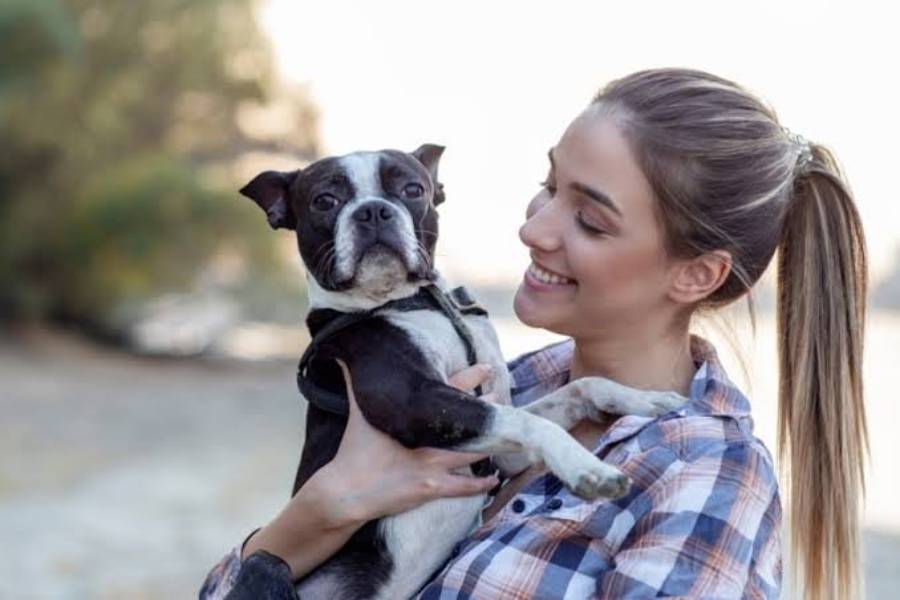
Yes, most Boston Terriers like to cuddle and stay physically close to people they trust. Boston Terriers are companion dogs with an affectionate, people-oriented temperament, so many enjoy sitting on their owner’s lap, leaning against family members, sleeping beside them, or seeking petting and other forms of physical contact.
Cuddling is also one way a Boston Terrier can strengthen its social bond with its owner. Physical closeness provides attention, comfort, warmth, and positive interaction, especially when the dog is allowed to approach voluntarily. However, cuddling is not the only sign of affection. A Boston Terrier may prefer following its owner around the house, initiating play, resting nearby, or seeking attention without wanting prolonged body contact.
Not every Boston Terrier has the same preference for cuddling. Individual personality, age, socialization, previous experiences, daily routines, and physical comfort can influence how much contact a dog enjoys. Some Boston Terriers want to spend hours beside their owners, while others prefer having more personal space. This article explains why Boston Terriers cuddle, how they show affection, why some avoid close physical contact, and how owners can encourage affection while respecting their dog’s boundaries.
Do Boston Terriers Like to Cuddle?
Yes, Boston Terriers generally like to cuddle because they are affectionate companion dogs that tend to enjoy close interaction with people. Cuddling can include sitting on an owner’s lap, leaning against a person, lying beside them on a couch, or seeking direct physical contact while resting. These behaviors allow a Boston Terrier to remain physically close to someone it trusts without requiring active play or training.
A Boston Terrier may actively initiate cuddling rather than simply tolerate it. For example, the dog may climb onto its owner’s lap, press its body against the owner’s leg, move closer when being petted, or choose to sleep while touching a family member. Voluntary contact is important because it shows that the dog is choosing proximity rather than remaining close because it is being held or restrained.
Cuddling preference still varies between individual Boston Terriers. One dog may regularly sleep against its owner, while another may prefer resting at the opposite end of the couch. Age, personality, socialization, previous experiences, household routines, and comfort with being touched can influence these differences. A Boston Terrier that prefers less physical contact can still have a strong bond with its owner and express affection through following, playing, greeting, or resting nearby.
Why Do Boston Terriers Like to Cuddle?
Boston Terriers cuddle primarily for social bonding, companionship, physical comfort, warmth, and positive attention. These factors can occur together, which means a dog may seek its owner’s lap because it wants both physical comfort and social interaction rather than for one isolated reason.
Social bonding is a major part of cuddling behavior. A Boston Terrier that feels comfortable with a person may voluntarily reduce the physical distance between them by leaning, sitting beside them, or lying against them. Repeated positive interactions can strengthen this behavior. For example, when sitting beside an owner consistently results in gentle petting, calm attention, or relaxation, the dog can associate physical proximity with a positive experience.
Physical comfort and warmth can also encourage close contact. Boston Terriers have short coats, so a warm lap, blanket, or place beside a person may provide a comfortable resting location. However, warmth alone does not explain cuddling. A Boston Terrier may seek physical contact even when other warm resting places are available because closeness can also provide social comfort and attention.
Cuddling can also become part of a Boston Terrier’s daily routine. A dog that regularly sits beside its owner during television time or sleeps nearby at night may learn to anticipate that interaction at the same time each day. This learned routine helps explain why some Boston Terriers actively approach their owners for cuddles without being called. The behavior combines companionship with a predictable positive experience, making physical closeness a normal part of the dog’s relationship with its owner.
How Do Boston Terriers Show Affection?
Boston Terriers show affection through physical contact, staying close to their owners, seeking attention, following family members, initiating play, and relaxing beside people they trust. Cuddling is one visible form of affection, but it should be considered alongside the dog’s other social behaviors.
Physical contact can include leaning against an owner’s legs, sitting on their lap, resting against their body, or approaching them for petting. A Boston Terrier that repeatedly initiates these interactions is actively choosing proximity. For example, a dog may leave its bed to lie beside its owner on the couch or press its body against the owner’s hand to continue being petted.
Boston Terriers can also express affection without direct body contact. Following an owner from room to room, bringing a toy to initiate play, greeting the owner when they return, or choosing to rest nearby can all reflect a desire for social interaction. A Boston Terrier may therefore have a close relationship with its owner even if it rarely climbs onto a lap or sleeps against them.
Relaxed body language provides additional context when interpreting affectionate behavior. A Boston Terrier that voluntarily approaches and remains relaxed during physical contact is more likely to be comfortable with the interaction. Owners should consider several behaviors together rather than assuming that one action, such as lap sitting, proves how strongly the dog is bonded to them.
Do All Boston Terriers Like to Cuddle?
No, not all Boston Terriers like to cuddle, and the amount of physical affection they enjoy varies between individual dogs. Breed temperament can influence behavior, but it does not determine the exact personality or physical-contact preferences of every Boston Terrier.
There are several factors that can influence cuddling preferences, including personality, age, socialization, previous experiences, household routines, and physical comfort. One Boston Terrier may seek its owner’s lap whenever the owner sits down, while another may prefer lying nearby without touching. Both dogs can feel secure and socially connected to their owners despite showing that connection differently.
Age can also affect how a Boston Terrier interacts with people. An energetic dog may prioritize exploring and playing during active periods, then seek physical contact when it becomes tired. Socialization and previous handling experiences can influence whether close contact feels familiar and comfortable. Positive experiences with gentle handling can make physical interaction easier for a dog to accept, while repeated unwanted restraint can make it more likely to move away.
A Boston Terrier that does not cuddle should not automatically be considered unaffectionate. Affection can appear through proximity, play, attention-seeking, following, greetings, and relaxed companionship. Owners should evaluate the dog’s overall pattern of social behavior instead of using the amount of cuddling as the only measure of attachment.
Why Doesn’t My Boston Terrier Like to Cuddle?
A Boston Terrier may not like to cuddle because of its individual temperament, preference for personal space, socialization, previous experiences, current environment, or physical discomfort. Avoiding cuddles does not automatically mean the dog dislikes its owner or has a weak bond with the family.
Individual temperament is one of the main reasons for differences in physical affection. Some Boston Terriers actively seek body contact, while others prefer staying close without being touched for long periods. For example, a dog may follow its owner into every room and sleep beside the owner’s feet but move away when placed on a lap. In this case, the dog is still seeking companionship while maintaining control over physical contact.
Previous experiences and socialization can also influence cuddling preferences. A Boston Terrier that has become comfortable with gentle, voluntary handling may be more willing to remain close to people. In contrast, repeatedly picking up, restraining, hugging, or holding a dog after it tries to move away can create a negative association with close physical contact. Giving the dog the choice to approach or leave helps keep affectionate interactions voluntary.
The environment can affect cuddling behavior as well. A Boston Terrier may choose a separate resting place when it is warm, distracted, energetic, or interested in another activity. Owners should therefore look at the context and the dog’s overall behavior instead of interpreting every refusal to cuddle as rejection.
Can Physical Discomfort Make a Boston Terrier Avoid Cuddling?
Physical discomfort can make a Boston Terrier avoid cuddling or react differently when touched. This possibility deserves more attention when a dog that previously enjoyed physical affection suddenly begins avoiding touch, moving away when approached, or reacting negatively to handling.
The important distinction is between a consistent preference and a behavioral change. A Boston Terrier that has always preferred limited physical contact may simply have an independent personality. A dog that normally climbs onto its owner’s lap but suddenly stops doing so represents a different situation because something has changed.
Owners should pay attention to accompanying changes rather than diagnosing the cause themselves. Reduced activity, difficulty moving, sensitivity when a particular area is touched, changes in appetite, unusual vocalization, or other noticeable behavioral changes provide additional context. Veterinary evaluation is appropriate when avoidance of touch appears suddenly or occurs alongside signs of pain or illness.
Do Boston Terriers Like to Be Held?
Some Boston Terriers like being held, but enjoying cuddles does not necessarily mean a Boston Terrier enjoys being picked up or restrained. Cuddling and being held are different interactions because voluntary cuddling allows the dog greater control over its position and ability to move away.
A Boston Terrier that enjoys being held may remain relaxed, settle comfortably against the person, or voluntarily seek similar contact again. A dog that wants to leave may shift its body away, struggle to get down, avoid being picked up again, or display other signs of discomfort. Body language and the context of the interaction are more useful than assuming that every affectionate Boston Terrier wants to be carried.
Owners should also distinguish hugging from the type of close contact a dog initiates naturally. Humans commonly use hugs to express affection, but a dog may prefer sitting against a person or receiving gentle petting without having its movement restricted. Allowing a Boston Terrier to choose how close it wants to be makes the interaction more predictable and comfortable.
The best approach is to respect the dog’s response rather than trying to make it tolerate prolonged holding. Put the Boston Terrier down when it clearly wants to leave and reinforce voluntary interactions with calm attention. This allows physical affection to remain associated with comfort and trust rather than restraint.
Do Boston Terriers Like to Sit on Your Lap?
Many Boston Terriers like to sit on their owner’s lap because lap sitting provides physical closeness, warmth, comfort, and attention. A Boston Terrier may climb onto a lap while its owner is sitting on a couch or chair, settle against the person’s body, and remain there while resting or receiving gentle petting.
Lap sitting can function as both affectionate behavior and a learned routine. A Boston Terrier may initially approach its owner’s lap to seek attention and then learn that the behavior consistently results in petting, warmth, or quiet companionship. For example, a dog that regularly sits on its owner’s lap during evening television time may begin approaching the same person and location when that routine starts.
Not every Boston Terrier that enjoys affection will choose to sit on a lap. Some prefer lying against an owner’s leg, sitting beside the person, or resting nearby without direct contact. Size, individual temperament, temperature, energy level, and previous experiences can all influence where a dog chooses to rest. The important signal is whether the Boston Terrier voluntarily seeks proximity and appears comfortable during the interaction.
Owners should also allow a Boston Terrier to leave the lap when it chooses. Voluntary contact gives the dog control over the interaction and helps distinguish cuddling from restraint. A dog that repeatedly returns to sit on its owner’s lap is providing a clearer indication of its preference than a dog that remains there only because it is being held.
Do Boston Terriers Like to Sleep With Their Owners?
Many Boston Terriers enjoy sleeping near their owners, although individual dogs differ in how much physical contact they want while resting. One Boston Terrier may sleep directly against its owner, another may choose the foot of the bed, and another may prefer a dog bed located nearby.
Sleeping close to an owner can extend the same social proximity seen during daytime cuddling. A Boston Terrier that feels comfortable around a family member may choose that person’s location as a resting place because it provides familiarity and companionship. The dog does not have to maintain constant body contact for this behavior to indicate social attachment.
Sleeping arrangements can also become established routines. If a Boston Terrier regularly sleeps in the owner’s bedroom or rests beside the owner on the couch, it may continue seeking the same location because it has become familiar and predictable. This preference can reflect a combination of comfort, habit, warmth, and proximity to a trusted person.
However, sleeping separately does not mean a Boston Terrier has a weaker relationship with its owner. Some dogs prefer more space when sleeping, move between several resting locations during the night, or choose a cooler surface instead of direct body contact. Owners should consider the dog’s broader pattern of behavior, including voluntary proximity, greetings, play, following, and attention-seeking, rather than judging attachment solely by where the dog sleeps.
Do Boston Terriers Get Attached to One Person?
Boston Terriers can become especially attached to one person, but they can also form strong bonds with multiple members of the household. The person who provides consistent care, attention, play, training, and positive interaction may become someone the dog frequently chooses to follow, approach, or cuddle with.
Daily routines can influence which person a Boston Terrier seeks most often. Feeding meals, going for walks, playing, training, and spending quiet time together create repeated opportunities for positive interaction. For example, a Boston Terrier may regularly sit on the lap of the family member who spends the most time relaxing with it while choosing another person when it wants to play.
A preference for one person does not mean the Boston Terrier cannot be affectionate with other people. The dog may cuddle with one family member, sleep near another, and initiate play with someone else. These behaviors can reflect different relationships within the same household rather than exclusive attachment to a single person.
Owners should therefore consider the Boston Terrier’s complete pattern of social behavior. Following, greeting, playing, resting nearby, seeking petting, and initiating physical contact can all indicate attachment. Cuddling is one expression of that relationship, but it is not the only behavior that demonstrates a strong social bond.
Read more: Do Boston Terriers Bark a Lot? Causes & Solutions
Do Boston Terrier Puppies Like to Cuddle?
Boston Terrier puppies can enjoy cuddling, but their preference for physical contact varies according to personality, energy level, socialization, and previous handling experiences. A puppy may seek close contact when tired and then become more interested in playing, exploring, or interacting with its surroundings after resting.
Energy level can make puppy cuddling inconsistent throughout the day. An active Boston Terrier puppy may have little interest in remaining on a person’s lap while it wants to play. The same puppy may voluntarily curl up beside its owner after becoming tired. Owners should therefore evaluate cuddling across different situations rather than deciding that an energetic puppy is unaffectionate because it will not sit still.
Positive handling experiences can help a puppy become comfortable with human touch. Gentle petting and allowing the puppy to approach voluntarily create opportunities for physical contact without forcing it to remain in place. Repeated positive experiences can teach the puppy that being close to people is comfortable and predictable.
Owners should not force a Boston Terrier puppy to cuddle in an attempt to make it more affectionate. Holding the puppy after it repeatedly tries to leave removes its ability to control the interaction and may make physical contact less appealing. Instead, owners can provide comfortable opportunities to rest nearby, reward calm voluntary interaction, and allow the puppy to decide when it wants more space.
A puppy’s current cuddling behavior also does not guarantee its exact preferences as an adult. Behavior can change as the Boston Terrier matures and develops its individual temperament and routines. The goal should be to build trust and positive associations with physical contact rather than trying to produce a specific amount of cuddling.
How Can You Encourage a Boston Terrier to Cuddle With You?
To encourage a Boston Terrier to cuddle, make physical contact voluntary, comfortable, and consistently associated with positive experiences. Owners can create opportunities for closeness, but the dog should decide whether to approach, remain in contact, or move away.
Start by creating a comfortable place where your Boston Terrier can rest close to you. Sitting quietly on a couch, placing a dog bed nearby, or providing a comfortable blanket gives the dog an opportunity to approach without being called, picked up, or restrained. When the Boston Terrier chooses to sit or lie beside you, calm petting and attention can reinforce the positive experience.
Build physical contact gradually rather than immediately expecting prolonged cuddling. A Boston Terrier that is comfortable sitting beside you may eventually lean against you or move onto your lap. Let the dog initiate these changes whenever possible. For example, if your Boston Terrier approaches and rests against your leg, gently petting it while allowing it to leave creates a different experience from picking it up and holding it in place.
Avoid forcing affection when your Boston Terrier chooses another activity. A dog that is playing, exploring, eating, or resting independently may not want physical contact at that moment. Repeatedly interrupting the dog to hug or hold it does not teach it to enjoy cuddling. Positive experiences are more likely to develop when physical affection occurs at times when the dog is already relaxed and receptive.
Consistency also matters. If sitting beside you regularly results in calm attention and the dog remains free to leave, your Boston Terrier can learn that approaching you is predictable and comfortable. The objective is not to increase the amount of physical contact as quickly as possible. It is to establish enough trust that the dog voluntarily chooses closeness.
How Can You Tell When Your Boston Terrier Wants Space?
A Boston Terrier wants space when its behavior shows that it is trying to avoid, reduce, or end physical contact. Owners should respond to these signals by allowing the dog to move away instead of continuing to pet, hug, hold, or reposition it.
Clear attempts to create distance are particularly important. A Boston Terrier may get off your lap, move to another resting place, turn its body away, repeatedly reposition itself, or try to leave when being held. These actions provide more useful information about the dog’s preference than assuming it should enjoy contact because Boston Terriers are generally affectionate.
More subtle changes in body language can also provide context. A dog that was previously relaxed may become tense, turn its head away, avoid further interaction, or repeatedly shift position during contact. Owners should interpret these behaviors together with the situation rather than relying on a single gesture to determine how the dog feels.
Respecting these boundaries can support future affectionate interactions. When a Boston Terrier learns that it can leave whenever it wants, approaching its owner does not automatically result in restraint. This gives the dog greater control over physical contact and allows cuddling to remain voluntary.
Ultimately, the goal is not to make every Boston Terrier behave like a lap dog. A strong relationship is built through trust, predictable positive interactions, and respect for the individual dog’s preferred level of physical affection. A Boston Terrier that chooses to rest beside you instead of on your lap can still be strongly bonded to you and comfortable in your company.
1 thought on “Do Boston Terriers Like to Cuddle?”