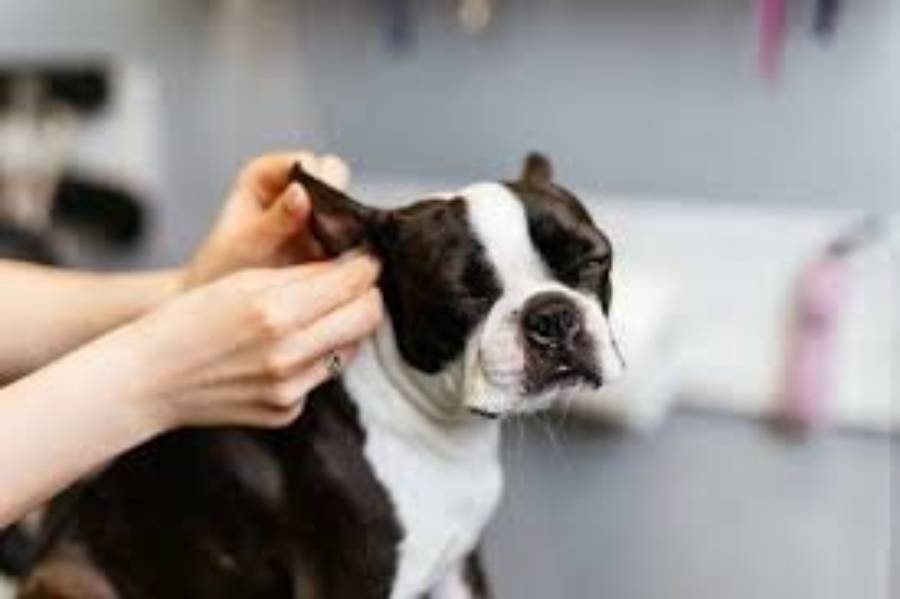
Cleaning a Boston Terrier’s ears involves checking the ears for abnormalities, applying a dog-safe ear cleaner, massaging the base of each ear, letting the dog shake its head, and wiping away loosened wax and debris. The goal is to remove excess debris and moisture without inserting objects deep into the ear canal. Using the correct technique also reduces the risk of irritating the sensitive tissue inside the ear.
Before cleaning, examine both ears for redness, swelling, unusual discharge, strong odor, or signs of pain. These symptoms can indicate that the problem requires veterinary attention rather than routine cleaning. Ear cleaning removes accumulated wax and debris, but it does not diagnose or treat conditions such as bacterial or yeast infections.
You will need a dog-safe ear-cleaning solution, cotton balls or gauze, and a clean towel. The process should remain gentle from start to finish, particularly when wiping the visible parts of the ear. This guide explains what to prepare, how to check your Boston Terrier’s ears, how to clean them step by step, how often cleaning is appropriate, what to avoid, and when ear symptoms warrant a veterinary examination.
How Do You Clean a Boston Terrier’s Ears?
You can clean a Boston Terrier’s ears in 6 steps: inspect the ears, apply a dog-safe ear cleaner, massage the base of the ear, let your dog shake its head, wipe away loosened debris, and dry the accessible parts of the outer ear. The entire process should be gentle because the ear canal contains sensitive tissue that can become irritated when it is rubbed aggressively or cleaned with unsuitable products.
Start by looking inside each ear before applying any cleaning solution. Check for visible wax, dirt, redness, swelling, discharge, and unusual odor. Once the ear appears suitable for routine cleaning, lift the ear flap and apply the ear-cleaning solution according to the product instructions. Massage the base of the ear to distribute the solution and loosen accumulated debris.
Release the ear and allow your Boston Terrier to shake its head. Head shaking helps move loosened wax, debris, and excess cleaning solution toward the accessible part of the ear. Use cotton balls or gauze to gently wipe away material you can reach without pushing anything deep into the ear canal. Finish by wiping excess moisture from the visible outer ear.
Routine ear cleaning should focus on removing accessible debris rather than reaching every part of the ear canal. Do not insert cotton swabs or other objects deep into the canal in an attempt to remove wax that you cannot see or easily reach.
What Do You Need to Clean a Boston Terrier’s Ears?
You need 3 basic supplies to clean a Boston Terrier’s ears: a dog-safe ear-cleaning solution, cotton balls or gauze, and a clean towel. Preparing these items before handling your dog keeps the procedure continuous and prevents you from leaving your Boston Terrier unattended while cleaning is underway.
A dog-safe ear-cleaning solution is used to loosen wax and debris inside the ear. Choose a product specifically intended for canine ear cleaning rather than substituting household liquids simply because they are available. An ear cleaner is designed for routine hygiene; it should not be treated as a replacement for medication prescribed to address an ear infection or another diagnosed ear condition.
Cotton balls or soft gauze are useful for removing debris that has moved toward the visible part of the ear. Use them to wipe surfaces you can reach easily rather than pushing them into the canal. This distinction is important because cleaning visible debris and probing the ear canal are different actions.
Keep a clean towel nearby because Boston Terriers will often shake their heads after cleaning solution is applied. The towel can catch excess liquid and help dry the hair and accessible outer ear afterward. Having all 3 supplies within reach also makes it easier to keep the cleaning session controlled and comfortable.
How Should You Check Your Boston Terrier’s Ears Before Cleaning?
Check your Boston Terrier’s ears for wax, debris, odor, redness, swelling, discharge, and pain before cleaning them. This inspection determines whether the ears appear suitable for routine cleaning or show signs that warrant veterinary attention.
Begin with the visible outer ear and compare both ears. A small amount of wax or superficial debris may simply indicate that cleaning is needed. In contrast, pronounced redness, swelling, abnormal discharge, or a strong unusual odor can indicate that something other than ordinary wax accumulation is occurring. Comparing the two ears can also make a new or one-sided change easier to notice.
Observe your Boston Terrier’s behavior during the inspection. Pulling away, crying, repeatedly scratching the ear, or showing obvious discomfort when the ear is gently handled should not be ignored. Do not continue routine cleaning when handling the ear causes significant pain. Adding cleaner or manipulating an already painful ear can cause additional discomfort without addressing the underlying cause.
The pre-cleaning check therefore has two purposes: identifying material that can be removed safely and recognizing when routine cleaning is not the appropriate next step. Cleaning manages wax and debris; it does not determine whether redness, discharge, pain, or persistent odor is caused by an infection or another ear disorder.
How Do You Clean a Boston Terrier’s Ears Step by Step?
Clean your Boston Terrier’s ears by applying a dog-safe ear cleaner, massaging the base of the ear, allowing your dog to shake its head, and wiping away the debris and excess solution that move toward the outer ear. Each step has a specific function: the cleaner loosens material, massage distributes the solution, head shaking moves loosened debris outward, and wiping removes material that is safe to reach.
Position your Boston Terrier where you can comfortably reach both ears and keep the cleaning supplies nearby. A bathroom, utility area, or another easy-to-clean space works well because ear solution can scatter when the dog shakes its head. Keep the procedure calm and controlled rather than restraining the dog forcefully.
How Do You Apply Ear Cleaner to a Boston Terrier’s Ear?
Lift the ear flap and apply the dog-safe ear-cleaning solution according to the product instructions. The solution needs to enter the ear canal sufficiently to contact accumulated wax and debris, but the bottle tip itself should not be pushed into the canal.
Hold the ear flap gently so you can see the canal opening. Position the cleaner above the opening and dispense the recommended amount. Avoid touching the ear with the bottle tip because contact can contaminate the applicator, particularly when the same bottle is used for both ears.
Do not immediately wipe the solution away. It needs time to contact the wax and debris before those materials can be moved toward the outer ear. Proceed directly to massaging the base of the ear unless the product instructions specify a different procedure.
How Do You Massage a Boston Terrier’s Ear After Applying Cleaner?
Massage the base of your Boston Terrier’s ear gently after applying the cleaner to help distribute the solution and loosen accumulated material. Massage the area where the ear meets the head rather than rubbing only the visible ear flap.
Use your fingers and thumb to massage the base of the ear with gentle movements. This mechanical action helps the cleaning solution interact with wax and debris inside the canal. You may hear a soft squishing sound as the liquid moves within the ear.
Stop massaging if your Boston Terrier shows clear signs of pain. Mild resistance from a dog that dislikes having its ears handled is different from sudden pain when a specific area is touched. Significant discomfort is a reason to stop the routine cleaning process rather than massage more firmly.
Why Should You Let Your Boston Terrier Shake Its Head?
Let your Boston Terrier shake its head because this movement helps carry loosened wax, debris, and excess cleaning solution toward the outer part of the ear. Head shaking is therefore a functional part of the cleaning process rather than something that needs to be prevented.
Release the ear after massaging and move your face away before allowing the dog to shake. Keep a towel nearby because droplets of ear cleaner and loosened material may be expelled during this step. Once the shaking stops, inspect the visible portion of the ear again.
Material that was previously deeper in the canal may now be easier to reach. Removing this material from the accessible area is safer than trying to reach deeply into the canal before the solution and head shaking have moved it outward.
How Do You Wipe and Dry a Boston Terrier’s Ears?
Wipe the visible parts of your Boston Terrier’s ear with cotton balls or soft gauze, then remove excess moisture from the accessible outer ear. Only clean areas that you can reach easily without forcing your finger, gauze, or another object deep into the canal.
Use a fresh cotton ball or piece of gauze as it becomes dirty. Gently wipe away loosened wax, debris, and remaining solution from the ear flap and accessible canal entrance. Repeat the wiping process until the material you can safely reach has been removed.
Do not aim to remove every trace of earwax. A successful ear-cleaning session removes accessible excess material without irritating the ear in an attempt to make the canal completely spotless. Aggressive wiping can turn routine grooming into a source of inflammation.
Finish by wiping away visible moisture from the outer ear and surrounding hair. Check your Boston Terrier’s reaction after cleaning. Temporary head shaking immediately afterward can occur, but persistent discomfort, scratching, or repeated head shaking requires closer attention.
How Often Should You Clean a Boston Terrier’s Ears?
A Boston Terrier’s ears should be cleaned according to their individual wax and debris buildup rather than on an unnecessarily frequent fixed schedule. Cleaning needs vary because ear condition is affected by factors such as bathing, swimming, previous ear problems, and the amount of material that accumulates between checks.
Inspecting the ears regularly is more useful than automatically cleaning them whenever you check them. Clean ears that have little visible debris and no problematic buildup do not need repeated cleaning simply because a certain number of days have passed. This distinction helps prevent unnecessary manipulation of healthy ear tissue.
Boston Terriers that accumulate wax or debris more readily may need cleaning more frequently than dogs whose ears remain clean. Water exposure also matters. Check the ears after swimming or bathing because retained moisture changes the condition inside the ear and may require additional attention.
Previous ear problems can change the appropriate cleaning routine. Follow the cleaning frequency recommended by your veterinarian if your Boston Terrier has a history of recurring ear problems or has been given a specific ear-care plan. More frequent cleaning is not automatically better, because excessive cleaning and repeated manipulation can irritate the ear instead of improving its condition.
What Should You Not Use to Clean Boston Terrier Ears?
Do not use cotton swabs deep inside the ear canal or unapproved household liquids as substitutes for a dog-safe ear-cleaning solution. The purpose of routine cleaning is to loosen and remove accessible wax and debris without irritating sensitive tissue or pushing material farther into the canal.
Cotton swabs are particularly problematic when inserted into the ear canal. Instead of removing debris, a swab can push wax and other material deeper into the ear. It can also cause injury when a dog suddenly moves its head during cleaning. Cotton balls or soft gauze are better suited for wiping material that has already moved into the accessible portion of the ear.
Plain water is not a direct substitute for a formulated dog ear cleaner. Water does not provide the same cleaning action as a product designed for canine ears, and moisture left inside the canal can create an undesirable environment. After bathing or swimming, check your Boston Terrier’s ears and dry the accessible outer areas rather than deliberately filling the ear canal with water.
Avoid routinely putting hydrogen peroxide or alcohol into your Boston Terrier’s ears unless a veterinarian has specifically directed you to use a particular product or treatment. These substances can irritate sensitive or already inflamed tissue. A product being useful for another cleaning purpose does not make it appropriate for a dog’s ear canal.
Home remedies should be approached with the same caution. Vinegar mixtures, oils, and other homemade solutions are not automatically safe for every dog or every ear condition. A painful, inflamed, or infected ear requires identification of the underlying problem rather than repeated experimentation with different cleaning liquids.
How Can You Tell If Your Boston Terrier’s Ears Are Clean?
Your Boston Terrier’s ears are sufficiently clean when excess visible wax and debris have been removed, the accessible outer ear is dry, and cleaning has not caused redness or discomfort. The goal is a healthy ear environment, not an ear canal with absolutely no earwax.
Inspect the visible portion of each ear after cleaning. Large pieces of debris and excessive wax that were accessible before cleaning should be gone. The ear flap and canal entrance should not remain saturated with cleaning solution. Use clean gauze or a cotton ball to remove residual material that has moved outward.
Do not continue cleaning solely because you can still see a small amount of wax deeper in the ear. Repeatedly inserting material farther into the canal increases the risk of irritation. Earwax itself is not proof that an ear is unhealthy, so the endpoint of cleaning should be based on removal of excess accessible material rather than complete elimination of wax.
Your Boston Terrier’s behavior provides another useful check. The dog should gradually return to normal after the cleaning session. Persistent scratching, obvious pain, or repeated head shaking indicates that the ear needs to be reassessed rather than cleaned repeatedly.
Read more: How Often Should You Walk a Boston Terrier?
Why Does My Boston Terrier Keep Shaking Its Head After Ear Cleaning?
A Boston Terrier may shake its head immediately after ear cleaning to remove residual solution and loosened debris, but persistent head shaking can indicate irritation or an underlying ear problem. The timing and duration of the behavior help distinguish an expected response from a sign that requires further attention.
Head shaking immediately after applying ear cleaner is part of the cleaning mechanism. Liquid inside the canal triggers the dog to shake, and the movement helps carry wax and debris toward the outer ear. This is why you should deliberately give your Boston Terrier an opportunity to shake its head before wiping the ear.
Continued head shaking after the cleaning process is different. Check the ears again when the behavior persists, especially when it occurs with scratching, redness, unusual odor, discharge, or sensitivity when the ear is touched. These signs suggest that simply adding more cleaner may not address the problem.
Do not repeatedly clean an ear in response to persistent head shaking. Additional cleaning can further irritate sensitive tissue when inflammation is already present. Persistent symptoms should instead be evaluated in the context of the ear’s appearance, odor, discharge, and your Boston Terrier’s level of discomfort.
When Should You Stop Cleaning Your Boston Terrier’s Ears and See a Veterinarian?
Stop routine ear cleaning and contact a veterinarian when your Boston Terrier has significant ear pain, persistent redness or swelling, abnormal discharge, strong unusual odor, or ongoing scratching and head shaking. These signs can indicate an ear condition that requires evaluation rather than additional routine cleaning.
Pain is an especially important reason to stop. A Boston Terrier that cries, pulls away sharply, or strongly resists gentle handling of a previously manageable ear may have inflammation or another painful problem. Continuing to manipulate the ear can increase discomfort and make subsequent examination more difficult.
Discharge and persistent odor also require attention. Routine cleaning can remove surface debris, but it does not determine why abnormal material is being produced. Ear problems can have different underlying causes, and the appropriate treatment depends on identifying the cause rather than treating every abnormal ear as a buildup of ordinary wax.
Seek veterinary attention promptly if ear symptoms occur alongside balance problems, unusual eye movements, a persistent head tilt, or other neurological abnormalities. These signs extend beyond routine outer-ear hygiene and should not be managed by repeatedly cleaning the ear at home.
For ordinary maintenance, the boundary is straightforward: clean accessible wax and debris from a comfortable ear, but stop when the ear is painful, persistently inflamed, producing abnormal discharge, or causing ongoing symptoms. This distinction keeps routine Boston Terrier ear cleaning focused on hygiene while leaving diagnosis and treatment of ear disease to veterinary care.
1 thought on “How to Clean Boston Terrier Ears: Step-by-Step Guide”